
5 min read
All About Synthetic Roof Underlayment Brands
Discover how synthetic roof underlayment brands deliver superior protection, slip resistance, and durability for shingle and metal roofs.
Read more

May 27, 2026
The best plumbing marketing tips help you do one thing: turn online searches into booked jobs. Here is a quick look at the strategies that move the needle most:
Top Plumbing Marketing Tips at a Glance:
Here is the reality most plumbing businesses face: you do excellent work, your existing customers are happy, and yet the phone goes quiet some weeks. Word-of-mouth and referrals have a ceiling. When a pipe bursts at midnight, a homeowner grabs their phone and searches on Google — and calls whoever shows up first. Over 70% of homeowners search online before hiring a plumber, and 97% research a business online before making contact. If your business is not visible, optimized, and trusted online, those jobs go to a competitor.
The good news is that a structured, multi-channel marketing approach can create consistent, predictable lead flow — without relying on luck or referrals alone. Plumbing companies that invest in digital marketing see an average 25% increase in leads within the first six months. The strategies in this guide are practical, measurable, and designed specifically for the way plumbing customers actually search and hire.
I'm Jennifer Bagley, CEO of CI Web Group and a digital marketing strategist focused on helping home service contractors build scalable growth systems — including proven plumbing marketing tips that align marketing, operations, and technology into a unified engine. In the sections ahead, I'll walk you through exactly what it takes to dominate your local market and keep your calendar full.
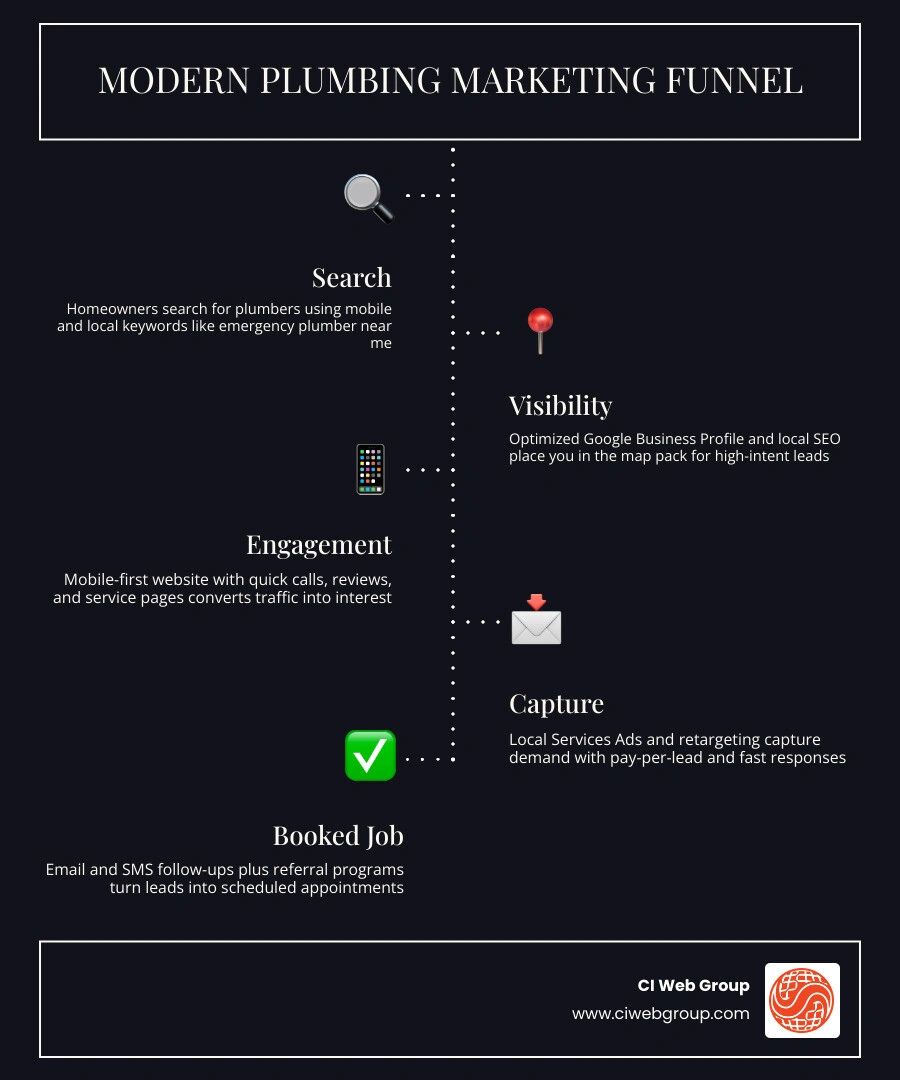
Common plumbing marketing tips vocab:
Before we worry about clicks, rankings, or ad campaigns, we need a plan. Good marketing starts with clarity: who you serve, what you want to sell more of, and how you will measure success.
For plumbing companies, that usually means balancing emergency calls, routine residential work, higher-ticket replacements, and sometimes commercial or property-management relationships. If everything is a priority, nothing is.
A strong foundation includes:
If you want a broader roadmap, our Plumbing Business Marketing Guide and Plumbing Contractors Marketing Guide are great next reads.
We recommend starting with three questions:
For many plumbing businesses, the audience is not just "anyone with pipes." You may want to target:
Then define offers that fit how people buy. Emergency plumbing needs speed and trust. Maintenance plans need reminders and long-term value. Referral offers need to be simple enough that customers actually use them.
This is also where seasonality matters. Even though plumbing demand is year-round, search patterns still shift. Storms, freezes, holidays, and moving season can all influence what people need and when they search.
One of the most overlooked plumbing marketing tips is simple: track everything.
Do not stop at website traffic. Traffic does not unclog drains. Booked jobs do.
We want to know:
That means using call tracking, CRM reporting, form attribution, and booking-rate analysis. Listening to call recordings can also reveal whether leads are qualified, whether your team is converting them well, and whether certain campaigns bring price shoppers instead of real buyers.
The goal is not more noise. The goal is more booked jobs from the right channels.
For plumbing, local search is the front door. When someone searches "emergency plumber near me" or "water heater repair in Houston," Google decides who gets seen first. That is why local SEO, reviews, and Google Business Profile management are core pieces of modern plumbing marketing.
Local SEO optimization can increase website traffic for plumbing businesses by up to 50%, and strong review profiles improve both ranking and conversion.
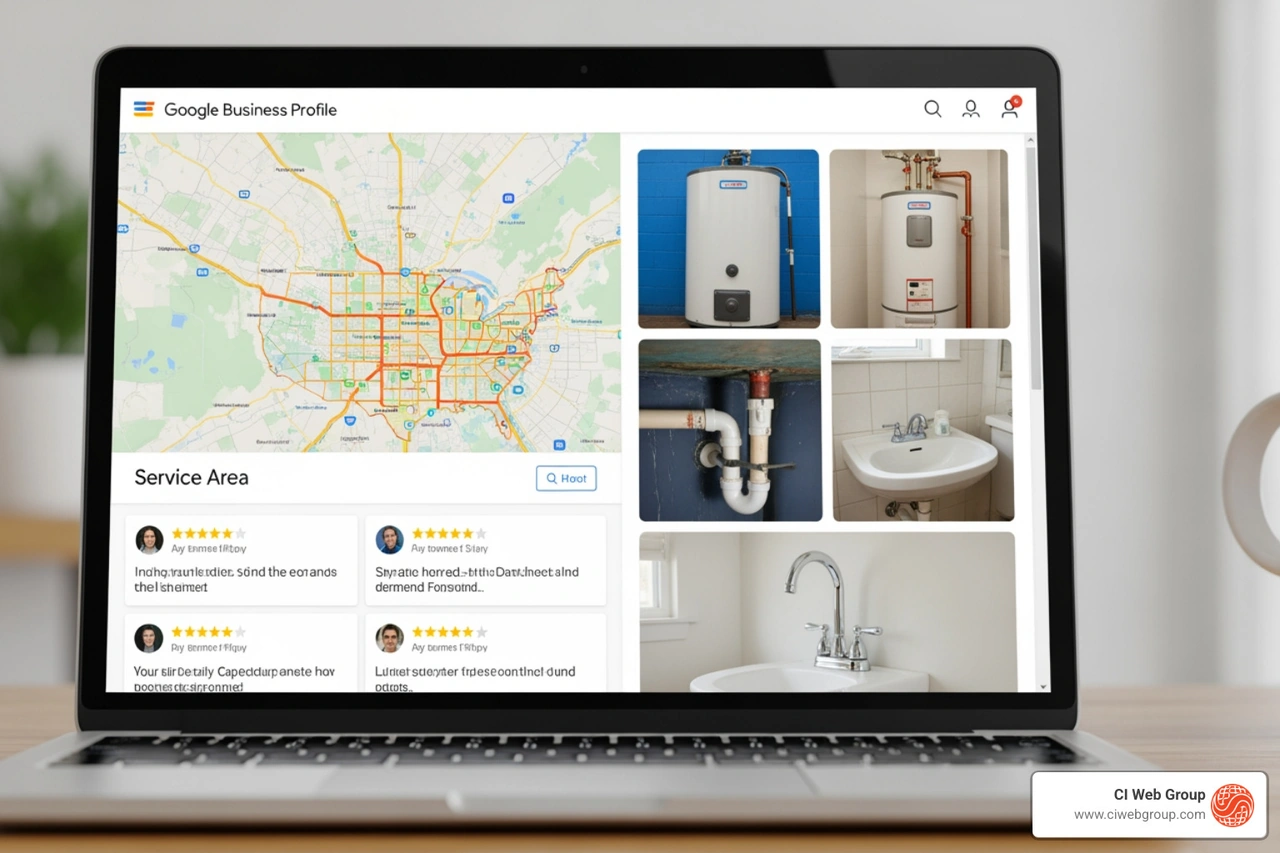
For deeper strategy, explore our Plumbing SEO Complete Guide and Plumbing SEO Company Complete Guide.
Your Google Business Profile should be complete, active, and accurate. That means filling out every useful field, not just the basics.
Focus on:
NAP consistency matters too. Your name, address, and phone number should match across your website and directory listings. Mixed details confuse search engines and customers.
For multi-location plumbing businesses, each location should have its own accurate profile. For service-area businesses, define the real areas you cover and avoid stretching too far just to look bigger. Bigger is not better if the lead is outside your service radius.
SEO helps you rank where and when customers are searching. For plumbers, that means targeting high-intent, local phrases tied to actual services.
Examples include:
The structure matters as much as the keywords. We recommend building:
This also supports visibility in AI-driven search experiences. In 2026, search is no longer just ten blue links. Google surfaces answers directly, and AI tools summarize businesses and service options. Clear page structure, scannable headings, and precise local relevance improve AEO and GEO visibility too.
Reviews are not just reputation fluff. They influence rankings, trust, and lead quality.
The research shows:
That means review generation should be systematic, not random.
Best practices:
Fresh reviews matter. People tend to trust recent feedback more than glowing comments from three years ago. A steady review velocity also sends strong local trust signals.
Your website should not function like an online brochure from 2018. It should function like a sales tool.
A high-performing plumbing website should be mobile-first, fast, clear, and built for action. Most local searches happen on smartphones, and 76% of people who search for a nearby business on mobile visit or hire within 24 hours. If your website is slow or confusing, your traffic leaks out. Yes, we made the plumbing joke. We had to.
For a full breakdown, see our Plumbing Company Website Guide.
Every plumbing website should include:
Visitors should know within seconds:
Do not make people hunt for your phone number. In emergency plumbing, friction kills conversions.
Your service pages should match what people actually search for. That means separate pages for services like:
Each page should include:
Keep forms short. Name, contact info, service need, and maybe ZIP code are usually enough. Long forms belong in tax season, not on a plumbing site.
Organic growth is powerful, but paid channels and content can accelerate lead flow and support visibility while SEO builds.
Our Plumbing Google Ads and Plumbing Service Leads resources go deeper on this mix.
For plumbing businesses, the fastest paid channels are usually:
Local Services Ads are especially strong for high-intent searches because they appear at the top of results and use a pay-per-lead model. They also add trust through the Google Guaranteed program when eligible.
Google Search Ads work well for service-specific and emergency-intent queries. We recommend:
Here is a simple comparison:
| Channel | Best For | Strength |
|---|---|---|
| Local Services Ads | High-intent local leads | Pay per lead and top-of-page visibility |
| Google Search Ads | Service-specific demand | Fast testing, targeting, and scale |
Social media is usually a trust and familiarity channel for plumbers, not the first place someone goes during a flood. But it still matters.
Research shows many consumers check a business's online presence before hiring, and active social content can help your company feel real, local, and responsive.
What to post:
Platforms like Facebook and Instagram are useful for local visibility, while short-form video can perform well for educational and trust-building content. You can also build retargeting audiences from website visitors and stay in front of people who did not book the first time.
Content marketing works best when it answers real homeowner questions.
Good topics include:
This kind of content helps in three ways:
Video deserves special attention too. Video marketing generates 66% more qualified leads for service businesses, and plumbing is a visual category. Showing a technician explaining a repair, walking through a maintenance tip, or sharing a before-and-after result builds confidence fast.
The easiest customer to market to is often the one who already knows you. Too many plumbing businesses finish a job and then disappear until the next emergency. That leaves repeat revenue on the table.
Our Plumbing Marketing Leads Ultimate Guide and Plumbing Lead Generation Ultimate Guide cover these retention systems in more depth.
Email remains one of the highest-ROI channels when used well. Research cited in the source material puts targeted email return as high as $40 for every $1 spent.
Useful campaigns include:
Segmentation matters. Sending the same message to every contact is lazy marketing dressed as efficiency. We recommend segmenting by service history, service area, and customer type whenever possible.
SMS is especially effective for urgent communication and reminders because open rates are extremely high. Keep texts short, useful, and action-focused.
Referrals do not have to be passive. You can build a system.
Good referral sources include:
A simple referral program with a thank-you incentive can help. So can direct outreach to organizations that control multiple properties or repeated service opportunities. One strong property-management relationship can create recurring work rather than one-off calls.
Marketing gets expensive fast when it is guided by guesses. Measurement is how we protect ROI and improve performance.
At CI Web Group, we care about transparency, asset ownership, and real reporting because contractors deserve to know exactly what is working.
The most important metrics include:
Use tools such as Google Analytics, Google Search Console, GBP Insights, call tracking, and CRM reporting to tie marketing activity to outcomes.
Once you have data, use it.
That may mean:
In 2026, we also recommend watching AI search visibility. If your content earns visibility in answer engines and AI summaries, that can influence branded searches, map actions, and conversions even when traffic patterns look different than they did a few years ago.
The most effective mix is:
Together, these channels cover discovery, trust, conversion, and retention.
For most plumbing businesses, SEO typically takes 3 to 6 months to show meaningful traction, though timing depends on competition, website quality, review growth, and content depth. Paid ads can produce leads faster, but SEO compounds over time and keeps working even when ad spend changes.
Track each lead back to its source, then connect it to booked jobs and revenue. The essentials are:
Without attribution, you are just hoping your marketing works. Hope is great for birthdays, less great for business planning.
The best plumbing marketing tips are not random hacks. They are systems. When your website converts, your Google Business Profile is active, your reviews are growing, your SEO is expanding, and your follow-up is automated, marketing becomes more predictable and a lot less stressful.
That is exactly the kind of long-term visibility and profitable growth we help build at CI Web Group. If you want to strengthen your market position, refine your message, and turn digital marketing into a real business asset, start with our guide to Plumbing Branding and learn more about our More info about plumbing website design services.
When you are ready, we are here to help you build a marketing engine that keeps the calendar full without guesswork, long contracts, or mystery reporting.
Search our Blog
5 min read
In Depth Guide to Plumbing Marketing Strategies
Discover proven plumbing marketing tips that boost local leads, improve visibility, and turn homeowner searches into booked jobs.
Read more
5 min read
All About Synthetic Roof Underlayment Brands
Discover how synthetic roof underlayment brands deliver superior protection, slip resistance, and durability for shingle and metal roofs.
Read more

5 min read
Designing Your Breeze: HVAC Logo Ideas That Stand Out
Design a standout air conditioning logo! Explore essential elements, color psychology, modern trends, and practical tips for a versatile brand identity.
Read more
5 min read
How to Build an HVAC Brand That Doesn't Blow Cold Air
Build a standout HVAC brand with expert Branding for HVAC tips: logos, consistency, digital activation & ROI strategies for 2026 growth.
Read more