
5 min read
Beginner's Guide to Starting an Advertising Agency Online
Learn how to start an advertising agency online with this beginner's guide covering niche selection, tech stack, AI tools, client acquisition, and more.
Read more
March 6, 2026
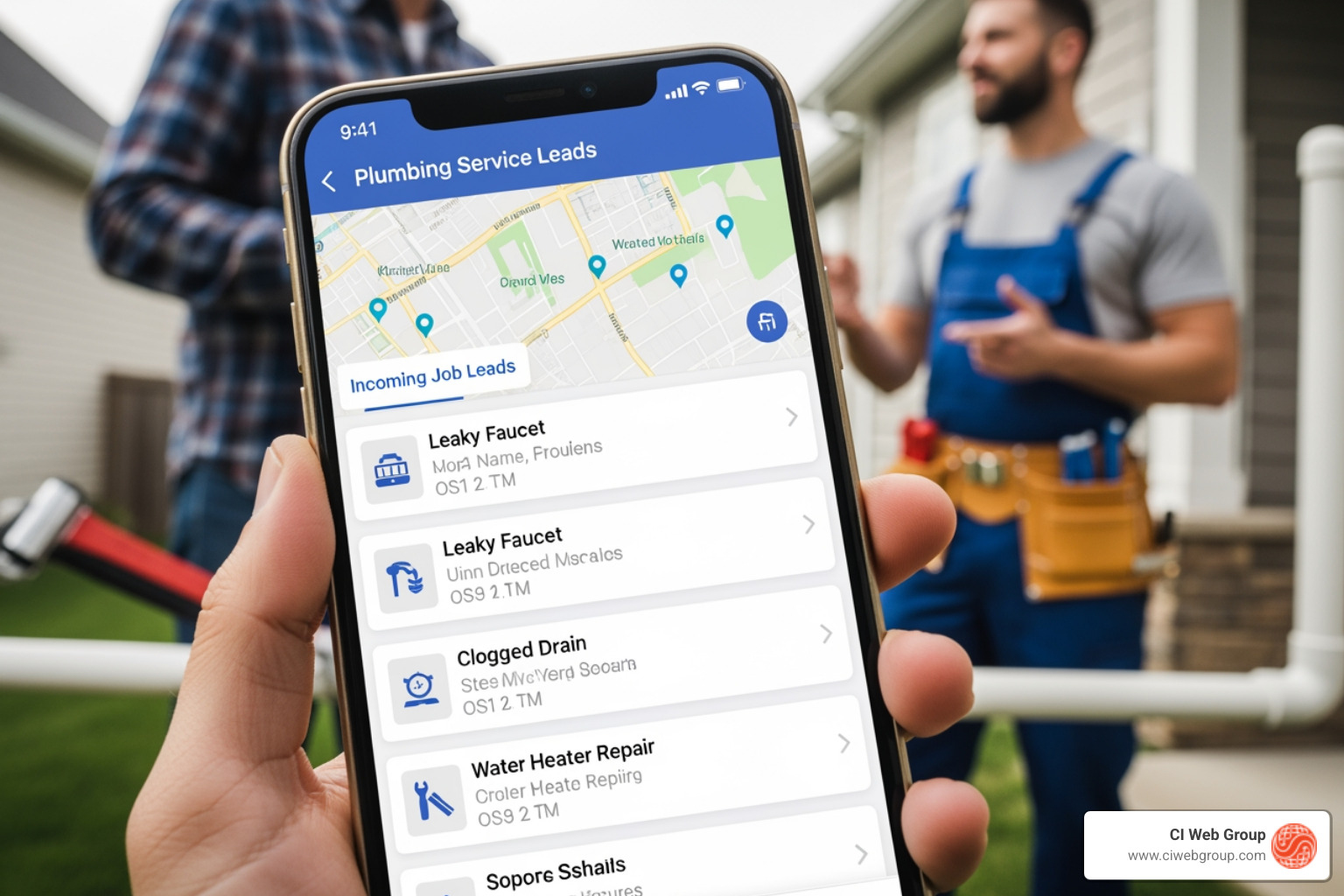
Plumbing service leads are the direct connection between your business and homeowners actively searching for help—whether it's a burst pipe at midnight or a water heater replacement next week. Without a steady flow of qualified leads, even the best plumbing companies struggle to fill their schedule, grow revenue, and compete in local markets.
Quick Answer: The Best Ways to Generate Plumbing Service Leads
The challenge for most plumbing businesses isn't just getting leads—it's getting the right leads at a sustainable cost. Too many companies waste budget on shared, low-quality leads or platforms that send price shoppers instead of qualified customers. The most successful plumbing companies build a diversified lead generation system that combines organic visibility (SEO, Google Business Profile), paid channels (LSAs, PPC), and trust-building tactics (reviews, content) to create a predictable pipeline of booked jobs.
I'm Jennifer Bagley, CEO of CI Web Group, and I've spent years helping plumbing companies future-proof their businesses by building enterprise-level marketing systems that generate consistent plumbing service leads and sustainable growth. My mission is to bring cutting-edge digital strategies and technology to contractors so they can compete with major brands and create stability for their families.

Plumbing service leads vocabulary:
In plumbing, not all leads are created equal. Understanding the different types of plumbing service leads and what makes them valuable is the first step toward building a robust and profitable lead generation system for your business in regions like Houston, Texas, the Pacific Northwest, Southeast, or Southwest.
When we talk about plumbing service leads, we're referring to potential customers who have shown interest in your services. This interest can range from a casual inquiry to an urgent need for immediate assistance. The goal is to capture this interest and convert it into a booked job. This often involves careful lead qualification and verification to ensure you're spending your time and resources on opportunities with the highest potential.
When potential customers reach out, they typically do so through one of two primary methods: form submissions or live inbound calls. Each type of lead has its own characteristics and benefits.
Form Submissions: These are often referred to as "traditional leads" or "email leads." A potential customer fills out a contact form on your website, a lead generation platform, or a directory listing. They provide their name, email, phone number, and a brief description of their plumbing issue.
Live Inbound Calls: Imagine your phone ringing, and on the other end is a homeowner with a plumbing emergency, ready to book a service. That's a live inbound call lead. These leads come directly to your phone, often from high-intent customers who are actively searching for urgent plumbing solutions. This direct connection is a real-time opportunity for your team.
For a deeper dive into how we can help you generate these crucial connections, explore our Plumbing Lead Generation guide.
A quality lead, whether it's a form submission or a live inbound call, is one that has a high probability of converting into a paying customer. In plumbing service leads, we define a "qualified call" or lead by several key factors:
Lead generation companies employ rigorous processes to ensure the leads they provide are qualified. For instance, some use a multi-step verification process, which might include a 7-point verification process where leads are vetted through calls, emails, and texts to ensure they are legitimate and ready to act. This proactive qualification helps avoid price shoppers and connects you with homeowners ready to make a hiring decision.
Understanding the nuances of quality leads is especially important for commercial plumbing services, where the stakes and project values can be significantly higher. For more insights, refer to our Commercial Service Plumbing Leads Guide.
Generating exclusive plumbing service leads means attracting customers who come directly to your business, bypassing competitors and lead marketplaces. This builds organic growth, strengthens your brand authority, and fosters online credibility, ultimately earning customer trust.
These foundational strategies are about building your digital presence so effectively that when potential customers in Houston, Texas, the Pacific Northwest, Southeast, or Southwest search for plumbing services, your business is the first they see and trust. For a comprehensive overview of how to market your plumbing business effectively, check out our Plumbing Business Marketing Guide.
Your website is your 24/7 digital storefront, and Local SEO is the key to getting local customers through its virtual doors. When someone types "plumber near me," you want your business to appear first. This is where Local SEO Plumbing comes into play.
Lead generation services use these SEO strategies to create authoritative online presences for plumbers. By optimizing websites for relevant keywords and local search intent, they help generate organic plumbing service leads that come directly to your business.
Your Google Business Profile (GBP) is arguably the most critical tool for local plumbing service leads. It's what appears in Google Maps and the local pack of search results when someone searches for a "plumber near me."
Effective GBP Optimization involves:
Optimizing your GBP is a core component of Local Marketing for plumbers. It directly influences your visibility in local searches and can be a significant source of high-quality plumbing service leads. Our Plumbing Google My Business guide provides a deep dive into mastering this essential platform.
Customer reviews are the new word-of-mouth. They provide crucial social proof that can make or break a potential customer's decision to call you. According to BrightLocal’s Local Consumer Review Survey, a staggering 87% of consumers read online reviews for local businesses before making a hiring decision.
What role do customer reviews and testimonials play in lead generation?
Best Practices for Leveraging Reviews:
Building a strong reputation through customer reviews is an ongoing process, but it's one of the most effective ways to generate organic plumbing service leads and solidify your brand's standing in regions like the Pacific Northwest or the Southwest.
While organic strategies build long-term sustainable growth, paid advertising offers immediate visibility and the ability to capture high-intent plumbing service leads quickly. These tactics are about strategically placing your business in front of customers who are actively looking for plumbing solutions right now, often with geo-targeted ads and digital retargeting. For a deeper understanding of how we approach this, check out our Advertising services.
When a homeowner in Houston, Texas, has a burst pipe, they're not browsing blog posts; they're searching Google for an immediate solution. This is where Search Engine Marketing (SEM) becomes critical.
Search Engine Marketing (SEM) encompasses strategies to increase your visibility on search engine results pages, primarily through paid advertising. This includes:
Lead generation services leverage these SEM strategies to generate plumbing service leads by ensuring your business appears prominently for high-intent searches. They manage complex campaigns, optimize bids, and constantly refine targeting to maximize your return on ad spend.
Social media platforms like Facebook and Instagram are no longer just for personal connections; they're powerful tools for generating plumbing service leads, especially through targeted advertising and community engagement.
How can plumbers leverage social media for lead generation?
For more inspiration and practical ideas, check out our guide on Social Media Posts for Plumbing Leads. By combining engaging content with smart targeting, social media can become a consistent source of plumbing service leads.
Generating plumbing service leads is only half the battle; converting them into booked jobs and ensuring a positive return on your investment is where the real magic happens. This involves a focus on speed-to-lead, effective lead nurturing, and strategies for customer retention, all aimed at maximizing your profit margin. Understanding the latest trends can also give you an edge; read our Plumbing Market Trends Ultimate Guide for more insights.
Once you've got those valuable plumbing service leads flowing in, the clock starts ticking. Speed and professionalism are paramount.
What are the best practices for converting plumbing leads into jobs?
Tips for Improving Call Handling:
By implementing these best practices, you'll significantly increase your conversion rate and make the most of every plumbing service lead.
Measuring the Return on Investment (ROI) of your lead generation efforts is crucial for smart business growth. It tells you which strategies are working, which need adjustment, and where to allocate your marketing budget for maximum impact.
How can plumbers measure the ROI of their lead generation efforts?
By carefully tracking these metrics, you can make data-driven decisions, optimize your campaigns, and ensure your investment in plumbing service leads is paying off. Most partners delight in catching their first plumbing lead within just two weeks of activating their account with us, but consistent measurement is key to long-term success.
Navigating plumbing service leads can feel like trying to find a leak in a complex piping system – challenging, but ultimately rewarding when you know where to look. We've explored the diverse types of leads, the critical importance of quality over quantity, and the foundational and advanced strategies that can fill your schedule with high-intent customers in Houston, Texas, the Pacific Northwest, Southeast, and Southwest.
The key takeaway is this: successful lead generation for your plumbing business isn't a one-size-fits-all solution or a magic bullet. It requires a blended strategy that combines strong organic presence through local SEO and an optimized Google Business Profile, with targeted paid advertising like Google Ads and LSAs, all underpinned by stellar customer reviews and a rapid, professional response system.
By understanding what defines a qualified call, leveraging the power of customer testimonials, and carefully measuring your ROI, you can transform your lead generation efforts from a drain on your resources into a powerful engine for long-term growth. Embracing a comprehensive lead generation system not only provides a consistent flow of new business but also gives you greater control over your marketing expenses and profit margins.
At CI Web Group, we specialize in data-driven digital marketing for home service companies. We believe in complete transparency, client asset ownership, and customized programs designed to help businesses like yours dominate online search and achieve their goals. We don't believe in long-term contracts; we believe in results. Let us help you take control of your lead flow and secure a prosperous future for your plumbing business.
Ready to stop getting drained by inconsistent leads and start building a predictable pipeline of booked jobs? Let's talk about how we can craft a winning strategy custom to your needs.
Search our Blog
5 min read
Beginner's Guide to Starting an Advertising Agency Online
Learn how to start an advertising agency online with this beginner's guide covering niche selection, tech stack, AI tools, client acquisition, and more.
Read more

5 min read
The Complete Guide to Plumbing Website Design
Discover expert plumbing website design strategies that boost conversions, mobile performance, and local SEO for your plumbing business.
Read more

5 min read
5 Ways to Find a Reliable Plumber Fast
Discover plumbing website content strategies that help homeowners find a reliable plumber fast with mobile-friendly design and trust signals.
Read more

5 min read
The Definitive Guide to HVAC Vehicle Wraps
Discover how HVAC vehicle wraps boost brand visibility, generate leads, and build trust with professional fleet graphics that deliver lasting marketing results.
Read more