5 min read
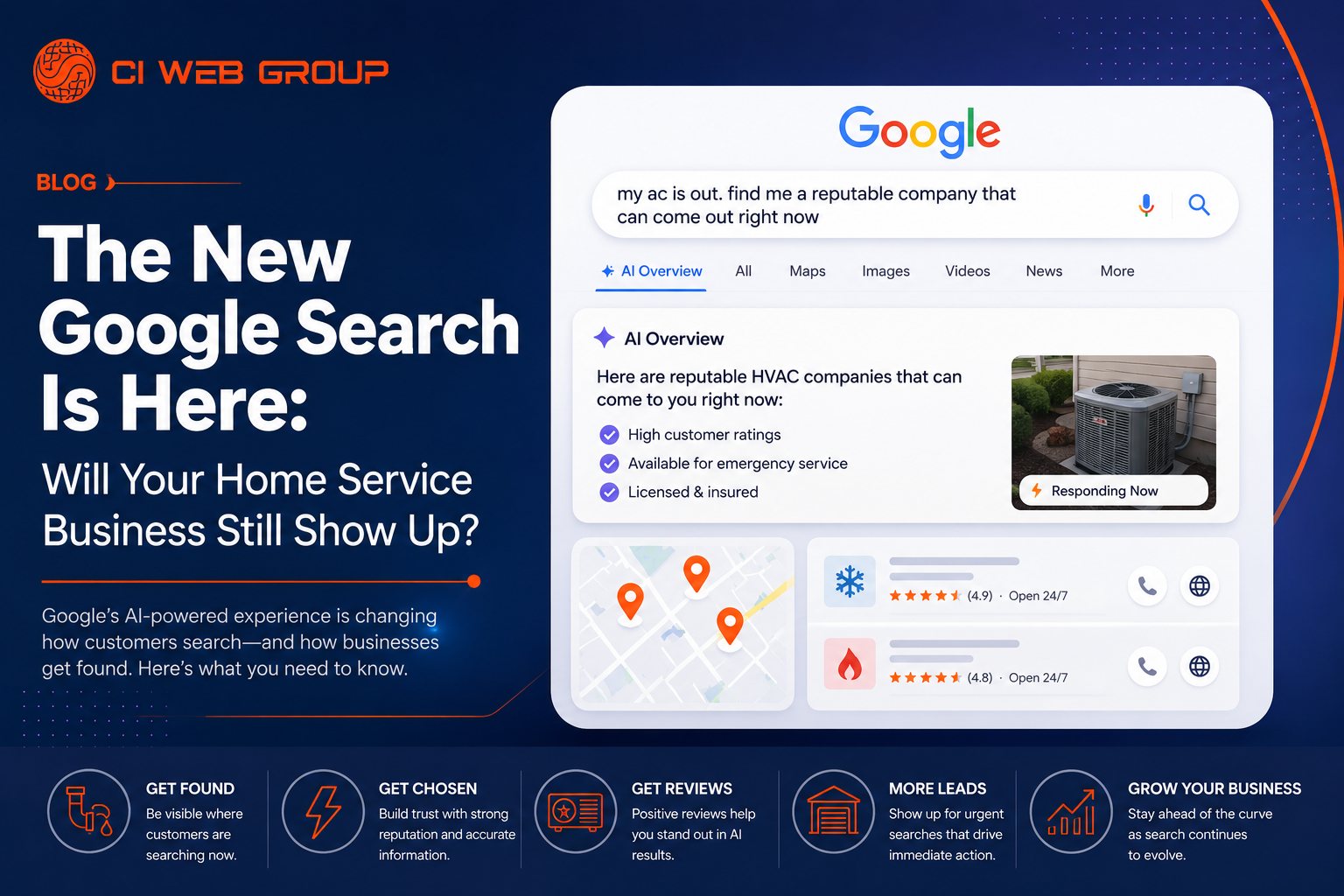
The New Google Search Is Here: Will Your Home Service Business Still Show Up?
Google just changed Search forever. Discover the 3 critical steps home service contractors must take right now to stay visible to AI search agents.
Read more
October 20, 2025
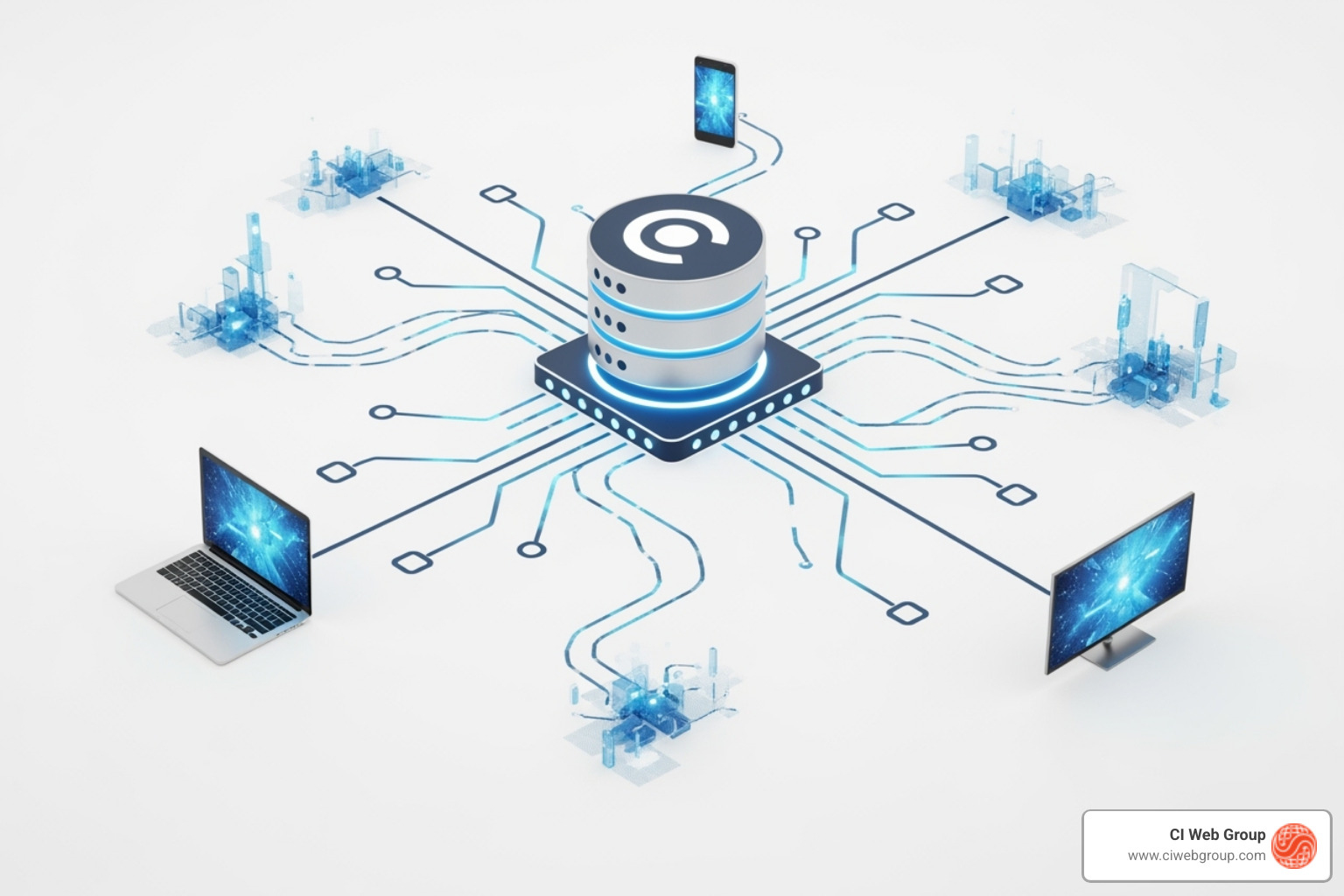
A Headless CMS Website is a modern content management system where the content repository (the “body”) is separated from the presentation layer (the “head”). This allows content to be delivered via APIs to any digital channel—websites, mobile apps, IoT devices, and more. In short, you create content once and publish it everywhere.
For years, traditional systems like WordPress bundled content, editing tools, and the website frontend into one monolithic platform. This worked when websites were the only channel, but today's digital landscape is far more complex. With 89% of companies competing on customer experience, legacy platforms struggle to deliver consistent content across apps, kiosks, and voice assistants. The result is often a poor experience, causing 86% of consumers to stop buying from a business.
A headless CMS solves this by treating content as data. It’s structured, reusable information that flows through APIs to any frontend you choose. This shift enables lightning-fast page speeds, centralized management, and the omnichannel delivery modern customers expect. Businesses using this architecture report 50% faster page loads and 65% shorter launch times.
I'm Jennifer Bagley, CEO of CI Web Group. I've helped countless home service companies break free from monolithic CMS constraints to build high-performance Headless CMS Websites. This isn't just a technical upgrade; it's a strategic move to future-proof your digital presence and compete in a complex digital world.

Think of a recording studio. Musicians record individual tracks—vocals, drums, guitar—in isolation. Those same tracks can then be mixed into an album, a dance single, or a movie soundtrack. The original recordings are pure data, ready to be presented in countless ways.
That's how a Headless CMS Website works. The "head" (the frontend users see) is completely separated from the "body" (the backend where content is managed). Your content repository becomes a single source of truth, storing everything in structured formats. Then, through an API-first approach, that content is delivered to any digital channel imaginable. Create once, publish everywhere.
Traditional CMS platforms use a monolithic architecture, bundling content management, the database, and the website frontend into one coupled system. This website-centric design was fine when businesses only needed one website, but it becomes a straightjacket in today's multi-channel world.
As we explored in our guide to Understanding CMS, traditional platforms often force you to copy and paste content for each new channel. A product description for your website has to be rewritten for your mobile app and then again for an email newsletter.
A Headless CMS Website flips this with a content-first approach. Your content exists as structured data, ready to be pulled into any frontend you build. This moves you from a "one-to-one" relationship (one piece of content, one use) to a scalable "one-to-many" model where a single update populates every channel instantly.
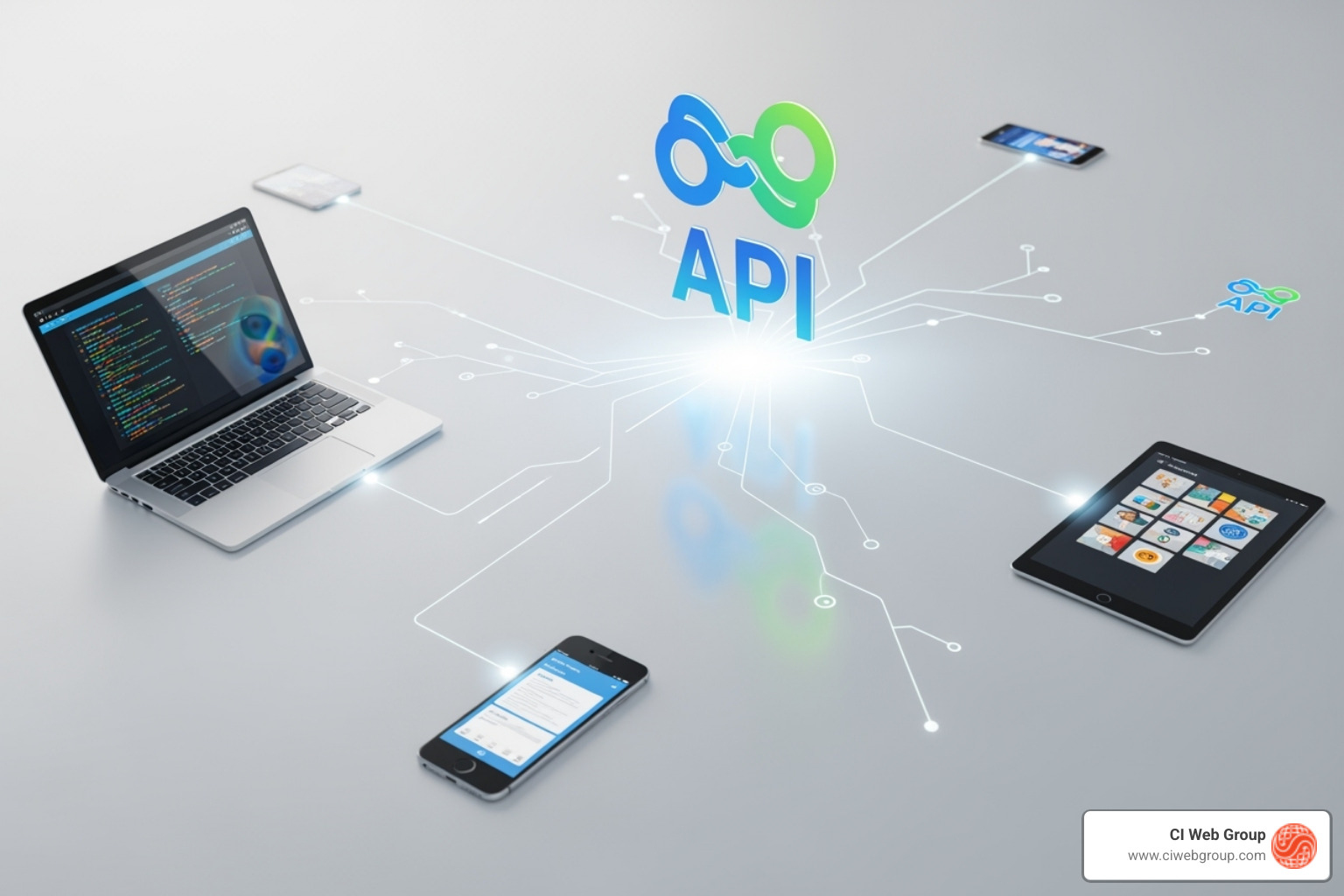
APIs (Application Programming Interfaces) are the delivery mechanism connecting your content repository to your frontends. They allow different software systems to talk to each other. Your website requests content, and the API delivers it in a format like JSON.
Most Headless CMS Websites use REST APIs, which are flexible and widely supported. A newer, more efficient approach is GraphQL, which lets developers request exactly the data they need, reducing data transfer and improving performance. This API-first design makes querying content straightforward and enables seamless integration across your digital ecosystem.
You'll often hear "decoupled" and "headless" used interchangeably, but there's a small distinction.
A decoupled CMS separates the backend and frontend but still includes an optional presentation layer. It's a flexible hybrid.
A pure headless system comes with no frontend included at all—just the content repository and APIs. This offers complete developer freedom to build the presentation layer from scratch.
Both approaches break free from monolithic limitations. The choice depends on your team's technical resources and desired level of control over the final user experience.
When 89% of companies compete on customer experience, the technology powering your digital presence is a critical advantage. A Headless CMS Website creates a win-win: customers get fast, consistent experiences, developers use modern tools, and your content team can focus on creating great content without wrestling with code.
Speed is survival. A Headless CMS Website delivers a speed advantage by pre-building pages through static site generation. This dramatically reduces your time to first byte (TTFB). When combined with CDN delivery, copies of your content are served from locations around the world, ensuring lightning-fast access for every user.
This performance boost naturally leads to Improved Core Web Vitals, the metrics Google uses to measure user experience and influence search rankings. Furthermore, you can scale independently. A traffic surge to your website won't affect your content management system, and backend changes won't disrupt the customer-facing experience. Your digital presence grows with your business, not against it.
A Headless CMS Website significantly reduces your attack surface. In a traditional CMS, the database can be accessed through the public-facing website. Headless architecture separates these layers; your content repository sits behind APIs, isolated from the public internet.
This separation of content and presentation layers eliminates common vulnerabilities found in the plugins and themes of traditional platforms. As we discuss in Why We Recommend Modern CMS Solutions for Our Clients, you're not dependent on a patchwork of third-party extensions. Instead, you have a managed infrastructure with a cleaner, more secure architecture, reducing maintenance headaches and improving stability.
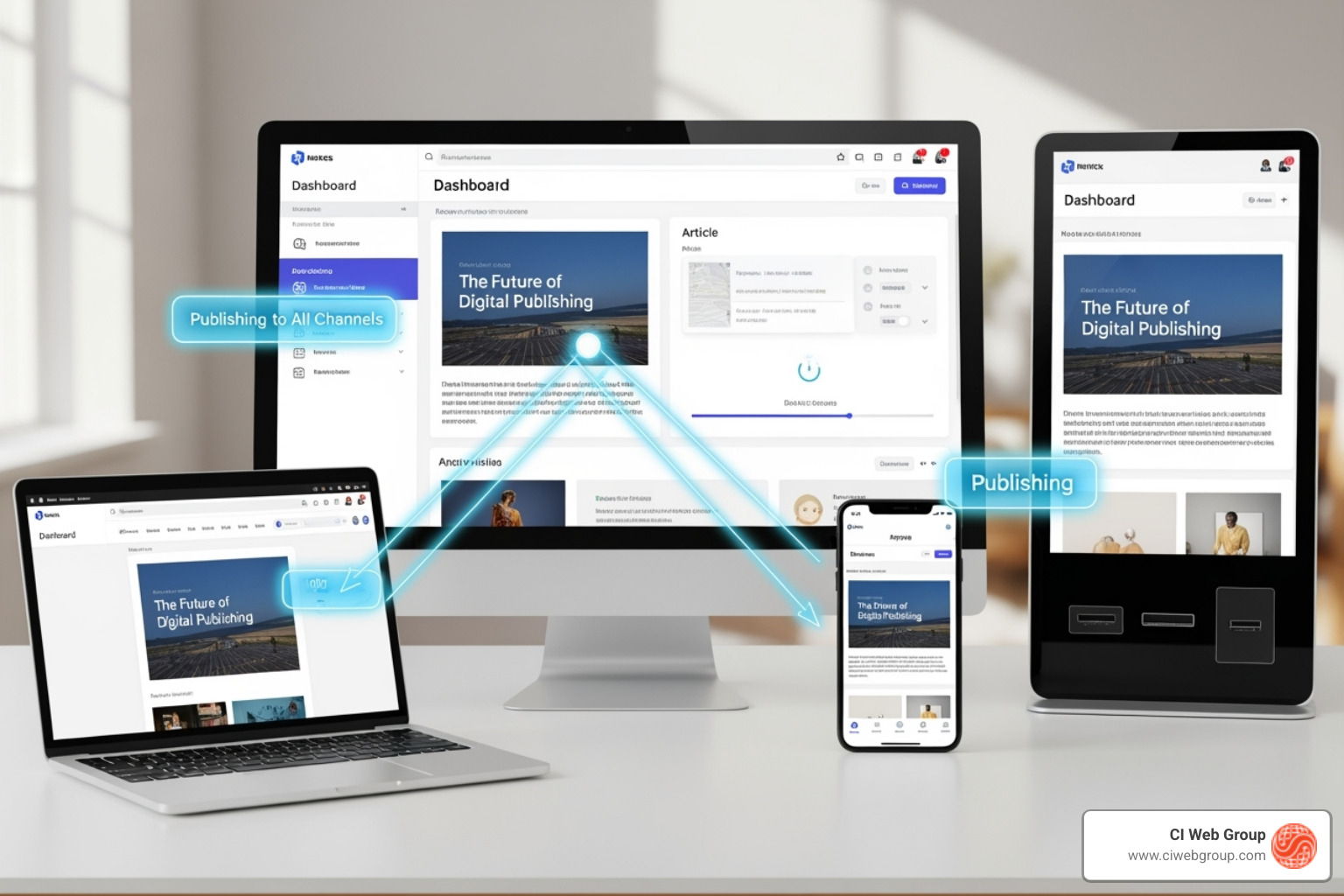
Stop the nightmare of manually copying content for your website, mobile app, and email newsletters. A Headless CMS Website uses the Create Once, Publish Everywhere (COPE) principle. Your content lives in a centralized content hub as structured, reusable data.
This content reusability means a single update flows seamlessly to your website, mobile apps, IoT devices, and digital signage. Restaurant Brands International uses this model to manage content for over 29,000 locations from one CMS. This maintains consistent brand messaging while saving costs and speeding up time-to-market.
For home service companies, this is transformative. Update service offerings or promotions in one place, and the changes cascade across every customer touchpoint automatically. Our Content Marketing strategies leverage this to tailor presentations for each channel while maintaining a single source of truth.
A Headless CMS Website is built on features designed for modern content operations. The foundation is structured content—information broken into modular, reusable components. This content modeling approach transforms content from static pages into flexible data blocks.
Key features like user roles and permissions ensure team members have appropriate access, while localization makes managing multilingual content straightforward from a single hub. The real power comes from integrations with e-commerce systems, CRMs, and marketing tools, allowing you to build a best-in-class, composable tech stack.
| Feature | Traditional CMS | Headless CMS |
|---|---|---|
| Content Model | Often page-centric, limited reusability. | Building blocks for many products, highly reusable. |
| Hosting & Delivery | In-house, often tied to server. | In the cloud, delivered via CDN. |
| Development Mindset | Project-focused, waterfall. | Product-focused, agile. |
| Supported Devices | Limited, primarily websites. | Limitless (websites, apps, IoT, wearables, etc.). |
| Reach (Content) | One-to-one (website only). | One-to-many (omnichannel). |
| Backend System | Monolithic, all-in-one. | Microservice, best-in-class. |
When evaluating platforms, prioritize flexible content modeling to define custom content types that match your business needs. Robust API options, including both REST and GraphQL, give developers the flexibility to use modern frameworks like React or Next.js.
An intuitive editor interface is essential for your content team. Look for clean writing environments and real-time collaboration. Collaboration tools like workflow management, content scheduling, and version history streamline operations and prevent bottlenecks.
Finally, extensibility via plugins or webhooks is crucial for integrating your CMS into your broader tech ecosystem. As we explore in The Future of CMS, this composable approach is key to a cohesive and efficient workflow.
A Headless CMS Website excels where traditional platforms fall short:
Adopting a Headless CMS Website is more than a software change; it's a shift in how your teams collaborate. It requires thoughtful project planning, clear roles for developers and content editors, and a solid migration strategy if moving from an existing system.

Once set up, this model enables efficient parallel workflows: your content team creates content while developers build the frontend, eliminating common bottlenecks.
Selecting the right platform is key. Consider these factors:
A Headless CMS Website improves job satisfaction and productivity for both developers and content editors.
Developers are liberated from rigid templates and outdated languages. They gain the freedom to use modern tech stacks, leading to faster, more enjoyable work. This is why headless platforms consistently lead developer satisfaction surveys.
Content editors get a clean, focused interface for managing content. They can handle metadata, URLs, and SEO elements without risking site layout. This streamlined publishing process empowers marketing teams to work independently, reducing reliance on developers for content updates.
Parallel workflows are transformative, allowing teams to work simultaneously and cutting launch times—some businesses report by as much as 65%.
Be aware of the trade-offs before committing:
For businesses without in-house developers, partnering with an agency is crucial. We specialize in this for home service companies through our Website Design in Seattle, WA services.
Here are answers to common questions about whether a Headless CMS Website is the right choice.
A Headless CMS Website can dramatically improve SEO. The impact is overwhelmingly positive for several reasons:
This flexibility provides an exceptional foundation for a strong SEO strategy.
The cost is nuanced. The initial development phase can be higher because you're building a custom frontend from scratch. However, this upfront investment often leads to a better total cost of ownership.
Long-term efficiency and scalability provide significant value. Centralized content management reduces redundant work, and reusable content saves countless hours of manual reformatting. The reduced maintenance burden of managed platforms also lowers ongoing costs, as you're not constantly paying for security patches and updates.
While a traditional CMS might seem cheaper for a quick launch, a headless architecture delivers better overall value through agility and performance. We help clients steer these cost considerations, similar to how we break down pricing in How Much Does a Webflow Website Cost?.
Yes, absolutely. While the initial setup requires a developer, the day-to-day content management is designed for marketers and content editors.
Modern headless platforms offer intuitive interfaces focused solely on creating and managing content. Non-technical users focus on the content, not the code. This separation empowers marketing teams to manage content independently, publishing blog posts or updating product info without waiting for developer assistance.
Many solutions now include visual editors or preview environments, making the transition from traditional WYSIWYG editors much smoother. A Headless CMS Website allows everyone to focus on what they do best, creating a more efficient workflow for the entire team.
A Headless CMS Website is a fundamental rethinking of how businesses deliver content in a complex digital world. By separating content from presentation, you open up capabilities that traditional systems can't match.
The benefits are clear: lightning-fast performance, robust security, and true omnichannel reach that meets customers on any device. Your developers get to use modern tools, your content creators gain streamlined workflows, and your customers receive the seamless experiences that build trust and drive conversions.
For home service companies, this architecture is especially powerful for managing multi-location content and deploying campaigns instantly across all touchpoints. As new digital channels emerge, your content infrastructure will be ready.
The transition requires planning and the right partner. At CI Web Group, we build high-performance digital experiences that deliver measurable results for home service companies. We understand your unique challenges and build solutions to meet them head-on.
Ready to future-proof your digital presence? Explore our custom web solutions and find how a Headless CMS Website can become your competitive advantage.
Search our Blog
5 min read
The New Google Search Is Here: Will Your Home Service Business Still Show Up?
Google just changed Search forever. Discover the 3 critical steps home service contractors must take right now to stay visible to AI search agents.
Read more
5 min read
The Ultimate Contractor Growth Guide
Master digital marketing for contractors in 2026: SEO, PPC, AI search, GEO & reputation strategies to dominate local rankings and scale your business.
Read more
5 min read
Beyond the Business Card: Creative Marketing Materials for Exterminators
Boost pest control marketing materials with print assets, vehicle wraps, QR codes & ROI strategies for local dominance in 2026.
Read more

5 min read
Don't Sweat the Tech with These Software Solutions
Discover top HVAC software solutions for 2026. Streamline scheduling, dispatching, invoicing & more to boost efficiency & cash flow.
Read more