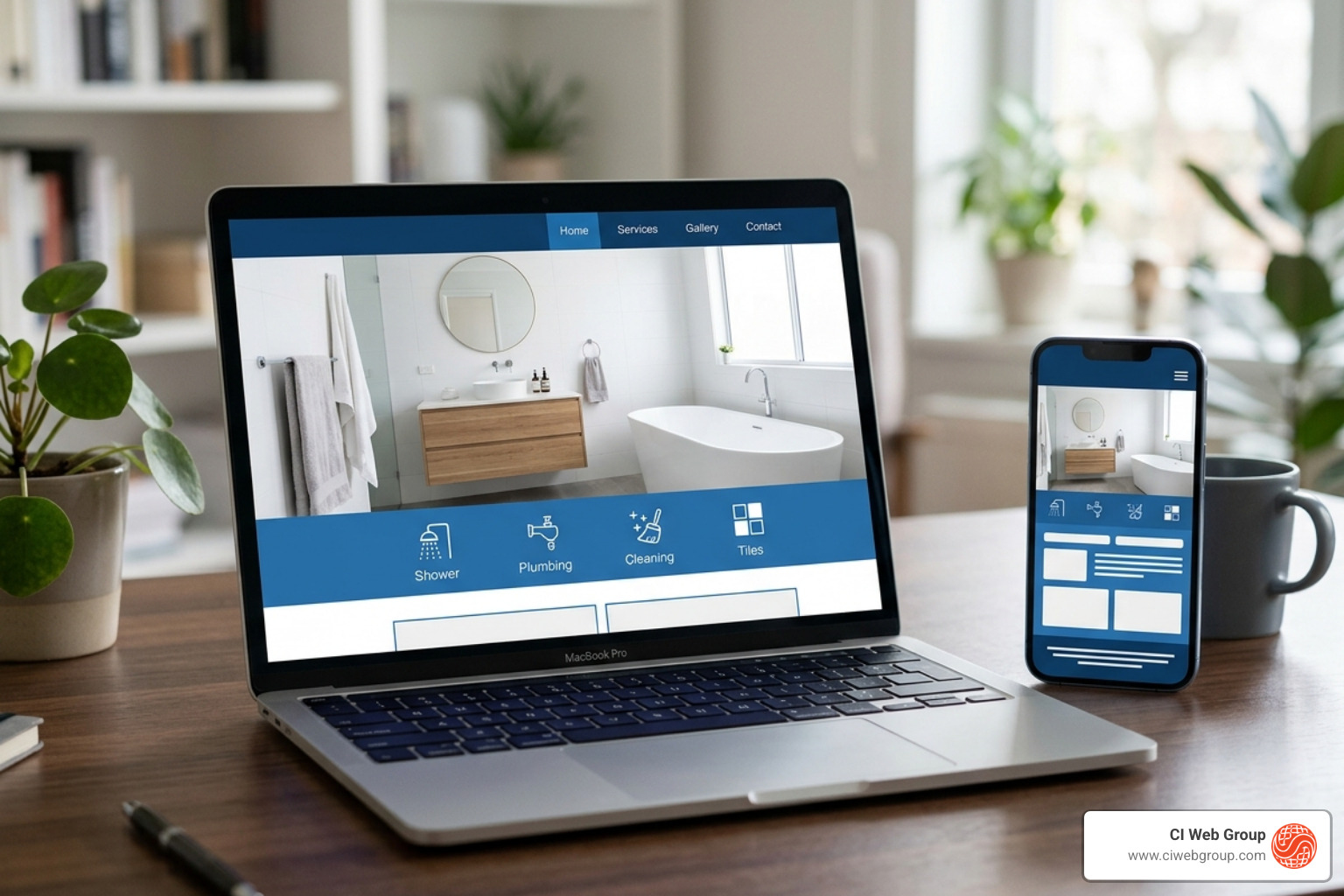
Don’t Miss a Tap: How to Mobile-Optimize Your Content Clusters
Content Cluster Mobile Optimization: Boost 2025
Why Content Cluster Mobile Optimization is Critical for Your Business
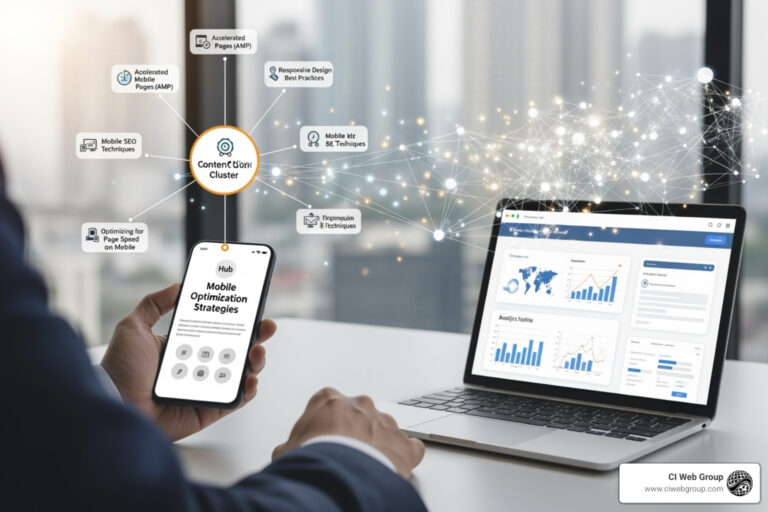
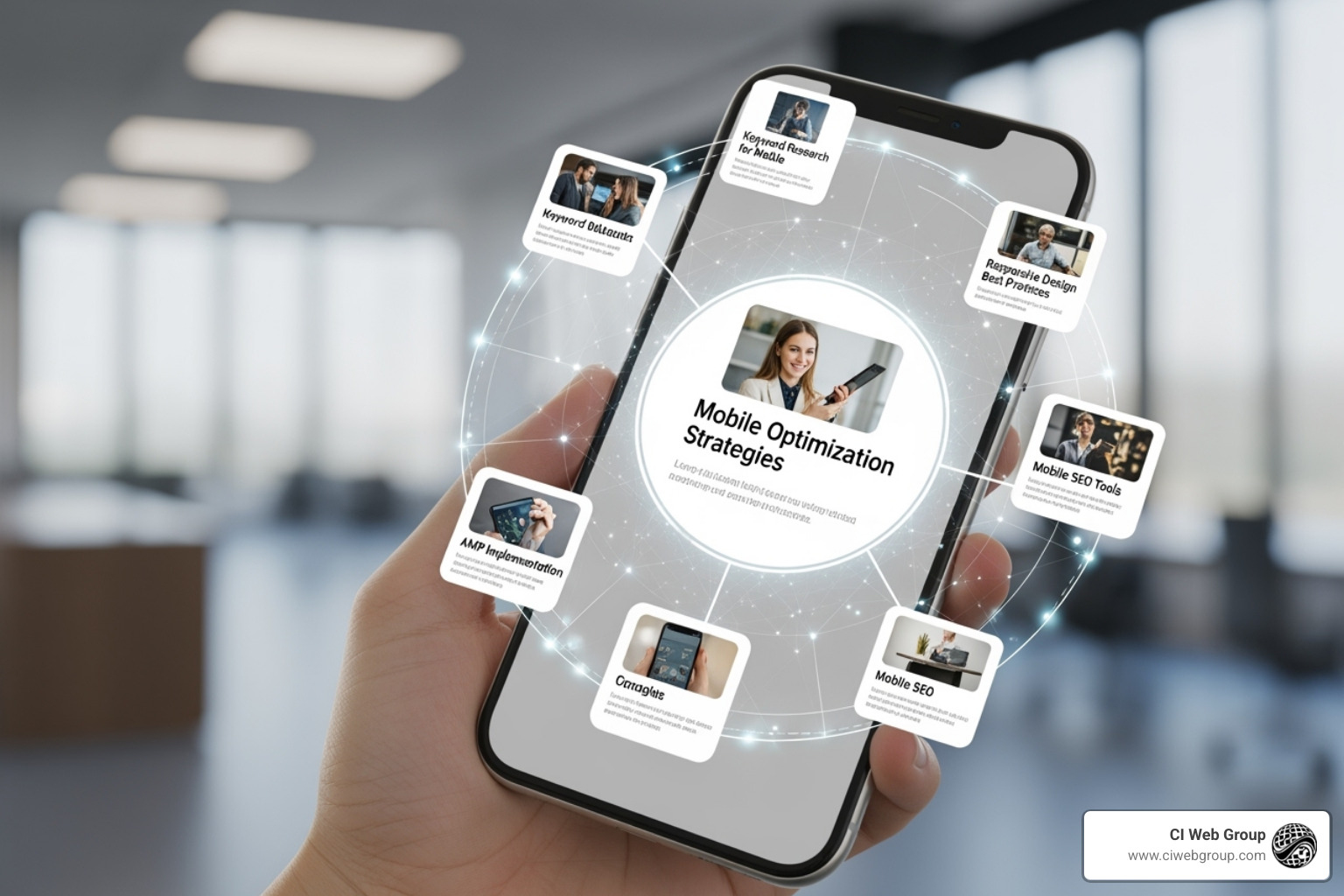
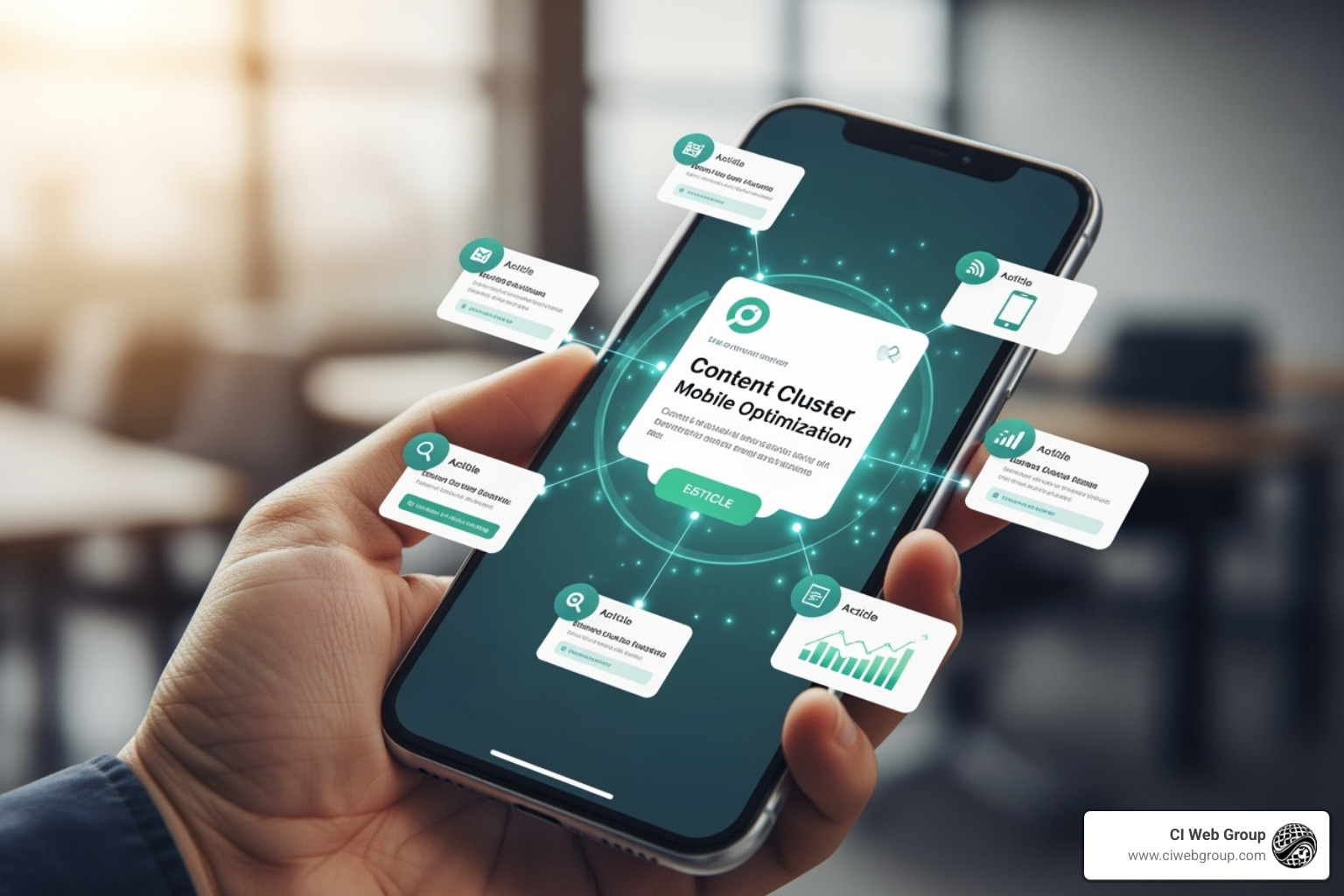
Content cluster mobile optimization means organizing related website pages around central topics and ensuring they perform perfectly on mobile devices. With over half of global web traffic coming from mobile and Google's mobile-first indexing now standard, this strategy is essential for ranking well and converting visitors.
Key requirements include:
Responsive design
Fast loading times (under 3 seconds)
Easy navigation with thumb-friendly tap targets
Scannable content with strategic internal linking
The stakes are high: a one-second delay in mobile load times can reduce conversions by 20%, and 70% of users will abandon a slow mobile site.
Content clusters establish topical authority. When combined with mobile optimization, they create a powerful SEO strategy that improves rankings, user experience, and conversions. The challenge is balancing comprehensive topic coverage with a mobile-friendly presentation, avoiding content that's too dense or overly simplistic.
The Foundation: Why Mobile-First SEO and Content Clusters Are a Perfect Match
Today's SEO success requires a sophisticated approach centered on user experience. This is critical as mobile devices generate over half of all web traffic, and Google's mobile-first indexing is now standard. The combination of content clusters and mobile optimization creates a website structure that satisfies search engines and provides genuine value.
Content cluster mobile optimization is the sweet spot where comprehensive topic coverage meets seamless mobile functionality. It's about establishing expertise while ensuring every visitor has a great experience on any device. This approach aligns with Google's search quality evaluator guidelines, which reward sites for expertise, authoritativeness, and trustworthiness. A well-executed content cluster strategy builds these signals, and mobile optimization delivers them effectively.
What is a Content Cluster?
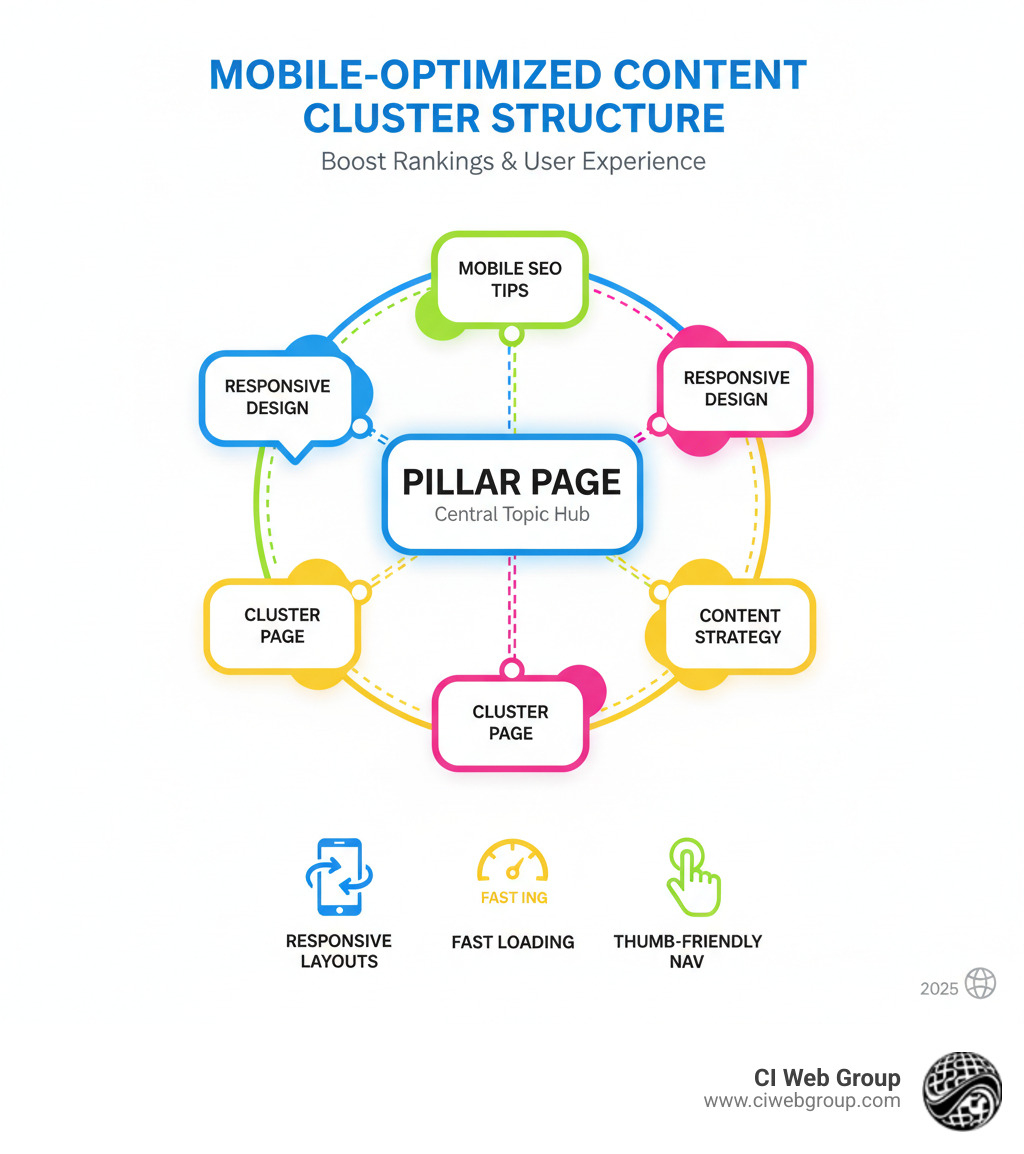
A content cluster organizes related articles into a cohesive structure, establishing your site as an expert on a topic.
Pillar content is the foundation—a comprehensive page covering a broad topic, like "The Complete Guide to Home Heating and Cooling Systems." It's informative and answers common questions.
Cluster content consists of focused articles that dive deep into specific subtopics, such as "Signs Your Furnace Needs Attention." These provide detailed information that the pillar page only introduces.
Strategic internal linking connects them all. Cluster pages link back to the pillar page, signaling its authority, while the pillar links out to cluster articles. This interconnected web improves SEO and creates intuitive navigation for users.
This approach builds expertise and establishes your business as a trusted resource, improving your user experience in SEO by making information easy to find.
How Mobile Optimization Impacts Content Clusters
Content clusters are ineffective if mobile visitors can't access them. With mobile-first indexing, Google primarily uses your site's mobile version for ranking. This means your pillar pages must load quickly on smartphones, articles must be readable on small screens, and internal links must be thumb-friendly.
Mobile user engagement is different; users often need quick answers or immediate solutions. A slow or clunky mobile experience will cause them to leave. Google's Page Experience update emphasizes Core Web Vitals (loading, interactivity, visual stability), which are critical on mobile. A slow pillar page or shifting cluster content will hurt your entire cluster's rankings.
For home service businesses, where customers on their phones need immediate help, a fast, mobile-optimized content cluster is essential to winning their business. The mobile optimizations significance for websites is undeniable.
The Benefits of a Mobile-Optimized Strategy
Combining content clusters with mobile optimization yields transformative results. You'll see improved SEO rankings by giving Google what it wants: authoritative content with an excellent mobile user experience.
Higher conversion rates follow as mobile users can easily move from information to action. Since a one-second mobile loading delay can cut conversions by 20%, speed directly impacts your bottom line.
An improved user experience encourages brand recall and return visits, sending positive signals to search engines. Lower bounce rates occur as visitors engage with your easy-to-consume mobile content instead of leaving a slow or confusing page.
You gain a competitive advantage. Many businesses struggle with mobile optimization, so mastering content cluster mobile optimization positions you ahead of the competition and builds a foundation for long-term success.
Building for the Small Screen: Creating Mobile-Friendly Pillar and Cluster Pages
Effective content cluster mobile optimization requires reimagining the user experience for thumbs, not mouse clicks. If a customer with a broken AC finds your pillar page but it's slow or hard to read on their phone, they're gone.
Responsive design is the backbone, but it's also about page speed, Core Web Vitals, and on-screen presentation. As with Website Loading Speed for Franchises, the principles are universal: every second of delay costs you customers.
Designing Responsive Pillar Pages
Pillar pages must welcome mobile visitors, not overwhelm them with text. This is achieved with fluid grids that adjust to screen size and rotation, and flexible images that scale perfectly without horizontal scrolling.
Media queries apply different styles based on screen size, improving readability and making buttons thumb-friendly. A single-column layout is often best, keeping content simple and focused. Finally, smart navigation like a sticky table of contents for mobile allows users to jump to the section they need without endless scrolling.
Crafting Scannable Cluster Content
Mobile users need quick answers. Your cluster content must be valuable yet easy to scan. Use short paragraphs to make information digestible. Employ bullet points and subheadings as signposts, helping users find what they need quickly.
Use concise language and avoid jargon to communicate clearly. Optimized images and video, when properly compressed, can explain complex topics faster than text alone. A short video on changing an air filter, for example, is highly effective on mobile. This visual approach is especially beneficial for Home Service Website Mobile Optimization.
Prioritizing Page Speed and Performance
Great design is useless if a page loads slowly on mobile. Prioritize performance with these techniques:
Image compression: Optimize high-resolution photos for the web using modern formats like WebP to reduce file size without losing quality.
Browser caching: Enable this so returning visitors' browsers remember site files for faster loading.
Minifying code: Remove unnecessary characters from CSS and JavaScript to cut down file size.
Regularly use Google's Mobile-Friendly Test to assess your performance and catch problems before your customers do.
The Ultimate Guide to Content Cluster Mobile Optimization
Successful content cluster mobile optimization harmonizes every element to create a natural, helpful experience for mobile visitors. It combines strategic content, technical know-how, and an understanding of mobile user behavior—they want fast answers, not slow pages or tiny text.
Internal linking is a critical piece of this puzzle. These links guide visitors and search engines through your expertise, making your site feel like a helpful conversation. As noted in How Can You Improve Your Websites Crawlability and Indexability?, smart internal linking helps search engines understand your content.
Best Practices for Internal Linking on Mobile
Internal links guide both search engines and visitors, and they must be flawless on mobile where screen space is limited.
Descriptive anchor text: Use text like "Learn about seasonal HVAC maintenance" instead of "click here."
Contextual links: Place links where they add value, such as linking from a troubleshooting article to your main pillar page.
Thumb-friendly tap targets: Ensure all links and buttons are large enough to tap easily.
Linking from cluster to pillar: This core practice reinforces the pillar's authority.
Linking between related clusters: Create a web of information by connecting related topics, such as AC repair and energy-saving tips.
Common Mistakes in Content Cluster Mobile Optimization
Avoid these common pitfalls when optimizing content clusters for mobile:
Neglecting pillar pages: Your main topic page needs mobile optimization just as much as your cluster articles.
Ignoring page speed: Mobile users are impatient. Slow pages due to large images or bloated code will drive them away.
Poor mobile user experience: Tiny text, difficult navigation, and intrusive pop-ups frustrate users.
Keyword cannibalization: Ensure each page targets a distinct focus to avoid competing with yourself.
Unresponsive design: Your site must adapt properly to all screen sizes.
Forgetting mobile user intent: Mobile users often need quick, local, or action-oriented answers. Tailor content to meet these needs.
How Technology Can Assist in Your Content Cluster Mobile Optimization
Technology can significantly improve your content cluster mobile optimization strategy. The right tools save time and lead to smarter content decisions.
Keyword research tools reveal the specific questions mobile users are asking.
Content gap analysis tools scan your existing content to find holes and opportunities.
Topic ideation is improved with AI, which can suggest subtopics and angles you might have missed.
AI can help streamline content creation by assisting with research and outlines, freeing you to focus on providing the human touch and expertise that makes content valuable.
Measuring Success and Reaping the Rewards
After implementing content cluster mobile optimization, tracking performance is key. Data validates the effort, showing that more mobile users are finding your content, staying longer, and converting.
For home service companies, this data directly translates to business growth. When we Optimize Home Service Websites Better Engagement, we're not just improving metrics; we're connecting real customers with services and growing our clients' businesses.
Key Metrics to Track
To measure the success of mobile-optimized content clusters, track these key metrics:
Organic mobile traffic: Are more people finding your content on their phones?
Bounce rate on mobile: A high bounce rate can indicate a poor mobile experience, like slow load times or unreadable text.
Time on page for mobile users: This reveals engagement levels with your content.
Mobile conversion rate: The ultimate metric. Are mobile visitors filling out forms, calling, or booking appointments?
Keyword rankings on mobile: These often differ from desktop due to mobile-first indexing.
Mobile click-through rate (CTR): This shows if your titles and descriptions are effective in mobile search results.
Tools for Measuring Performance
Several tools make tracking these metrics straightforward.
Google Search Console: Its mobile usability report highlights specific issues to fix and shows mobile keyword rankings and CTR.
Google Analytics (GA4): Allows for deep dives into mobile user behavior by segmenting traffic by device, helping you understand which content drives conversions.
Heatmap tools like Hotjar: Show where mobile users tap, scroll, and get stuck, providing visual feedback on user experience.
Page speed testing tools like Google PageSpeed Insights and GTmetrix are essential for diagnosing and improving load times on mobile.
Using this data removes the guesswork from optimization, allowing you to focus on strategies that are proven to work.
Frequently Asked Questions about Content Cluster Mobile Optimization
Home service companies often have questions about content cluster mobile optimization. These are important concerns from business owners wanting to ensure their digital marketing investment pays off. Answering them can be the difference between a mediocre mobile strategy and one that drives real business results.
How does mobile user intent differ from desktop?
Mobile users often have a different mindset than desktop users. A desktop user might research "best HVAC systems," while a mobile user is more likely searching "emergency AC repair near me."
Mobile users typically have immediate, location-based, or action-oriented needs. They want quick answers and local solutions now. Therefore, mobile content must be concise and provide fast answers. Include clear calls-to-action like visible click-to-call buttons to address these immediate "micro-moments."
Should I use AMP for my content clusters?
Accelerated Mobile Pages (AMP) can dramatically improve loading speed, a critical factor for mobile SEO. By stripping down code, AMP delivers content almost instantly.
While the speed benefits are significant, AMP requires careful implementation and can come with design limitations and maintenance overhead. AMP may be beneficial for certain content types but isn't a universal solution. The decision requires weighing speed benefits against potential design constraints. For more details, see our guide on AMP Google Accelerated Mobile Pages Implementation.
How many cluster pages should I have for one pillar page?
There is no magic number of cluster pages for one pillar page. The goal is comprehensive coverage of the main topic. A good starting point is 5-10 in-depth cluster articles addressing core subtopics and common customer questions.
From there, you can expand over time by using keyword research and content gap analysis to identify new, relevant subtopics. The key is quality and relevance over quantity. Five helpful, well-optimized cluster pages will always outperform twenty mediocre ones. Focus on content that truly serves your customers.
Conclusion
The mobile revolution has reshaped SEO, making content cluster mobile optimization an absolute necessity for online success. With over half of web traffic coming from mobile and Google using a mobile-first index, treating mobile as an afterthought means losing customers—a one-second delay can cut conversions by 20%.
Combining content clusters with mobile optimization is a win-win: search engines reward your organized expertise, and mobile users get a seamless experience. This approach delivers measurable results: better SEO rankings, higher conversion rates, improved user experience, and lower bounce rates. The key takeaway is that this combined strategy creates a powerful competitive advantage.
For home service companies aiming to dominate their local market, this integrated approach is crucial. CI Web Group specializes in customized digital marketing programs that place content cluster mobile optimization at the core of your strategy.
Get your free SEO & AI Visibility Assessment. We’ll analyze how your website performs across Google and AI search engines — uncovering SEO gaps, speed issues, and LLM visibility opportunities that impact traffic and conversions.
Launch the most advanced AI-powered technology in the home services industry. Faster load times, higher rankings, greater visibility, and more conversions.
What do our customers have to say about their experience with CI Web Group?
THE REAL STORY,
straight FROM OUR CUSTOMERS
I love this company! I have learned so much in a short amount of time. If your not working with them you definitely need to be.
Stacy
MAC Warehouse Air Conditioning & Heating
CI Web Group has been amazing to work with! Our company did a complete overhaul of our website and it turned out amazing. We have seen a substantial increase in calls and web traffic leading to a lot of new work since launching the new site. The whole team has been great to work with especially Vee & Addison. Can't recommend them enough if your looking to take your HVAC & Plumbing company's digital marketing to the next level!
Ben Warner
Warner Services
As someone who's worked with a lot of vendors, I can confidently say CI Web Group stands out in every way. From the moment we started working together on rebuilding the HRI Plumbing website, I was blown away by their professionalism, creativity, and the sheer amount of value they bring to the table. This experience has been nothing short of awesome. The attention to detail, responsiveness, and strategic thinking they’ve shown throughout the process continue to impress me. I'm genuinely excited about what we’ve accomplished so far and what’s still ahead. Thank you to the entire CI Web Group team—you’ve made a huge impact, and I truly appreciate everything you do.
Chris Williams
HRI Plumbing
I've been with CI Web Group for countless years and I can honestly say that they have always had me and my company's best interest first and always. I feel fully heard, and fully taken care of by all their staff. And it doesn't hurt that my business has increased substantially with their expertise.
Jen Coen
LJ Refrigeration
I had the pleasure of working with the CI Web Group team on an HVAC industry conference. The team helped with marketing including email, landing page development and website development. The team members are responsive and dedicated to ensuring that their clients are satisfied with the outcome. They were quick to make any changes I suggested and forthcoming with thoughts and ideas which was very helpful. I would highly recommend them!
Brittany Doering
TACCA
CI Web Group has been such a joy to work with. They have been so thorough and proactive with all the onboarding and project management. For the first time since managing my company's marketing department, I have confidence that everything is being handled in a timely manner without having to micromanage them!
I highly recommend CI Web Group!
Hannah Messer
Springdale Heating & Air
We have used CI Web Group for years for our website design, SEO and SEM services for our HVAC company. Our results and reporting have been stellar. We have worked with a few other online marketing companies and none of them have been as on top of web edits for us. They do a fantastic job communicating updates and new products, offer monthly reporting to ensure they are tracking results, and every single team member is easy to reach and are great communicators. Hoda has been especially wonderful lately as our lead point of contact for a complete website relaunch. A+ service and performance.
Midwest Comfort
Such a professional marketing company with team members that understand the in and outs of marketing and service. Vee is an all-star, Beca helped me create an awesome website. Can not say enough about how great CI Web Group is. I have had 3 marketing companies in the last 10-years and no one has processes like CI Web Group. Such a blessing working with Vee and Beca!!
Ryan Black
Integrity Refrigeration & AC
Great company. They stay on top of the latest industry information to make sure my business stays relevant on Google. Vee and Andrew and the rest of the team always is super attentive to me and is there when I need them. Thank you very much for what you do!
Shane Viggiani
Ampere Electric
Absolutely fantastic group of people!! Everyone we have worked with has been 100% top tier! Very friendly and extremely helpful, regardless of whether you are an SEO novice or Pro. They always make sure you have exactly what you need!
Zack Grossenburg
Mr. Breeze Heating & Cooling
CI Web Group always provides excellent service.
We would recommend them to anyone.
Thank you for taking such good care of Sinclair Air.
Sinclair Air
CI web group was a game changer for Econo West Air we have been amazed on how professional they are. ... Not to mention my inquiries on my web page are off the charts.
Dave Kerr
Econo West Air
CI has built the engine that can- it it just keeps getting better and further ahead.
Stephanie Allen
Air Works Solutions
TemperaturePro San Antonio began working with CI web Group in early 2023 to transition over website services. The process was painless & smooth. The entire team, from onboarding, development, content and support, have all been amazing to work with. Each division is incredibly responsive and keeps me in the loop on all processes. I would highly recommend CI Web Group.
Courtney Meier
TemperaturePro
I’VE BEEN WITH CI WEB FOR YEARS, THE NEW AI ENABLED WEB PLATFORM GETS BETTER RANKINGS
Reviewer name
CI Web Group is hands-down the BEST marketing company we have ever worked with. From day one, they made us feel like family—not just another client. They don’t just provide amazing marketing services; they truly care. Whenever we’re thriving, they cheer us on, and whenever we’re struggling, they recognize it and jump in immediately to help. Their team has built us the best website we’ve ever had, delivered top-notch SEO that actually works, and given us expert advice on all things Google—from Local Service Ads to PPC. Every single thing they do is A+ quality. If you’re looking for a marketing company that delivers results AND genuinely has your back, CI Web Group is the only choice. We can’t recommend them enough!