5 min read
Unlocking Efficiency: A Guide to AI-Powered Web Design Services
Discover AI web design services: top tools, workflows, benefits for home services, and 2026 trends for efficient, SEO-optimized sites.
Read more

May 19, 2026
Plumbing supply refers to the vast range of products needed to install, repair, and maintain plumbing systems. For professionals and DIYers alike, understanding this landscape is key to making informed decisions and selecting the right products for the job.
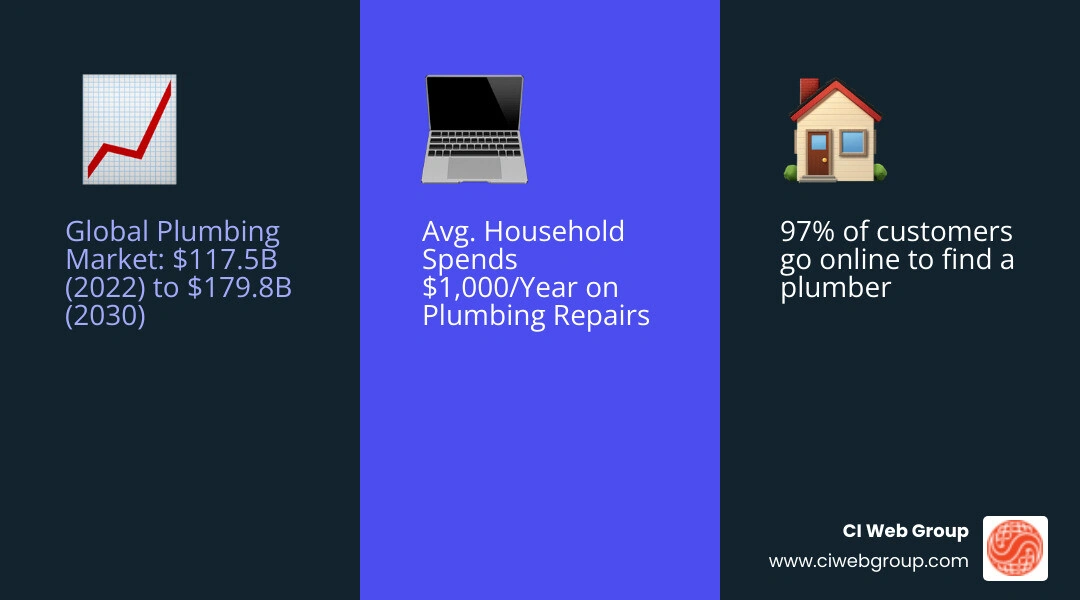
The plumbing supply industry is massive, with a global market projected to reach $179.8 billion by 2030. This growth is driven by new construction and the constant need for repairs and upgrades. The product range is extensive, from pipes, fittings, and fixtures to water heaters, valves, and pumps. Key considerations when choosing supplies include material quality, compatibility, water efficiency, and brand reputation.
For home service companies, a deep understanding of plumbing supply is crucial for positioning your business where customers are searching. Today, that means online. With 97% of people needing a plumber going online, a strong digital presence is no longer optional. It's a vital tool for connecting with customers and growing your business.
Specialized plumbing supply stores offer deep product knowledge and pro-grade inventory that general hardware stores often can't match. However, e-commerce is also a major force, allowing customers to browse extensive catalogs and compare products from anywhere. For plumbing businesses, staying competitive requires a blend of the right supplies, effective marketing, and a powerful online strategy to capture and convert leads.
I'm Jennifer Bagley, CEO of CI Web Group. We help home service companies build digital strategies that drive real results. Understanding the full spectrum of plumbing supply options—and how to connect customers with them—is foundational to success.
Glossary for plumbing supply:
Walking into a plumbing supply store can be overwhelming, with rows of pipes, fittings, and fixtures. However, most products fall into a few core categories, making the selection process much more manageable.
Pipes and tubing are the foundation of any plumbing system, carrying water and removing waste. Common materials include durable copper, flexible PEX, and budget-friendly PVC/CPVC, each suited for different applications and building codes.
Fittings and connectors (elbows, tees, couplings) are the essential components that join pipes, allowing for changes in direction or size.
Fixtures are the parts you interact with daily. This includes faucets in various styles, water-saving toilets, sinks in materials like stainless steel or ceramic, and showers ranging from simple heads to complex systems.
Water heaters provide hot water. Traditional tank models store heated water, while energy-efficient tankless models heat water on demand.
Valves are crucial for controlling water flow and pressure. Shut-off valves isolate sections for repairs, while pressure-reducing valves protect pipes.
Pumps move water where gravity can't. Sump pumps prevent basement flooding, and well pumps draw water from underground sources.
The global plumbing supply market was valued at $117.5 billion in 2022 and is projected to reach $179.8 billion by 2030, reflecting the constant need for repairs and modernization.
Even the best systems need repairs, which often involves identifying a small, failed component. Knowing the common culprits can save you time and frustration.

Faucet cartridges: These regulate flow and temperature in modern faucets. A drip or stiff handle often points to a faulty cartridge.
Toilet flappers: This rubber seal in the tank lifts during a flush. A warped flapper causes a constantly running toilet.
Fill valves: Located in the toilet tank, these control refilling. A slow or non-stop refill cycle may indicate a bad fill valve.
O-rings and gaskets: These small rubber rings create watertight seals in faucets and joints. A degraded O-ring can cause a significant leak.
Supply lines: These flexible hoses connect fixtures to water valves and can wear out or burst over time.
P-traps: The curved pipe under a sink blocks sewer gases. They can leak or corrode, especially older metal ones.
Part identification tip: The best strategy is to bring the old part to a specialized plumbing supply store. If you can't, take clear photos with measurements and look for any brand names or part numbers. The staff at these stores are experts and can help you find the exact replacement.
Selecting the right products and supplier is crucial for any plumbing project. Your choice between a specialized store and a general hardware store will depend on your specific needs.
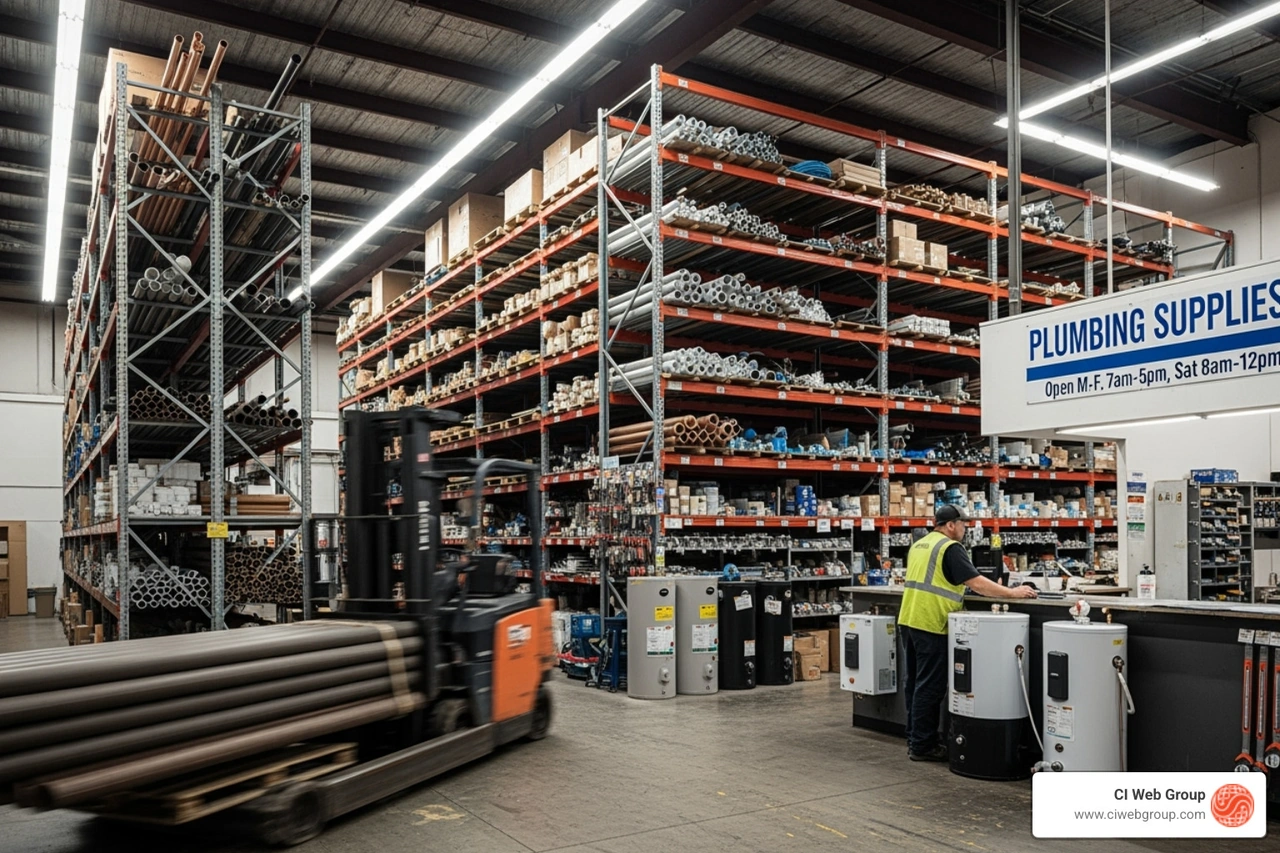
Specialized plumbing supply stores offer deep expertise from staff with years of industry experience, which is invaluable for complex problems. Their product selection is far more extensive, including commercial-grade items and hard-to-find repair parts that general hardware stores don't stock. They typically carry pro-grade products known for durability.
General hardware stores offer convenience and a solid range of common items for basic repairs. They are great for quick fixes but may lack the specialized inventory and expert advice needed for larger or more complex jobs.
| Feature | Specialized Plumbing Supply Store | General Hardware Store |
|---|---|---|
| Selection | Extensive, deep inventory; commercial-grade; hard-to-find parts | Basic to moderate inventory; common residential items |
| Expertise | Highly knowledgeable staff; technical support; project guidance | General knowledge; limited technical support |
| Price & Value | Professional-grade quality; wholesale options for pros | Competitive pricing on common items; consumer-focused |
For complex projects or when you need specific guidance, a specialized plumbing supply store is the best choice. For simple, common repairs, a hardware store is sufficient.
Choosing the right plumbing supply involves more than just fit and appearance. Consider these factors for a successful, long-lasting system:
Understanding these factors helps you make better decisions and build trust with clients. More info about Local Marketing services can help your business connect with customers who value quality advice.
Online plumbing supply stores offer incredible convenience and selection. You can browse thousands of products, compare specs, and read reviews from your home or job site.
When shopping online, rely on detailed product descriptions and customer reviews to understand an item's quality and performance. Always ensure the site uses secure checkout (look for "HTTPS"). Online stores are particularly useful for finding hard-to-find parts, as their large databases and search functions can locate components that local stores don't carry. Many online retailers, like Ferguson plumbing supplies and parts, offer extensive catalogs and may even provide options for local pickup, blending digital convenience with physical access.
The plumbing supply industry is rapidly changing, driven by technology and a growing commitment to sustainability. These innovations are reshaping how we design, use, and maintain plumbing systems.
The days of driving from store to store are fading as the online plumbing supply market has exploded. E-commerce offers convenience, vast selection, and the ability to research and order products 24/7. This is especially useful for sourcing common repair parts quickly.
Physical stores are evolving into digital showrooms, merging online convenience with offline experience. These spaces allow customers to see and touch fixtures before buying. Virtual design consultations are also becoming common, offering expert guidance remotely. This hybrid model, exemplified by platforms like this digital showroom example, is reshaping customer expectations. To connect with this new type of customer, businesses need compelling online content, where Content Marketing services can make a significant impact.
The industry is experiencing a technological revolution, making homes smarter and more efficient. The global smart plumbing market is projected to grow at 15% from 2023 to 2028, driven by real value for homeowners.
Smart plumbing devices: Leak detectors are a popular innovation, sending alerts to your phone and even automatically shutting off the water supply to prevent damage. Smart faucets offer touchless operation and precise temperature control, while smart water heaters allow for remote adjustments and energy monitoring.
Water conservation: Driven by environmental awareness and rising utility costs, water-efficient products are now standard. Low-flow fixtures, such as toilets using 1.28 gallons per flush or less, save significant amounts of water without sacrificing performance. Tankless water heaters are another key trend, heating water on demand to eliminate standby energy loss and provide an endless supply of hot water. For maximum conservation, greywater recycling systems repurpose water from sinks and showers for irrigation or toilet flushing.
These trends reflect a shift toward plumbing solutions that are not only sustainable but also offer better performance, cost savings, and greater user control.
For professionals, the right plumbing supply partner is crucial for success. This involves understanding commercial needs and leveraging supplier relationships and technology for growth.
Commercial plumbing demands are far more rigorous than residential ones. Professionals must account for these key differences:
Wholesale accounts are fundamental to a plumbing business's profitability and efficiency. Key benefits include:
Leveraging these pro services helps plumbing businesses operate more efficiently. To learn more about optimizing your operations, explore how you can Grow Your Plumbing Business.
Technology is essential for streamlining operations and generating leads. At CI Web Group, we know that integrating technology is a necessity for growth.
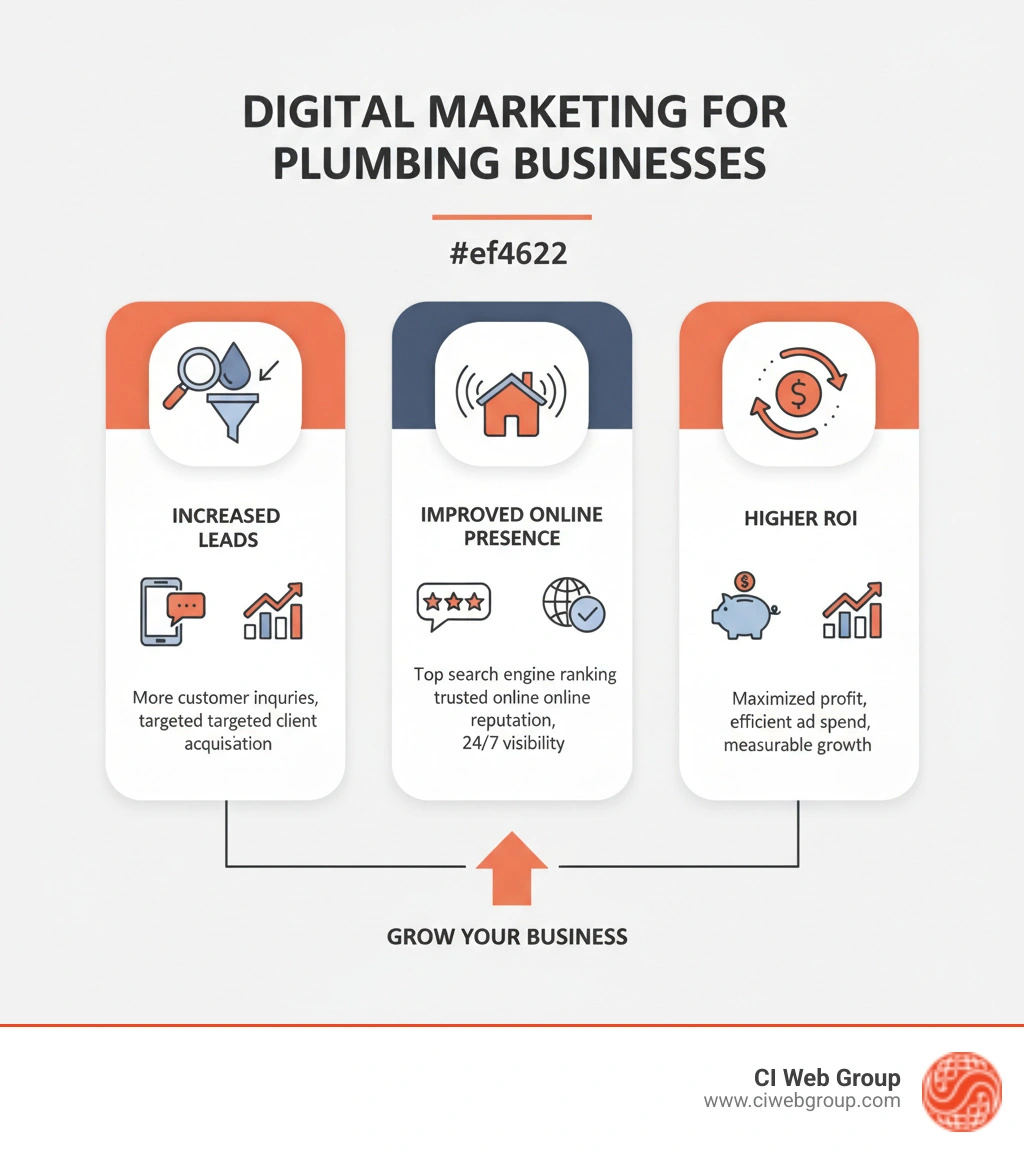
By embracing technology, plumbing businesses can expand their reach and customer base significantly.
Extreme temperatures can damage your plumbing supply. To protect against freezing, insulate exposed pipes in basements, attics, and crawl spaces using foam sleeves. Seal air leaks around pipes with caulk or spray foam to block cold drafts.
During severe cold snaps, let faucets drip slightly to keep water moving, as moving water is less likely to freeze. Before winter, drain outdoor lines by disconnecting hoses and shutting off exterior faucets from inside. For vacant properties, a full winterization (shutting off water, draining pipes, adding antifreeze to drains) is essential.
In extreme heat, ensure outdoor plumbing is not exposed to direct sunlight, which can degrade materials. Also, check that your water heater has proper ventilation to prevent overheating.
Return and warranty policies for plumbing supply vary significantly between retailers. General hardware stores often have more flexible return policies, while specialized suppliers may have stricter rules and charge restocking fees, especially for special orders. Always keep your receipts, as they are required for returns and warranty claims.
Most stores require returned items to be in unused condition with original packaging. Once a part is installed, it's typically not returnable unless it's defective. It's important to distinguish between a store's return policy (usually 30-90 days for a refund/exchange) and a manufacturer's warranty, which covers defects for a longer period and may require you to contact the manufacturer directly. Review all policies before you buy to avoid future headaches.
Finding an elusive plumbing supply part can be frustrating, but a systematic approach usually works.
With persistence, even the most obscure parts can usually be found.
Navigating plumbing supply is manageable with the right knowledge. From basic pipes and fittings to advanced smart fixtures and eco-friendly solutions, understanding your options is key to a successful project. For professionals, a reliable supply chain is vital, but a strong digital presence is equally critical for growth.
With 97% of potential customers searching online for plumbers, your website is your digital showroom. It must be visible, trustworthy, and designed to convert visitors into customers. That's where we come in.
At CI Web Group, we build powerful online platforms for home service companies. We understand the plumbing industry and create customized, transparent digital marketing strategies that deliver real results—with no contracts. We help you get found, build trust, and grow your business.
Ready to transform your digital presence? Learn how to make a website for a plumbing business that works as hard as you do.
Search our Blog
5 min read
Unlocking Efficiency: A Guide to AI-Powered Web Design Services
Discover AI web design services: top tools, workflows, benefits for home services, and 2026 trends for efficient, SEO-optimized sites.
Read more
5 min read
Your Go-To Resource for All Things Plumbing Store Related
Discover everything about plumbing supply. Find products, repair parts, and pro tips for your next project or business growth. Your ultimate guide.
Read more

5 min read
Nail Down New Business: Proven Strategies for Roofing Marketing Leads
Discover proven strategies to generate high-quality roofing marketing leads in 2026. Master SEO, AI, PPC & more for max ROI!
Read more

5 min read
Don't Get Ripped Off: Finding Top Roofing Logo Design Services
Don't get ripped off! Discover top roofing company logo design services to build a trusted, professional brand.
Read more