5 min read
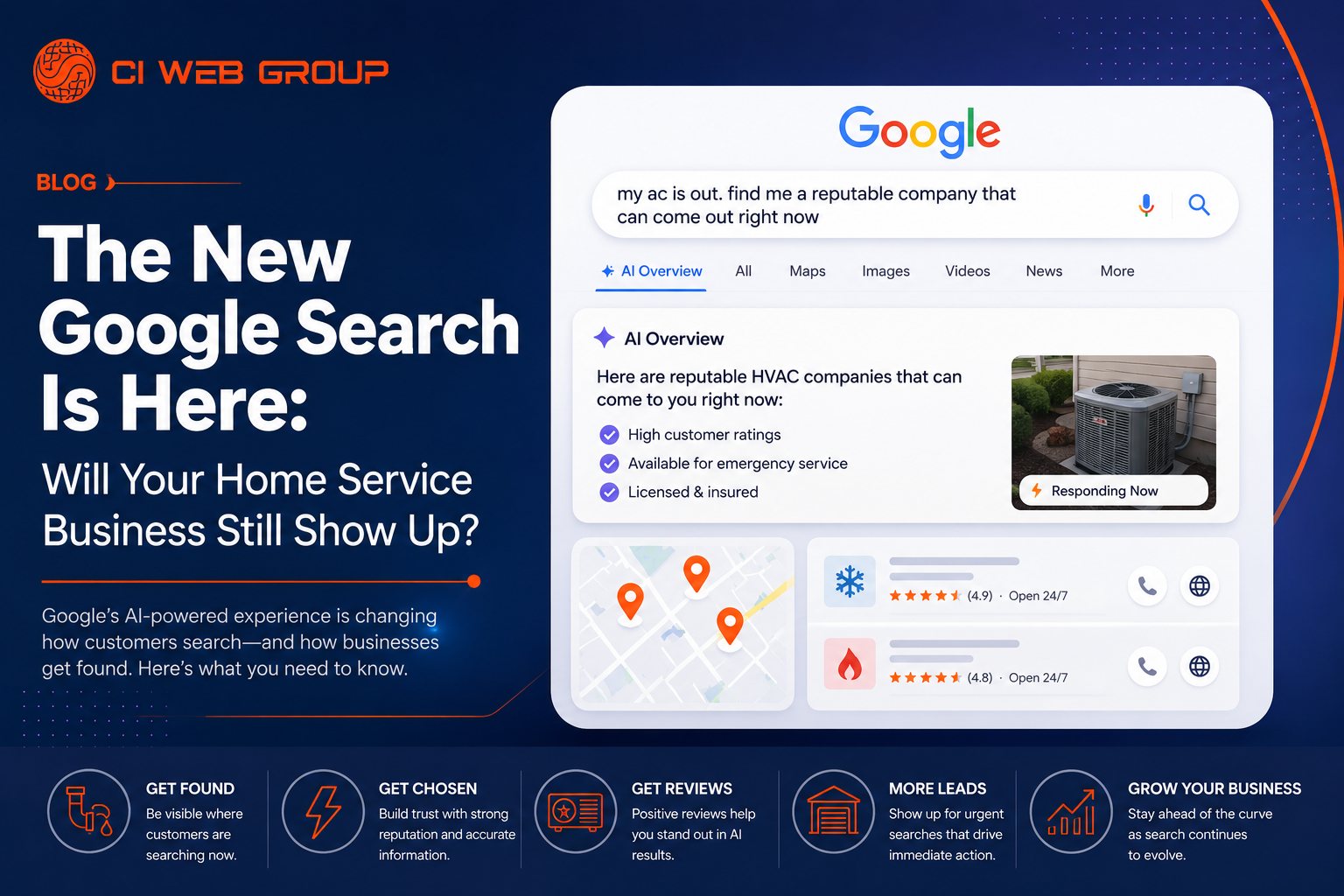
The New Google Search Is Here: Will Your Home Service Business Still Show Up?
Google just changed Search forever. Discover the 3 critical steps home service contractors must take right now to stay visible to AI search agents.
Read more
January 7, 2026
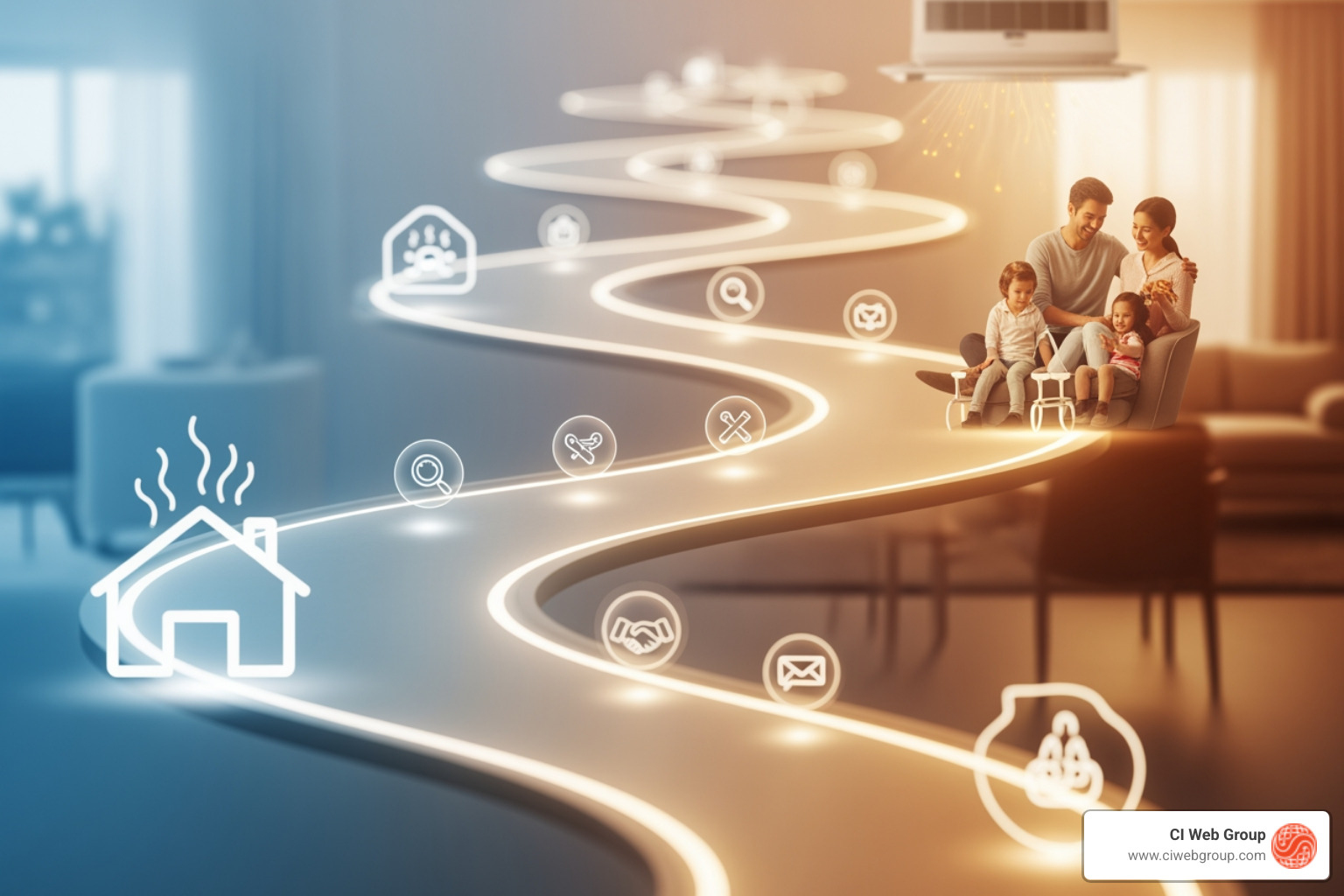
The HVAC customer journey maps every interaction a homeowner has with your business—from the moment they realize their AC isn't cooling to the day they refer you to their neighbor. Here's what it includes:
Understanding this journey helps you show up at the right moment, build trust faster, and turn one-time callers into loyal advocates who fuel your growth.
In the HVAC industry, most customer interactions start with stress. A homeowner's furnace dies on the coldest night of the year. Their AC quits during a summer heatwave. They're not casually shopping—they're in crisis mode, searching online, asking friends, and making fast decisions about who to trust with their comfort and their money. According to research, 97% of people learn about local companies online, and 54% of HVAC shoppers say customer reviews are the most important factor when choosing a provider. That means your online presence, your reputation, and your responsiveness at every stage directly determine whether you win or lose the job.
Yet many HVAC companies focus only on getting the phone to ring. They invest in ads and SEO but lose leads because their website loads slowly, their CSRs don't answer promptly, or they fail to follow up after the job is done. The result? Missed revenue, lost referrals, and customers who forget your name by the time they need service again. The companies that thrive today are the ones that map the entire customer journey, identify friction points, and optimize every touchpoint—from the first Google search to the post-service thank-you email.
I'm Jennifer Bagley, and over my career working with hundreds of HVAC contractors, I've seen how mastering the HVAC customer journey transforms businesses from reactive service providers into proactive, customer-centric brands that dominate their local markets. My mission is to help you turn every stage of this journey into a competitive advantage.
If you want a broader definition of how journeys are mapped across industries, you can also review this high-level customer journey overview, which explains how experience, expectations, and touchpoints work together.
Mapping the journey from the customer's perspective is the first step to optimizing it. Each stage is driven by a different question and requires a unique approach from your business.
The HVAC customer journey often kicks off with a jolt: a sudden realization that something is amiss with their home comfort system. This could be triggered by extreme temperatures inside their home, strange noises coming from the unit, or a shocking spike in their energy bills. For many, it's a breakdown during a peak season—a non-negotiable emergency where comfort, and sometimes even safety, is at stake. They might ask themselves, "Why is my house so hot?" or "Is that burning smell normal?"
At this stage, homeowners are just identifying a problem and are likely feeling anxious or frustrated. Their primary need is to understand what's happening and how to fix it. This leads to initial searches, often through online searches, referrals, or advertisements. They might turn to search engines like Google, Bing, and Yahoo (which 26% of home service shoppers do) or ask friends and family for recommendations (a path 20% of shoppers take). For us, this means being visible and providing helpful, easy-to-understand information.
Once a homeowner has identified an HVAC problem, they move into the Consideration stage. Here, the question shifts from "What's wrong?" to "Who can I trust to make it right?" They're actively researching local companies, comparing services, and seeking expertise. This is where your online reputation truly shines, or, well, doesn't.
Customers in this stage are looking for reassurance and validation. They want to know if you're reliable, experienced, and capable of solving their specific problem. A whopping 54% of HVAC and plumbing shoppers cite customer ratings and reviews as the most important criteria when evaluating providers. They're reading testimonials, checking star ratings, and looking for signs of trustworthiness. They also value transparency and clear communication. If your website is slow to load (53% of mobile users abandon sites that take longer than three seconds), or lacks crucial information, you're losing them before they even consider calling.
This stage is about building authority and credibility. We need to be where they're looking, with compelling evidence that we're the best choice.
This is the moment of truth. After all the research and comparison, the homeowner is ready to make contact and schedule service. But here's an interesting twist: more than one-third of buyers said they only called a single provider, while another one-third called just two. This means if you've done your job well in the Awareness and Consideration stages, you might be the only call they make!
When they pick up the phone or fill out that online form, they're assessing your responsiveness, professionalism, and ability to instill confidence. Will someone answer promptly? Will their questions be met with empathy and clear answers? The scheduling process itself becomes a critical touchpoint. If it's cumbersome, confusing, or takes too long, they might revert to the Consideration stage and call a competitor.
Our goal here is to make the process as frictionless as possible, confirming their decision to choose us was the right one. This includes providing clear communication about what to expect, from technician arrival times to service procedures.
The HVAC customer journey doesn't end when the technician leaves. In fact, the Post-Purchase stage is arguably the most important for long-term success. It's where a satisfied customer transforms into a loyal advocate. This stage is all about the service experience itself, the technician's interaction, and the quality of the workmanship. Was the problem truly fixed? Was the technician friendly, knowledgeable, and respectful of their home?
After the service, we have a golden opportunity to solidify that positive experience. This is the time for automated follow-up sequences, satisfaction surveys, and making it easy for them to leave a review. Only 36% of buyers who used an HVAC or plumbing provider left a review, so encouraging this is crucial. Happy customers are more likely to provide word-of-mouth referrals, which are invaluable. They're also prime candidates for signing up for maintenance plans, ensuring repeat business and a stable revenue stream. By excelling in this stage, we turn customers into our biggest fans and most effective marketing team.
Proactively addressing customer needs at each stage is what separates industry leaders from the competition. It requires a blend of digital marketing, transparent processes, and a commitment to service.
In the Awareness stage, homeowners are just realizing they have an HVAC problem and are beginning their search for solutions. Our primary goal is to be visible and helpful. This means a robust online presence is non-negotiable.
Once homeowners know they have a problem, they start weighing their options. This is where we build trust and differentiate ourselves.
This is where we convert interested leads into booked jobs. Responsiveness, clarity, and a solid sales process are key.
The Post-Purchase stage is about turning a one-time service call into a long-term relationship. This is where we build true customer loyalty and advocacy.
Your team and your tools are the engine that drives a smooth HVAC customer journey. Investing in both is critical for creating a seamless and memorable experience.
No matter how advanced our technology, the human element remains irreplaceable.
Technology empowers us to deliver personalized, efficient, and consistent experiences across the entire HVAC customer journey.
If you can't measure it, you can't improve it. Tracking key performance indicators (KPIs) provides the data you need to refine your processes and maximize your return on investment.
To truly understand and improve the HVAC customer journey, we need to measure its effectiveness. Here are some critical KPIs:
Measuring these KPIs allows us to:
It helps us meet customer needs at each step, build trust, and stand out from competitors, leading to more booked jobs and loyal customers. It shifts our focus from simple lead generation to creating long-term customer value and advocacy. In an industry where trust and reliability are paramount, a well-mapped HVAC customer journey allows us to anticipate pain points and proactively deliver solutions, fostering relationships that last.
While factors like speed and availability are important, research shows that for 54% of home service shoppers, customer ratings and reviews are the most important criteria. This highlights the critical need for a strong online reputation. Customers rely on the experiences of others, making positive feedback and testimonials an invaluable asset in our marketing strategy.
Focus on technician professionalism, as they are the face of your company. Implement a simple follow-up sequence (e.g., a thank-you message, a satisfaction survey, and a maintenance reminder). Finally, make it easy for happy customers to leave reviews and refer us to others. This continuous engagement after the service ensures that a single transaction blossoms into a lasting relationship, turning satisfied clients into powerful brand advocates.
Mapping and mastering the HVAC customer journey is no longer optional—it's a core business strategy. By understanding the distinct needs of homeowners from the initial awareness of a problem to their post-service reflections, we can build a system that consistently delivers exceptional experiences. This deliberate, customer-focused approach reduces friction, builds unshakable trust, and transforms satisfied clients into a powerful marketing force of loyal advocates. A data-driven digital marketing partner like CI Web Group can provide the tools and expertise to analyze and optimize every touchpoint of this critical journey.
Learn how to dominate your local market with our HVAC marketing services
Search our Blog
5 min read
The New Google Search Is Here: Will Your Home Service Business Still Show Up?
Google just changed Search forever. Discover the 3 critical steps home service contractors must take right now to stay visible to AI search agents.
Read more
5 min read
The Ultimate Contractor Growth Guide
Master digital marketing for contractors in 2026: SEO, PPC, AI search, GEO & reputation strategies to dominate local rankings and scale your business.
Read more

5 min read
Beyond the Business Card: Creative Marketing Materials for Exterminators
Boost pest control marketing materials with print assets, vehicle wraps, QR codes & ROI strategies for local dominance in 2026.
Read more

5 min read
Don't Sweat the Tech with These Software Solutions
Discover top HVAC software solutions for 2026. Streamline scheduling, dispatching, invoicing & more to boost efficiency & cash flow.
Read more