
5 min read
Building Your Commercial Empire: Marketing for Roofing Businesses
Master digital marketing for roofing contractors commercial: SEO, PPC, AI trends & leads to dominate B2B in 2026.
Read more
October 13, 2025
Funnel analytics and measurement is the process of tracking and analyzing how prospects move through each stage of your marketing funnel - from initial awareness to final conversion. Here's what you need to measure for marketing funnel success:
Essential Funnel Metrics to Track:
Your marketing funnel is like a bucket with holes in it. Without proper measurement, you're pouring money into the top while customers leak out at every stage - and you have no idea where or why.
The numbers tell a stark story: 68% of B2B companies haven't even identified their sales funnel, according to recent research. Meanwhile, businesses that do measure their funnels see an average 26% increase in returns on advertising spend over two years.
Think about it this way - if you increase your conversion rate by just 10%, a business with 50,000 monthly visitors and an $82 average order value could generate nearly $80,000 in additional revenue per year. That's the difference between guessing and measuring.
But here's what most home service companies get wrong: they track vanity metrics like website visits instead of what actually drives revenue. They celebrate 1,000 new visitors while ignoring that only 2 became customers.
Real funnel measurement shows you exactly where prospects drop off, which marketing channels deliver quality leads, and how to turn more clicks into customers who actually pay you.
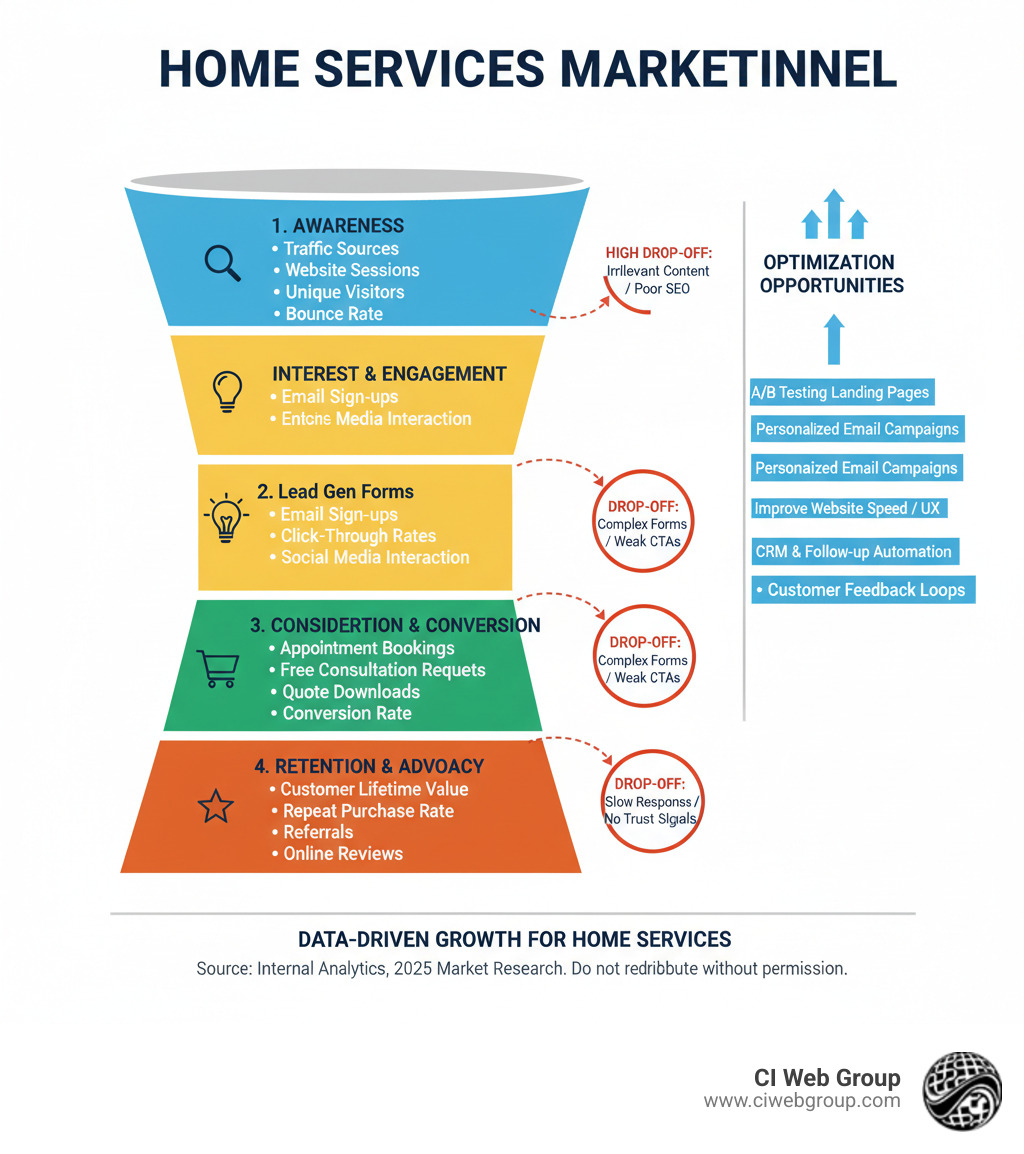
Think of funnel analytics and measurement as your business's GPS. Without it, you're running marketing campaigns without knowing where customers are going—or where they're getting lost.
Funnel analytics and measurement is the process of tracking a potential customer's journey, from a 2 AM search for an "emergency plumber" to becoming a loyal client. Most businesses fly blind, seeing website traffic but not understanding why only a fraction of visitors call for service. It's like pouring water into a leaky bucket.
By embracing funnel analytics and measurement, you commit to data-driven decisions over expensive guesswork. You can pinpoint the exact bottlenecks where prospects drop off. The impact is measurable: improving your conversion rate by just 10% could generate nearly $80,000 in additional annual revenue. Funnel analysis reveals not just what is happening, but the why behind customer actions, helping you turn more visitors into paying customers. With the right system, The Customer Journey becomes crystal clear.
Every click tells a story. Funnel analytics and measurement helps you read it. If a homeowner visits your contact page but doesn't submit the form, there's a reason—perhaps the form is too long or asks for too much information.
User behavior analysis is your secret weapon for uncovering the motivations and obstacles behind these actions. By spotting patterns—like mobile users dropping off at a different stage than desktop users—you can create smoother customer journeys. This insight allows you to remove friction points before they cost you customers, making Data-Driven Decision Making second nature.
When funnel analytics and measurement turns data into growth, the results are tangible. Companies that effectively measure their funnels see an average 26% increase in returns on advertising spend over two years.
Your marketing funnel is like a plumbing system: you want customers to flow smoothly from top to bottom. Funnel analytics and measurement involves breaking this journey into stages to find and fix leaks. The most common framework includes Top-of-Funnel (TOFU), Middle-of-Funnel (MOFU), and Bottom-of-Funnel (BOFU).
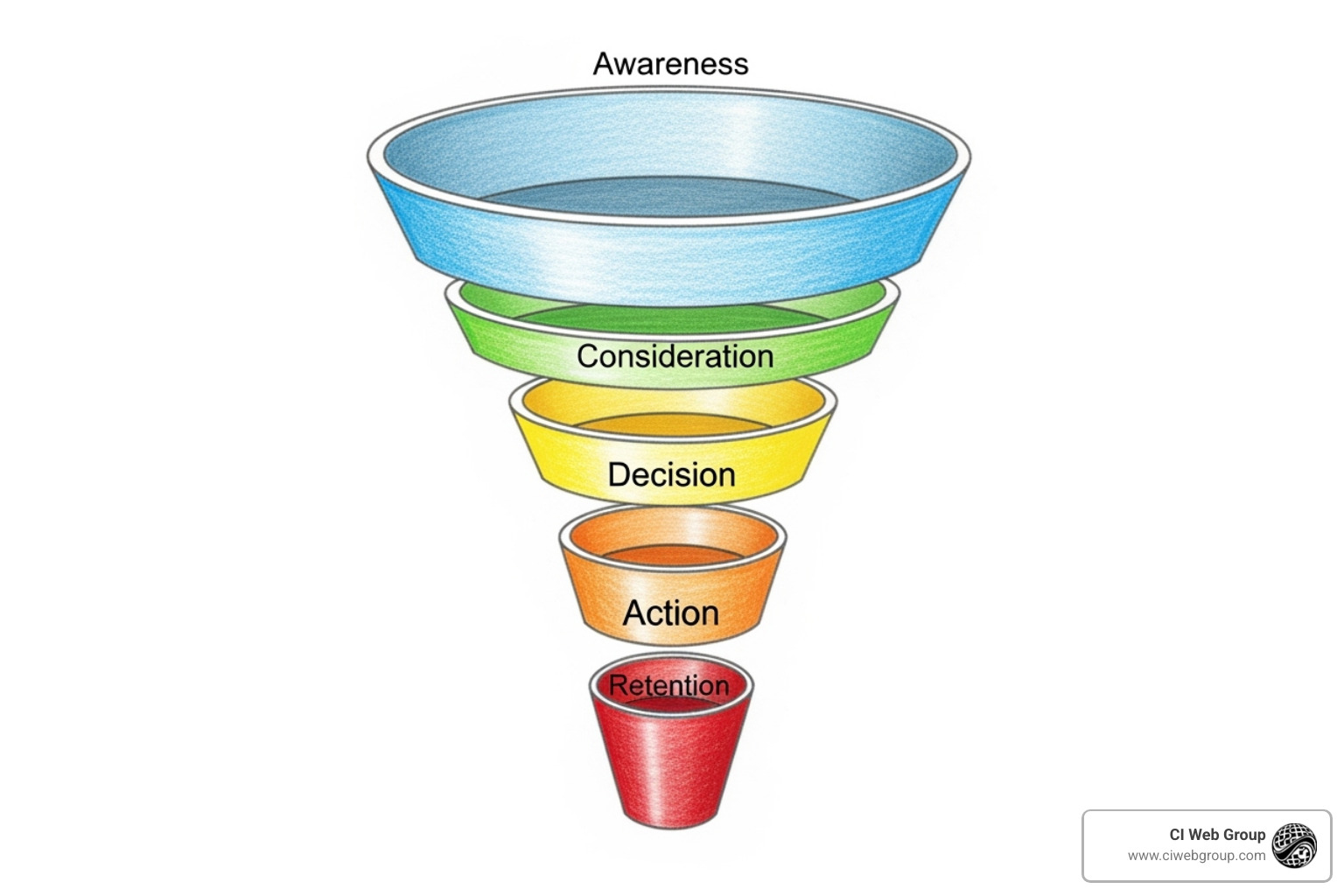
Each stage serves a different purpose, and tracking the right Key Performance Indicators (KPIs) tells you where your funnel is working and where it's springing leaks.
This is the awareness stage, where a homeowner with a problem starts looking for a solution. Your goal is to be found. Key metrics tell you how well you're casting your net:
Essential KPIs for Home Service Digital Marketing offers more detail on these early-stage metrics.
Prospects now know you and are comparing options. Your goal is to nurture the relationship and demonstrate your value. Funnel analytics and measurement here focuses on engagement.
Tracking conversion rates between stages is key to spotting issues early.
This is the decision stage, where prospects are ready to hire. Your goal is to close the deal efficiently. Key metrics include:
These metrics directly impact profitability and separate a campaign that looks good from one that actually grows your business.
Effective funnel analytics and measurement is a systematic process of asking the right questions to find and fix leaks in your customer journey. It's about uncovering opportunities to guide more prospects toward becoming paying customers.
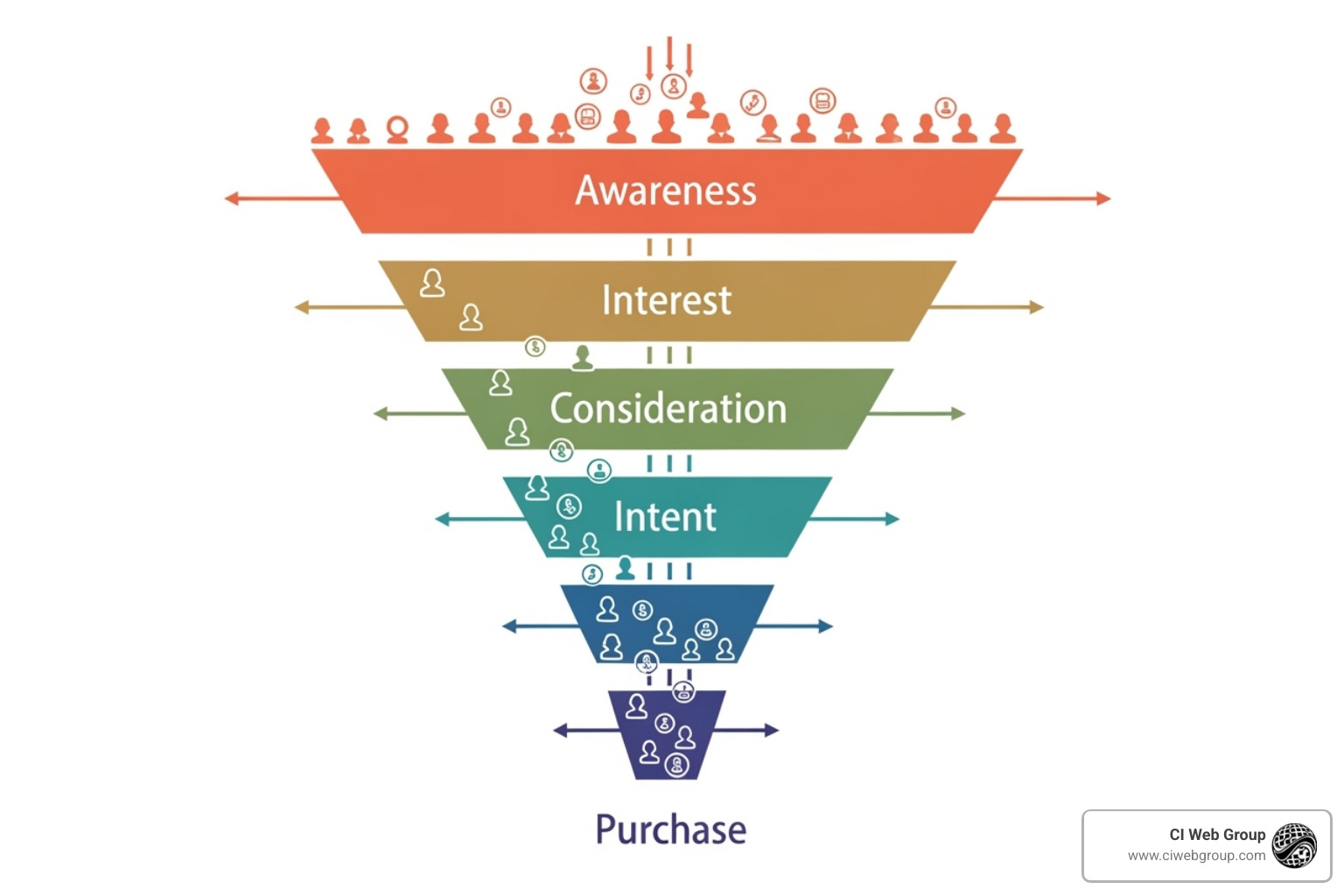
First, map the ideal customer journey. For a home service company, this could be: visit website -> view service page -> click "Get Quote" -> submit form -> book appointment. Each step is a potential drop-off point. Once mapped, define your conversion goals and set up tracking tools like Google Analytics. Implement proper event tracking for each step and remember to update your tracking as your business evolves to ensure you're collecting accurate data.
Use funnel visualization reports to see where customers drop off. These reports calculate the conversion rate between each step, revealing the biggest leaks in your funnel. For example, if 800 people click "Schedule Service" but only 50 complete the form, you've found a major problem. Identifying significant drop-offs helps you prioritize optimization efforts where they'll have the most impact. Fix the biggest leaks first for the most dramatic results.
Numbers show where problems exist; qualitative data explains why. Use these tools to uncover user friction:
Combining quantitative and qualitative data is the key to effective Conversion Optimization, as it allows you to address the real reasons for drop-offs.
Not all customers are the same. Segmenting your audience reveals powerful insights and helps you personalize the customer journey.
Segmentation helps you identify high-value segments and create personalized experiences that improve overall conversion rates.
As your skills grow, advanced funnel analytics and measurement models can provide a deeper understanding of marketing performance. These approaches show how different marketing efforts work together to drive business results, moving beyond single touchpoints to see the bigger picture.

Different goals require different funnels. The main types include:
A combination of tools is necessary for effective funnel analytics and measurement:
Understanding which marketing touchpoints contribute to conversions is critical for budget allocation. Different models offer different perspectives:
The gold standard is Triangulation for precise measurement, which combines MTA, MMM, and controlled testing to get the most accurate picture of what drives growth. This approach provides the most reliable insights for established home service companies looking to optimize their marketing spend.
Funnel analytics and measurement is about turning insights into action. This requires cross-functional collaboration. When marketing, sales, and product teams align around shared funnel metrics, they create a seamless customer experience. This collaboration is what separates businesses that simply collect data from those that use it to drive growth.
When done right, funnel analytics and measurement provides actionable insights for every team:
When teams work from the same data, marketing generates better leads, sales closes more deals, and customers have a better experience.
Companies across industries have used funnel analytics and measurement to achieve remarkable results:
These examples show that small, data-informed changes can produce outsized results. By identifying specific bottlenecks, you can make surgical improvements that dramatically boost conversions. This is also why Leveraging Customer Reviews for Reputation and Sales is so effective when you know which parts of your funnel need more credibility.
The journey through funnel analytics and measurement reveals a fundamental truth: every marketing dollar deserves to be tracked, understood, and optimized. We've walked through the essential stages of building a measurement system that actually works - from defining your funnel and setting up proper tracking to analyzing drop-offs and understanding the deeper "why" behind user behavior.
The numbers don't lie. When home service companies accept this data-driven approach, they see real results. Improved ROI becomes the norm, not the exception. Higher conversion rates turn website visitors into paying customers. Sustainable growth replaces the feast-or-famine cycle that plagues so many businesses.
But here's what makes all the difference: this isn't a "set it and forget it" solution. Funnel analytics and measurement thrives on continuous improvement. It's about asking better questions, testing new approaches, and always looking for ways to serve your customers more effectively. Every month brings new insights, new opportunities to plug leaks, and new ways to turn prospects into loyal clients.
The power of data becomes most apparent when teams work together around shared insights. Marketing finds which campaigns truly drive quality leads. Sales understands exactly when prospects are ready to buy. Customer service identifies friction points before they become major problems. This alignment transforms how your entire business operates.
At CI Web Group, we've seen how data-driven strategies revolutionize home service companies. We understand the unique challenges you face - from seasonal fluctuations to emergency service calls that don't follow traditional marketing funnels. That's why we specialize in creating measurement systems that actually make sense for your business.
Your marketing funnel tells a story about every customer who finds you online. The question is: are you listening to what it's trying to tell you? Don't let another month go by wondering which marketing efforts are working and which are just draining your budget.
Plan your digital marketing strategy with us and find what happens when you finally have a clear view of your customer journey from first click to final conversion.
Search our Blog
5 min read
Building Your Commercial Empire: Marketing for Roofing Businesses
Master digital marketing for roofing contractors commercial: SEO, PPC, AI trends & leads to dominate B2B in 2026.
Read more
5 min read
Your Reputation, Your Revenue: Effective HVAC Review Management
Master HVAC review management to boost local SEO, customer trust, and revenue. Learn strategies for growth.
Read more

5 min read
What is the best brand of AC unit for my forever home
Choose the ideal AC for your forever home. Compare top brands, SEER2 ratings, and understand Best HVAC branding for trust.
Read more
5 min read
Get Your Phone Ringing: Google Ads Strategies for Plumbers
Master Google Ads for plumbers in 2026: Drive emergency leads, optimize campaigns & scale ROI in Dallas. Get your phone ringing now!
Read more