

5 min read
Don't Get Hung Up: Choosing the Right Garage Door Marketing Partner
Choose the best garage door marketing agency for 2026. Master SEO, PPC, AI, and local leads with expert strategies for explosive growth.
Read more
March 18, 2026
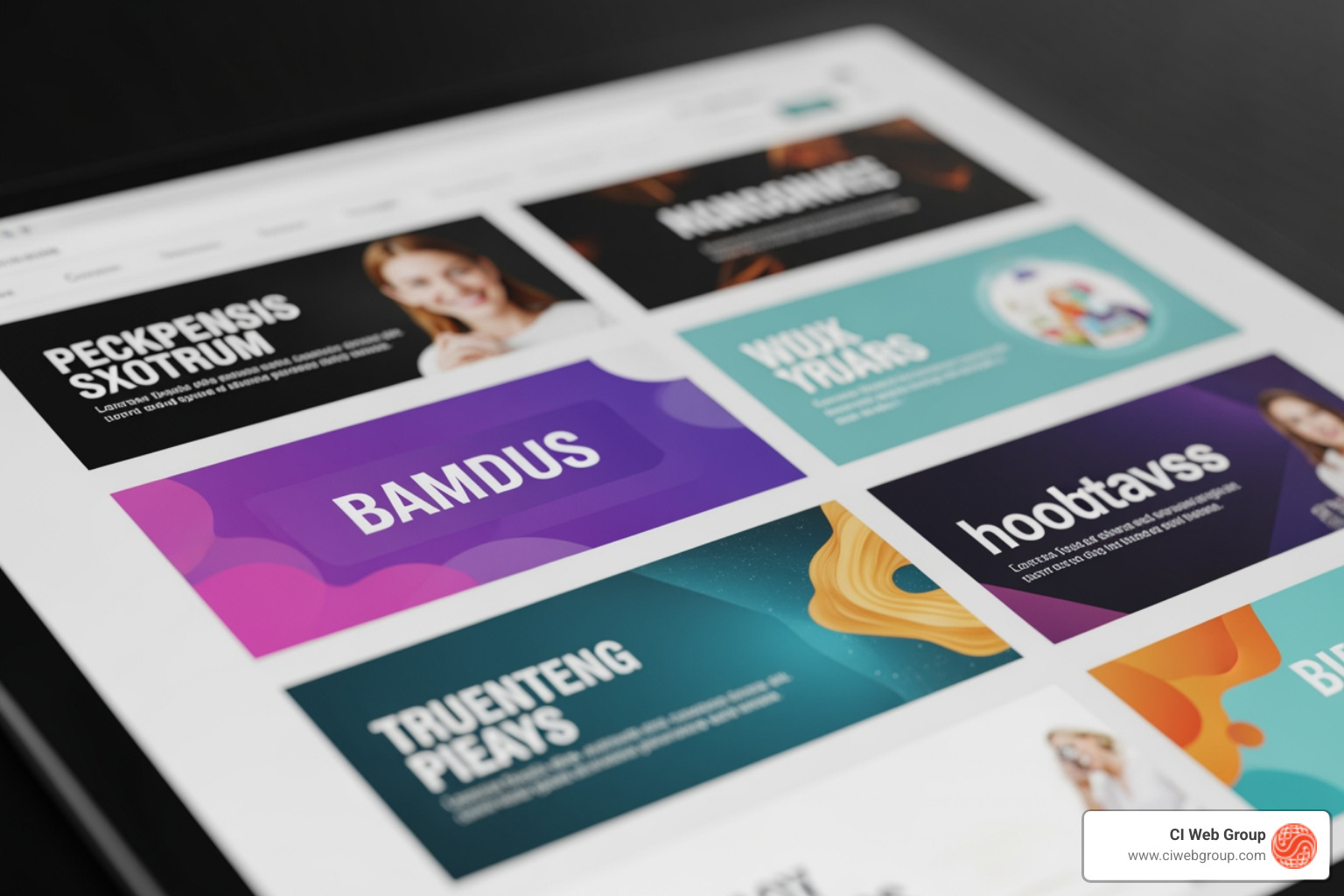
Digital banner ads are rectangular graphic advertisements displayed on websites, designed to drive traffic, build brand awareness, and generate customer actions across the internet. They represent one of the most established and versatile forms of online advertising, appearing on everything from news sites to social media platforms.
Quick Reference: Digital Banner Ads Essentials
Nearly three decades after the first clickable banner ad appeared on HotWired in 1994, digital display advertising continues to evolve. While skeptics point to challenges like ad blockers and banner blindness, the numbers tell a different story. U.S. digital advertising revenue hit $138.9 billion in 2020, with display ads claiming a significant share. The secret isn't whether banner ads work—it's understanding how to deploy them strategically within your broader marketing ecosystem.
For home service companies competing in crowded local markets, banner ads offer a unique advantage: they reach potential customers when they're not actively searching for your services. A homeowner reading a local news article about summer heat might see your HVAC company's banner ad reminding them about seasonal maintenance. That's not interruption—it's intelligent brand positioning at scale.
I'm Jennifer Bagley, and I've spent my career helping home service businesses steer the complexities of digital marketing, including the strategic use of digital banner ads to complement search and social campaigns. At CI Web Group, we've learned that banner advertising works best when it's part of an integrated approach—not a standalone tactic.

The story of digital advertising truly begins with the digital banner ad. Imagine a time before social media feeds, before search engines dominated, when the internet was still a wild frontier. It was in this nascent digital landscape that the first internet-specific advertising form emerged.
The very first clickable web ad was sold by Global Network Navigator (GNN) in 1993 to a law firm, a precursor to what we now know. However, the official birth of the banner ad as a widely recognized format is often attributed to HotWired (the online version of Wired magazine). On October 27, 1994, HotWired deployed a banner ad for AT&T that read, "Have you ever clicked your mouse right here? You will." This ad famously led users to an AT&T campaign, marking a pivotal moment in online marketing history. HotWired wasn't just groundbreaking for hosting the ad; they were also the first company to provide click-through rate reports, laying the groundwork for performance measurement in digital advertising.
From those early days of simple static images, digital banner ads have undergone a remarkable change. Initially, many animated creatives required Flash browser plug-ins. Fast forward to 2015, and the Interactive Advertising Bureau (IAB) announced new creative guidelines for display and mobile, embracing HTML5. This shift brought more dynamic, interactive, and responsive ad formats, moving away from Flash. By 2017, the IAB further expanded its guidelines to include adjustable ad formats and new digital content experiences like augmented reality (AR), virtual reality (VR), social media, mobile video, and 360-degree video ads.
We offer more information about advertising services that can help your home service business steer this exciting landscape. More info about advertising services
One of the most significant advancements in digital banner ads is the rise of programmatic advertising. It's a fundamental shift in how ad space is bought and sold, making the process faster, more efficient, and more targeted.
In the early days, ad space was often bought directly from publishers, a manual process. With the advent of real-time bidding (RTB) technology in the late 2000s, everything changed. Programmatic bidding allows companies to bid on ad space as an ad loads, essentially conducting an auction in milliseconds.
Here is how it works at a high level: When a user visits a website, the ad space on that page becomes available. Information about the user (such as general location and inferred interests) and the website content is sent to an ad exchange. Advertisers, often through automated platforms called Demand-Side Platforms (DSPs), then bid on that impression in real-time. The winning ad is served instantly.
This automated process, powered by advanced algorithms and AI, has changed ad placement. It helps align the right message with the right audience at the right moment, minimizing wasted impressions. For home service companies, that can mean reaching homeowners in specific service areas with messaging that matches seasonality and local needs (for example, HVAC maintenance reminders during peak weather shifts, or plumbing awareness during cold snaps), rather than relying on broad, untargeted reach.
At CI Web Group, we use this evolution to support full-funnel growth: awareness campaigns that build familiarity, retargeting that keeps your brand top-of-mind, and conversion-focused display placements that complement search and social efforts.
Understanding where digital banner ads fit into the broader digital marketing funnel is crucial for any business, especially for home service providers. We often think of this funnel in three main stages: Awareness, Consideration, and Conversion.
Awareness: At the top of the funnel, digital banner ads are excellent for introducing your brand to a wide audience. Imagine a homeowner in Texas who hasn't thought about their water heater in years. A visually appealing banner ad for "Reliable Water Heater Services" from your company, appearing on a local news site, can spark that initial awareness. Our research shows that for many internet users, banner ads contribute to brand recall, even if they don't click immediately. This stage is about getting your name out there and making a memorable first impression.
Consideration: Once a potential customer is aware of your brand, banner ads can be used to nurture their interest. Perhaps they’ve visited your website to check out your HVAC services. Retargeting banner ads can then follow them across the web, reminding them of your offerings, showcasing testimonials, or highlighting a special offer for a furnace tune-up. These ads keep your brand top-of-mind as they compare options and move closer to making a decision.
Conversion: While banner ads typically have a lower click-through rate (CTR) compared to search ads (because users aren't actively searching when they see a banner), they still play a role in driving conversions. An ad offering a "Free Plumbing Inspection" or "24/7 Emergency Electrical Service" with a clear call-to-action can prompt immediate action from someone in need. Moreover, they often act as a supporting touchpoint, reinforcing your brand's message just before a customer takes the final step, whether that's calling us or filling out a contact form.
By strategically segmenting our audience and tailoring banner ad campaigns to each stage of the funnel, we ensure that every impression serves a purpose. This approach transforms seemingly passive ads into powerful tools for guiding potential customers from initial awareness to becoming loyal clients. Learn more about search engine optimization to see how it complements our banner ad strategies.
For home service companies, the true power of digital banner ads comes from integrating them seamlessly into an omnichannel marketing strategy. We understand that your potential customers interact with many different digital touchpoints throughout their day. Our goal is to be there, consistently and effectively, at each of those points.
Imagine a homeowner in Houston, Texas, who just experienced a sudden AC breakdown. They might first search on Google (where our SEO and paid search efforts will shine), but later that day, while scrolling through their Facebook feed or reading a blog, they see a banner ad from your company offering emergency AC repair. This consistent presence builds trust and reinforces your brand's reliability.
Here's how we integrate digital banner ads into a broader strategy:
By treating digital banner ads not as isolated campaigns, but as integral components of a cohesive strategy, we amplify their effectiveness. They work in concert with search engine marketing, social media marketing, and other digital efforts to ensure your home service business captures attention, nurtures leads, and ultimately drives conversions. It’s about creating a powerful, interconnected web of marketing that guides customers directly to your door.
When it comes to digital banner ads, size matters. To ensure ads can be displayed across a wide network of websites, the Interactive Advertising Bureau (IAB) established standard ad sizes. These standards simplify the process for both publishers and advertisers, improving compatibility and display consistency.
Here are some of the most common IAB standard ad sizes that we frequently use for our home service clients:
These standard sizes help your digital banner ads run on more placements, maximizing reach. We typically produce a set of sizes so your creative can fit different inventory without forcing cramped designs.
You can see actual sizes and more IAB standard ad dimensions here: See actual sizes
Creating digital banner ads that stand out and achieve their objectives is both creative and strategic. For home service businesses in markets like Houston, Texas and throughout the Pacific Northwest, Southeast, and Southwest, display ads need to communicate credibility quickly.
Here are practical best practices we follow:
The goal is not just to earn a click. It is to build familiarity and confidence so when a homeowner needs help, your company is one of the first they remember.
Measuring the effectiveness of digital banner ads is essential for optimizing campaigns and connecting performance to real business outcomes.
Here are the key metrics we track:
| Metric | What It Measures | Why It Matters |
|---|---|---|
| Click-through rate (CTR) | Clicks divided by impressions | Indicates how compelling your ad is to your audience |
| Impressions | Number of times your ad was displayed | Shows overall reach and visibility |
| CPM (per thousand impressions) | Efficiency of awareness campaigns | Helps evaluate brand exposure efforts |
| CPC (per click) | Engagement efficiency | Measures how effectively ads drive traffic |
| CPA (per action) | Conversion efficiency | Ties ad performance to meaningful business actions |
| ROAS (return on ad spend) | Revenue generated relative to spend | Connects campaigns to bottom-line results |
| Viewability | Whether the ad had the chance to be seen | Ensures impressions represent real exposure |
| Conversion tracking | Calls, form fills, booked appointments | Measures the actions that matter most for home service companies |
When these metrics are reviewed together, we can see whether a campaign is building awareness, assisting conversions, or driving direct response, and adjust targeting, creative, and placements accordingly.
Despite their value, digital banner ads come with challenges. We plan for these issues so campaigns stay effective.
To counter these obstacles, we focus on:
With the right measurement and a proactive optimization plan, digital banner ads can stay efficient, support other channels, and consistently contribute to lead flow for home service businesses.
We know that navigating digital banner ads can bring up a lot of questions. Here, we address some of the most common inquiries we receive from home service businesses.
While effectiveness can vary based on placement and audience, some digital banner ad sizes consistently perform well due to their visibility and common adoption across ad networks.
The "most effective" size often depends on your specific goals and where your audience spends their time. We recommend creating a suite of different sizes to maximize reach and test which ones perform best for your particular campaigns.
Programmatic bidding is the automated, real-time process of buying and selling digital banner ad impressions. It's a sophisticated system that has made ad placement incredibly efficient and targeted.
Here's a simplified breakdown:
This entire process happens in the blink of an eye. Programmatic bidding allows for highly targeted placement, ensuring that your HVAC repair ad is shown to a homeowner who lives in your service area and has recently searched for home improvement services, rather than someone completely irrelevant. This efficiency and precision are key to maximizing your ad spend.
A low click-through rate (CTR) on your digital banner ads can be frustrating, but it's often due to a combination of inherent challenges and optimization opportunities. Here are the primary reasons:
To improve CTR, we focus on highly targeted campaigns, fresh and engaging creatives, strong value propositions, and continuous A/B testing. We also consider the entire customer journey, understanding that sometimes a banner ad's role is to build brand awareness or recall, rather than to generate an immediate click.
In the dynamic world of digital marketing, digital banner ads remain a powerful and essential tool for home service businesses. From their humble beginnings in the early days of the internet to today's sophisticated programmatic and dynamic creatives, they've continuously evolved to meet the demands of an ever-changing digital landscape.
While challenges like ad blocking and banner blindness exist, we've shown that with strategic planning, creative excellence, and meticulous measurement, these ads can effectively drive brand awareness, nurture leads, and contribute significantly to your bottom line. They allow us to reach homeowners in our diverse service areas, from the busy streets of Houston, Texas, to the serene communities of the Pacific Northwest, Southeast, and Southwest, ensuring your services are top-of-mind when comfort and safety are paramount.
At CI Web Group, we specialize in data-driven digital marketing solutions designed specifically for home service companies. We pride ourselves on complete transparency, client asset ownership, 24/7 support, and customized programs that help you dominate online search and achieve your business goals. We understand the nuances of the home service industry and how to leverage every digital tool, including digital banner ads, to your advantage.
If you're ready to move beyond just clicks and truly unpack the power of strategic digital banner ads for your home service business, we're here to help. Let us craft a comprehensive digital marketing strategy that puts your brand in front of the right customers, at the right time.
Search our Blog
5 min read
Don't Get Hung Up: Choosing the Right Garage Door Marketing Partner
Choose the best garage door marketing agency for 2026. Master SEO, PPC, AI, and local leads with expert strategies for explosive growth.
Read more

5 min read
Landing Page Love: Boosting Conversions with AI
Unlock higher conversions with AI-powered landing page optimization. Learn how AI transforms your strategy & drives results.
Read more
5 min read
Ready to Buy? Find Your Perfect Roofing Lead Provider Today
Discover how to buy roofing leads: exclusive vs shared, maximize ROI with real-time strategies, top providers & compliance tips. Boost conversions now!
Read more

5 min read
The Ultimate Guide to Topical Authority and AEO
Master Answer Engine Optimization in 2025: Boost AI search citations, dominate zero-click results & grow your home services business now!
Read more