
5 min read
The Ultimate Contractor Growth Guide
Master digital marketing for contractors in 2026: SEO, PPC, AI search, GEO & reputation strategies to dominate local rankings and scale your business.
Read more

October 6, 2025
Content cluster user experience is a strategic approach to organizing website content that puts your visitors first while boosting your search engine rankings. Instead of scattered, disconnected pages, content clusters create a logical web of information that guides users naturally through your expertise.
Here's how content clusters improve user experience:
Think of it like a library. Instead of randomly placing books on shelves, you group related topics together. When someone wants to learn about plumbing, they find everything from basic maintenance to complex repairs in one logical section.
This user-centric approach also dramatically boosts your SEO performance, as search engines reward websites that keep users engaged and provide comprehensive topic coverage.
The model is simple: create one comprehensive "pillar page" on a broad topic, then surround it with detailed articles on specific subtopics. Strategic internal linking connects everything in what experts call the "hub-and-spoke" model.
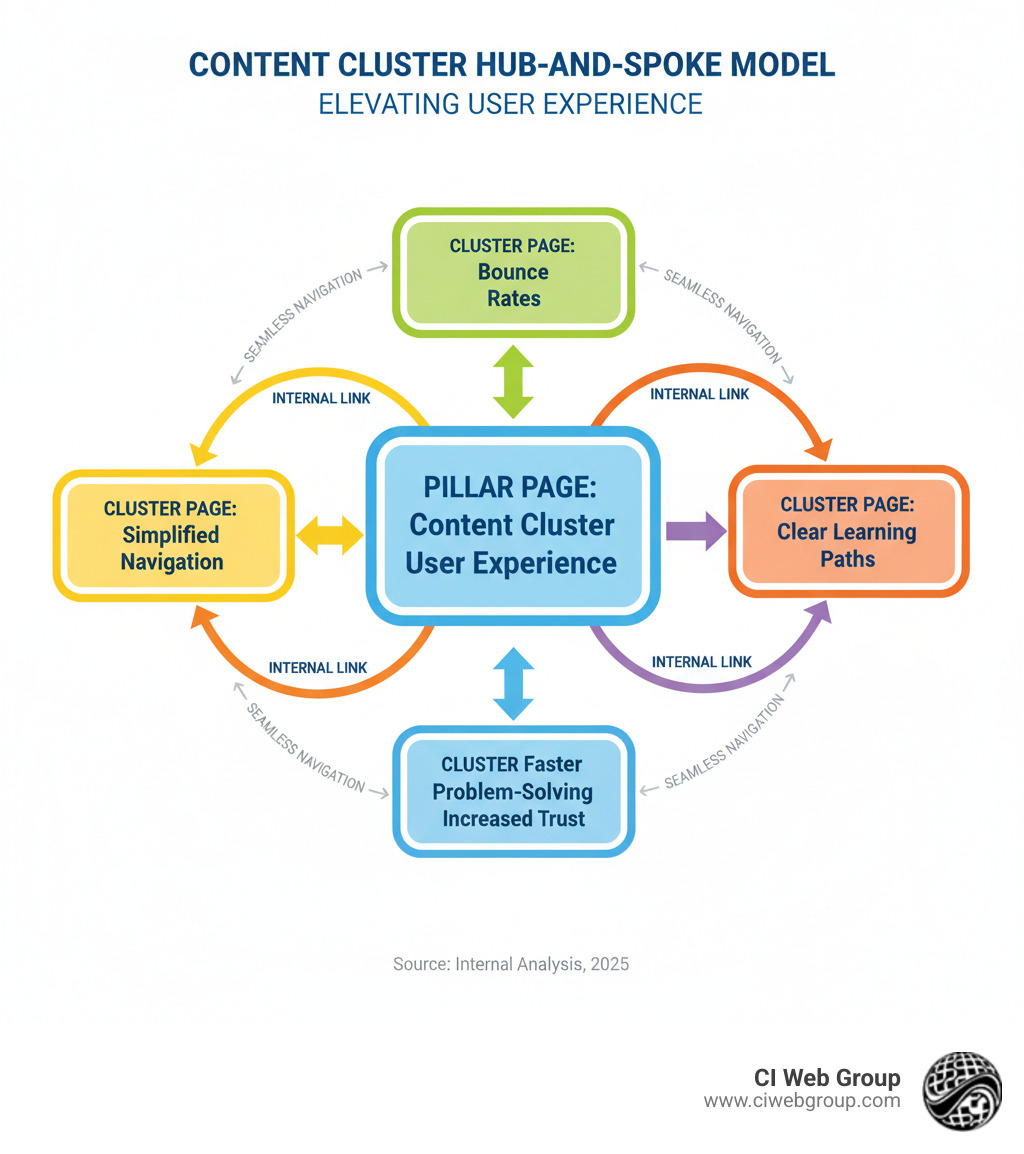
Picture a perfectly organized library where every book connects to create a complete story. That's what a content cluster user experience delivers for your website visitors. A content cluster is a family of related web pages that creates a strategic network, guiding visitors from one piece of valuable information to the next.
It works through three key components:
By covering a subject from every angle, you build topical authority, proving to search engines that your site is a go-to resource. Google's focus on E-E-A-T (Experience, Expertise, Authoritativeness, and Trustworthiness) rewards websites that demonstrate genuine knowledge, aligning perfectly with User Experience in SEO principles. Google's helpful content update further prioritizes content created to help users, a philosophy that content clusters naturally embody.
Effective content clusters create a simplified navigation system. Instead of hunting through random blog posts, a visitor with a plumbing issue finds a clear pillar page on "Common Home Plumbing Problems" with easy links to articles on leaky faucets or clogged drains. This logical organization leads to reduced bounce rates because visitors aren't frustrated or lost. They stick around longer, which signals increased engagement to search engines. The result is a cohesive user journey where each click feels purposeful.
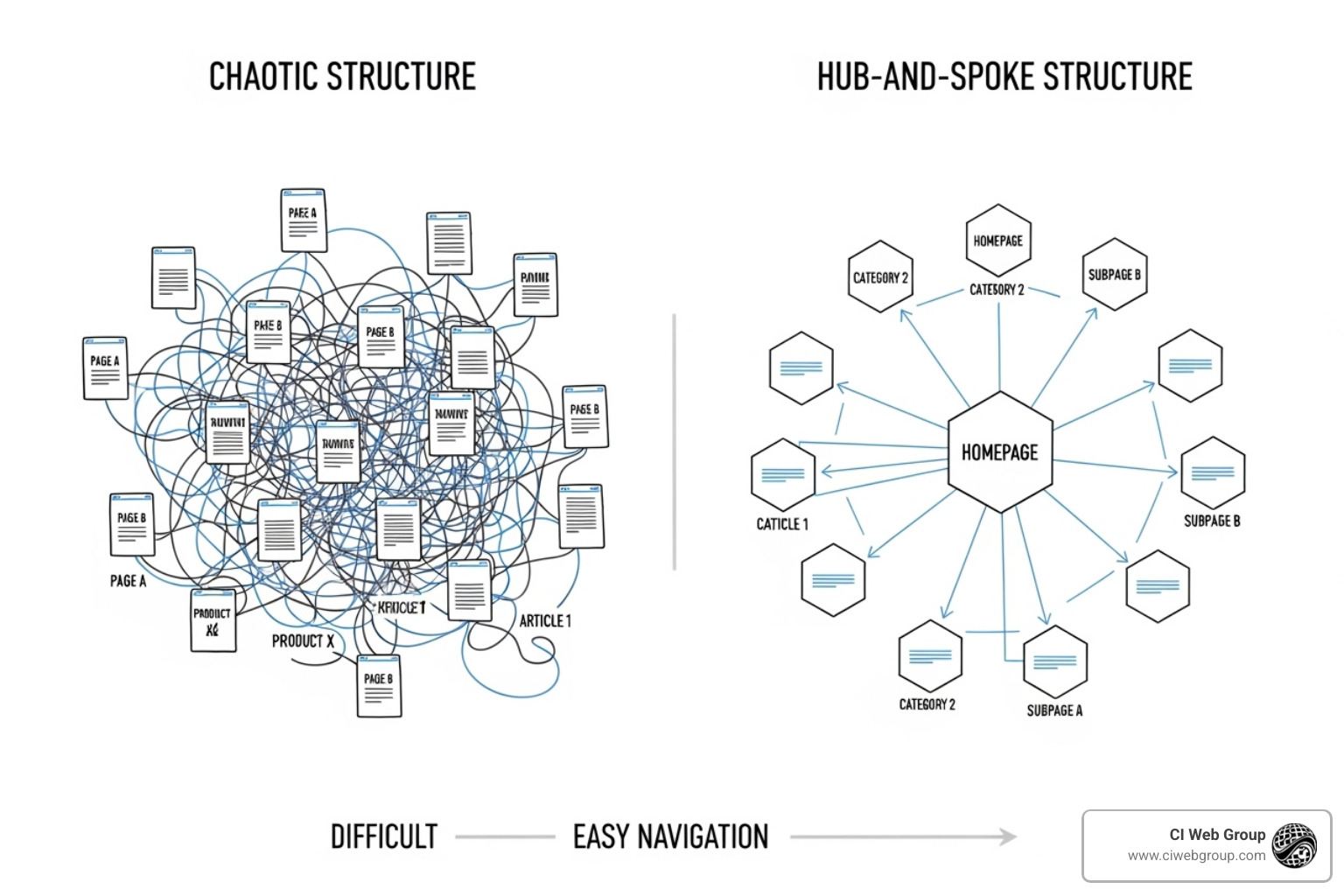
The easy information findability that clusters provide transforms how visitors interact with your site. This intuitive flow builds trust and improves usability, which directly contributes to increasing conversions.
Beyond happy visitors, content clusters deliver powerful SEO advantages. By building topical authority, you can achieve higher SERP rankings for both pillar and cluster pages. Clusters also solve the problem of keyword cannibalization, where multiple pages compete for the same terms, by giving each piece a distinct focus. The logical internal linking structure leads to improved crawlability, helping search engines index your content more efficiently. Finally, this structure ensures strategic link equity distribution, as your strong pillar page passes authority to cluster content and vice versa, creating a supportive network that boosts your entire site. These are sustainable improvements that help Drive More Traffic to Your Website: Essential SEO Strategies.
Ready to transform your home service business's online presence? Building a successful content cluster user experience requires a clear plan. This systematic approach will help your business create content that not only ranks well but genuinely helps your customers. It's the foundation for implementing A Complete Guide to SEO Content, Including 8 Writing Tips.

Your pillar page topic should be broad enough to support multiple subtopics but specific enough to match your expertise. For home service businesses, winning topics revolve around major customer pain points, such as "Emergency Plumbing Solutions" or "HVAC System Maintenance." These topics work because they address real problems and align with your business goals. Ask yourself: Can I break this topic into 5-15 subtopics? Is this something my customers are curious about? If yes, you've found your pillar topic.
Next, dive into what your customers are searching for. Your goal is to understand user intent: are they looking for information, comparing options, or ready to hire someone? Your cluster should address all these stages. Use long-tail keywords (longer, more specific phrases like "how to prevent frozen pipes in winter") to attract motivated visitors. While research tools are helpful, don't forget to listen to your customers. The questions they ask on the phone are a goldmine for content ideas.
Organize your research into a logical structure using the hub-and-spoke model. Group related keywords and questions into subtopics, with each group becoming a future cluster article. This process will also help you perform a content gap analysis, revealing important subtopics you haven't covered yet. As you map your content, consider the user journey stages, guiding visitors from initial awareness of a problem to their decision to hire a professional.
Now it's time to write. Your pillar page should be the definitive resource on your core topic, comprehensive enough to stand alone but designed to link readers to your cluster content for more detail. Each cluster article must thoroughly explore its specific subtopic, providing actionable insights and expert advice. Focus on creating the most helpful content, not just the most content.

Using varied content formats like blog posts, how-to guides, videos, and infographics keeps your audience engaged and caters to different learning preferences. This diversity improves your Content Marketing 101 approach and improves the overall content cluster user experience.
Great content is just the beginning; how you organize it makes all the difference for a superior content cluster user experience. Your website architecture should be like a well-sorted bookshelf, where everything has its logical place. This thoughtful organization is a cornerstone of your Website Design Concept, ensuring users can steer effortlessly.
Smart architecture removes friction, keeping users engaged and moving them closer to becoming customers.
Internal linking creates a network of helpful pathways through your content. To create a smooth content cluster user experience, links should feel natural and add value. Use descriptive anchor text that tells users what they'll find (e.g., "learn about common AC repair issues" instead of "click here").
Focus on quality over quantity. Too many links can be overwhelming. Follow Internal linking best practices by linking only when it's relevant and helpful.
Your URL structure and navigation system work together to create an intuitive experience. A logical URL hierarchy mirrors your content organization (e.g., /hvac-maintenance/ac-filter-replacement/), making it clear how pages relate. Breadcrumbs (like "Home > HVAC > AC Filters") show users their path and make it easy to backtrack.
Integrating your core topic clusters into your main menu provides high-level entry points for users. When navigation feels natural and logical, it creates the kind of seamless content cluster user experience that keeps visitors engaged and builds trust.
Building a successful content cluster user experience is an ongoing process that requires continuous refinement and adaptation. Think of it like tending a garden—the initial work is just the beginning.

Even well-intentioned strategies can go wrong. Avoid these common pitfalls to ensure your clusters are effective.
| Bad Practice | Good Practice |
|---|---|
| Overly Broad Pillar Topics | Choose focused pillar topics that support multiple subtopics. |
| Content Flooding | Target a unique search query and user intent for each cluster piece. |
| Inadequate Internal Linking | Create robust, contextual links between pillar and cluster pages. |
| Neglecting User Intent | Create content that answers specific user questions and needs. |
| Inconsistent Content Quality | Prioritize quality and depth in every piece of content. |
| Focusing on Keywords Over Topics | Shift to a topic-centric approach, covering subjects holistically. |
| Not Aligning with Business Offerings | Ensure clusters support your services and guide users to conversion. |
For home service companies, local relevance is a superpower. Weave local keywords and geo-targeted content into your clusters. Instead of generic advice, write about "protecting plumbing during Texas freeze warnings." This specificity is invaluable to local searchers.
Also, optimize for voice search by structuring content with clear headings and concise answers that smart speakers can easily use. While AI content generation tools can help with brainstorming, they can't replace your human expertise and local knowledge. Staying flexible with your content strategy and Using the best localization software can help you scale geo-targeted content while maintaining a personal touch. This adaptive approach strengthens The Power of Online Presence.
The proof is in the results. One plumbing company restructured its site into content clusters and saw a substantial increase in organic traffic within six months. Their pillar pages ranked for competitive terms, while cluster content captured specific long-tail searches.
Another HVAC business focused on comprehensive climate control clusters and became the go-to online resource in their service area, leading to a significant increase in qualified service calls. The keys to their success were a commitment to quality, strategic interlinking, and a sharp focus on their audience. Most importantly, consistent maintenance and content updates ensured their long-term dominance.
Building a successful content cluster user experience often raises questions, and we're here to address the most common ones we hear from home service businesses.
Here's the truth: there's no magic number that guarantees success. What matters most is comprehensive coverage of your topic and delivering genuine value to your audience.
We typically recommend starting with a solid pillar page and 5-8 high-quality cluster pieces. This gives you enough content to establish topical authority without overwhelming yourself or your team. Think quality over quantity every time.
As you gain experience and better understand your audience's needs, you can expand your cluster gradually. Maybe you'll find new subtopics through customer questions, or you'll identify content gaps that need filling. The beauty of content clusters is their flexibility - they can grow organically with your business.
Focus on creating content that truly helps your customers solve problems. Whether that's 5 articles or 15, the key is making sure each piece serves a purpose and adds value to the overall cluster.
Let's be honest about expectations here. SEO is a long-term strategy, and content clusters follow the same timeline. While some businesses hope for overnight success, the reality is more nuanced.
You might notice some early improvements in user engagement and site navigation within the first few weeks. Visitors tend to spend more time on well-organized sites, and your analytics will likely reflect this improved content cluster user experience.
However, the big wins - higher SERP rankings and increased organic traffic - typically emerge within 3-6 months. This timeline varies significantly based on your industry's competitiveness, the quality of your content, and how well you execute your internal linking strategy.
Consistency is absolutely key. Search engines reward websites that regularly publish valuable content and maintain their clusters over time. Think of it as building trust with both your audience and Google - it takes time, but the results are worth the investment.
This is one of our favorite questions because the answer is a resounding yes! Changing existing content into clusters is often the smartest way to start, especially if you've been creating content for a while.
Begin with a thorough content audit. Look through your existing blog posts, service pages, and resources to identify potential pillar pages or cluster content. You might be surprised to find you already have the foundation for several clusters.
Next, identify your content gaps. Where are the missing pieces that would complete your clusters? Maybe you have great articles about plumbing emergencies but nothing about preventive maintenance. These gaps become your content creation roadmap.
Finally, update and strategically interlink your existing articles. This might involve refreshing outdated information, improving headlines, and creating those crucial connections between related pieces. Sometimes a simple internal linking overhaul can dramatically improve how your existing content performs.
This approach lets you leverage work you've already done while creating a more cohesive, user-friendly experience. It's like renovating a house - you're working with a solid foundation and making strategic improvements rather than starting from scratch.
The content cluster user experience is the backbone of a successful modern online strategy. By organizing your content into logical, interconnected clusters, you help visitors find solutions while signaling your expertise to search engines, resulting in better rankings and a better customer experience.
For home service companies, this strategy is especially powerful. Customers often need education before they're ready to call for service. Content clusters help you build trust systematically by guiding them from their initial problem to your expert solution, whether it's for an HVAC system or a plumbing emergency.
The results are clear: higher search rankings, increased organic traffic, and more qualified leads. Most importantly, you create genuine value for people who need your services.
We know implementing a comprehensive content cluster strategy can feel overwhelming. That's why CI Web Group exists. We specialize in data-driven digital marketing that delivers measurable results for home service companies like yours.
Our approach is different: no lengthy contracts, complete transparency, and you own all your assets. We believe in building partnerships. With 24/7 support and programs customized to your market, we help you dominate online search while you focus on what you do best: serving your customers.
Ready to transform your digital presence? Start planning your digital marketing strategy today and find how a powerful content cluster user experience can fuel your business growth.
Search our Blog
5 min read
The Ultimate Contractor Growth Guide
Master digital marketing for contractors in 2026: SEO, PPC, AI search, GEO & reputation strategies to dominate local rankings and scale your business.
Read more
5 min read
Beyond the Business Card: Creative Marketing Materials for Exterminators
Boost pest control marketing materials with print assets, vehicle wraps, QR codes & ROI strategies for local dominance in 2026.
Read more

5 min read
Don't Sweat the Tech with These Software Solutions
Discover top HVAC software solutions for 2026. Streamline scheduling, dispatching, invoicing & more to boost efficiency & cash flow.
Read more

5 min read
HVAC Direct Mail Marketing Guide
Discover how HVAC direct mail helps contractors attract homeowners, boost response rates, and book more service calls with proven targeting and offers.
Read more