
5 min read
The Ultimate Contractor Growth Guide
Master digital marketing for contractors in 2026: SEO, PPC, AI search, GEO & reputation strategies to dominate local rankings and scale your business.
Read more
September 26, 2025
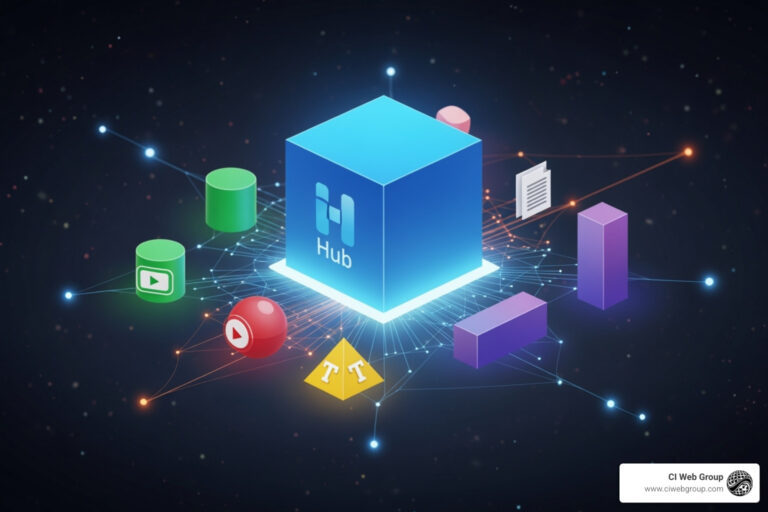
Content cluster link building is a strategy that organizes related content around a central topic to attract high-quality backlinks while building topical authority. Instead of creating isolated blog posts, you build comprehensive resource hubs that naturally earn links from other websites.
Here's how content cluster link building works:
The traditional approach of writing random blog posts and hoping for backlinks is broken. When industry leaders first experimented with content clusters, they found something remarkable: the more interlinked related content they published on a particular subject, the higher their website ranked in Google SERPs for not just that subject but also its subtopics.
This isn't just theory. One client achieved a 3000% increase in website traffic by deploying cluster content. The reason? Google's AI now rewards websites that demonstrate deep expertise across related topics, not just individual keyword-optimized pages.
For home service companies, this means you can become the go-to authority for your local market. Instead of competing page-by-page with larger competitors, you build comprehensive topic clusters that establish your expertise and naturally attract backlinks from industry publications, local directories, and other relevant websites.

The old days of cramming keywords into random blog posts are over. Google's gotten smarter. Instead of just looking for keyword matches, search engines now want to understand your topical expertise.
This is where content cluster link building becomes your secret weapon. Think of it as changing your website from a messy toolshed into a well-organized workshop.
FeatureTraditional SEO ApproachThe Topic Cluster ModelContent StrategyStandalone articles targeting specific keywordsInterconnected content organized around broad topicsKeyword FocusOne keyword per page, often leading to cannibalizationMultiple related keywords addressed within a cohesive topicWebsite StructureFlat or loosely organized, hard for search engines to understandHierarchical, clear relationships between content piecesAuthority SignalRelies heavily on external backlinks to individual pagesBuilds topical authority through comprehensive coverageUser Experience (UX)Users might struggle to find related informationGuides users through related content, improving engagementSearch Engine ViewSees isolated pages, may not grasp overall expertiseRecognizes deep expertise and comprehensive understanding of a subject
When you build content clusters, you're not just targeting keywords – you're establishing topical authority. This means Google sees you as the go-to expert on your subject.
This approach perfectly aligns with Google's E-E-A-T guidelines (Experience, Expertise, Authoritativeness, and Trustworthiness). For example, a plumbing company that creates a comprehensive cluster on water heaters—covering installation, troubleshooting, and maintenance—shows Google and its customers that it truly knows its craft.
But here's the best part: content clusters make your visitors happy. When someone lands on your site looking for help, strategic internal links guide them to related topics, keeping them engaged and building trust. This improved user experience sends positive signals to search engines while turning more visitors into customers. Understanding what is SEO and how will it help my business? becomes crucial for leveraging these benefits.
Every successful content cluster has three essential parts working together.
The Pillar Page (The Hub) is the center of your cluster—a comprehensive guide covering a broad topic. This "10x content" should be significantly better than competitors, giving a complete overview while linking to specific subtopics. Examples include "The Complete Guide to Home Plumbing Maintenance" or "Everything Homeowners Need to Know About Electrical Safety."
Cluster Pages (The Spokes) dive deep into specific subtopics, targeting long-tail keywords and answering specific customer questions. For a plumbing maintenance pillar, cluster pages could be "How to Fix a Running Toilet" or "Signs You Need a New Water Heater," attracting users with specific problems.
Internal Links (The Connections) tie the pillar and cluster pages together. These contextual links use descriptive anchor text to tell users and search engines what to expect. This structure distributes SEO value and creates natural exploration pathways for visitors.
Google now uses semantic search to understand the relationships between words and the intent behind queries. It no longer just matches keywords; it aims to deliver the most helpful, comprehensive answer.
This shift perfectly favors content clusters. When you organize related content into logical groups, you help Google understand your expertise. Google's AI advancements now analyze entire passages, understanding complex relationships in language. You can read more about Google's AI advancements and their impact on search results.
By demonstrating deep knowledge, you showcase the kind of authority that Google rewards. This isn't about ranking for one keyword – it's about becoming the definitive resource. When Google recognizes this authority, your entire site benefits with higher rankings and increased visibility.
The beauty of this approach is that it's future-proof. As search evolves, websites with strong topical authority and excellent user experience will continue thriving. Understanding the future of SEO helps you stay ahead and build lasting success.
Building a content cluster link building strategy is a strategic process. Instead of writing random posts, you're creating an interconnected network of content that builds authority and attracts backlinks.

Think of it like building a house: you need a solid blueprint. Your journey involves identifying your parent topic and subtopics, conducting keyword research, creating high-quality content, and weaving it all together with a smart internal linking strategy. When done right, this turns your website into a resource that other sites naturally want to link to. For detailed guidance, check out our guide on How to Create and Optimize SEO Content.
This is where it all begins—choosing the foundational topics that will define your expertise.
Start by brainstorming your core business offerings and common customer questions. These customer pain points, like "water damage prevention" for a plumber, make excellent pillar topics because people are actively searching for solutions.
Competitor analysis helps you spot gaps where you can provide better, more comprehensive coverage. Maybe they have a basic article on a topic, but you could create an entire cluster covering every angle.
Ensure your chosen topics align with your business goals. Focus on subjects that support your most profitable services and attract your ideal customers.
Keyword research tools are fantastic for this phase. By entering a seed keyword, you can generate a map of questions, prepositions, and comparisons that people actually search for. These insights reveal potential subtopics and provide a roadmap for your cluster.
Once you have topics, dig into the specific keywords and the intent behind them. This is about understanding what people want when they search.
Start with seed keywords (broad terms) and expand into long-tail variations (more specific phrases). While "plumbing" is broad, "emergency plumber near me Sunday night" shows specific, urgent intent.
Understanding search intent is crucial. "How to fix a leaky faucet" is informational, while "plumber Houston emergency" is transactional. Your content strategy must address both within your cluster.
Keyword grouping helps you avoid creating multiple pages that compete against each other. Advanced keyword tools can help you identify which keywords naturally belong together. This helps you decide whether to cover them on a single page or create dedicated cluster pages for each group.
Now, turn your research into content that people want to read and share.
Your pillar page must be the definitive resource on its topic. As a comprehensive guide, it covers the subject broadly while linking to detailed cluster pages. While often long (2,500+ words), its value comes from being genuinely comprehensive, not just its length. The goal is creating 10x content—content that's ten times better than anything else available.
Your cluster pages dive deep into specific subtopics, targeting long-tail keywords with specific user intent. These pages answer very particular questions thoroughly, fully satisfying a user's search.
Remember to include well-optimised relevant images throughout your content. Visuals break up text, improve user experience, and offer more SEO opportunities through alt text.
The internal linking strategy transforms individual pages into a powerful cluster. Your pillar page should link out to cluster pages using descriptive anchor text. Each cluster page should link back to the pillar and to other relevant cluster pages. This creates the network effect that helps SEO value flow throughout your cluster.
Most importantly, write for humans first. Use a conversational tone and focus on genuinely helping your readers. When content is truly helpful, shares and backlinks follow. For more guidance, refer to A Complete Guide to SEO Content, Including 8 Writing Tips.
Once your content cluster is built, it's time to attract backlinks. This is where content cluster link building shines. A well-organized content hub is a natural linkable asset that other websites will want to reference.

Backlinks are the internet's vote of confidence. When another site links to yours, they're telling their readers (and Google) that your content is valuable.
Earning backlinks is critical for SEO success. While a page might rank without many backlinks, it's incredibly difficult to maintain that rank over time. These external links establish your authority and drive referral traffic. If you're wondering why this matters, our guide on Why Should I Get Link Building? breaks down the impact.
Content clusters are essentially link magnets for a few key reasons:
While clusters naturally attract links, smart promotion accelerates the process.
For more detailed strategies, check out our guide on Effective Link Building Strategies.
Internal links are the circulatory system of your cluster, and they are critical to content cluster link building success.
The experts at Search Engine Journal confirm that internal linking is a key part of the strategy for turning individual pages into powerful, cohesive content clusters.
Building a content cluster is just the beginning. Your content cluster link building strategy needs ongoing care, smart use of new tools, and vigilance against common pitfalls to maintain its power.
Just as you would update your website, your content clusters need regular attention. The digital landscape is always shifting, and staying ahead is crucial for maintaining your competitive edge. Keep informed about SEO Trends in 2024: A Glimpse into the Future to ensure your strategy remains effective.
Even well-intentioned marketers can make mistakes that derail a content cluster strategy. Here are the most common ones to avoid:
Artificial intelligence is a powerful ally for developing and optimizing content clusters. The key is to use it as an assistant, not a replacement for human expertise.
Always fact-check AI-generated suggestions and ensure everything aligns with your brand voice and actual expertise.
Your content clusters are living assets that need regular care to maintain their content cluster link building power.
Patience combined with consistent maintenance will pay off with stronger rankings and more valuable backlinks over time.
The world of SEO has evolved. Random blog posts no longer cut it; today's landscape demands the sophistication of content cluster link building. By creating comprehensive pillar pages supported by detailed cluster content and woven together with internal links, you build a knowledge hub that establishes authority and naturally attracts backlinks.
The results are clear: higher rankings, more organic traffic, and a stream of qualified leads who already trust your expertise. This strategy works because it guides customers through their entire journey, from identifying a problem to finding a solution.
For home service companies, this is a game-changer. It allows you to become the go-to local resource, building trust and converting browsers into loyal customers. The structured approach we've outlined is a roadmap to long-term digital marketing success. It requires patience, but the payoff is substantial.
At CI Web Group, we've seen how content cluster link building transforms home service businesses. We specialize in data-driven digital marketing that cuts through the noise and delivers real results. With complete transparency, no long-term contracts, and 24/7 support, we help companies like yours dominate local search and achieve sustainable growth.
Ready to build a dominant online presence? Start planning your digital marketing strategy with us.
Search our Blog
5 min read
The Ultimate Contractor Growth Guide
Master digital marketing for contractors in 2026: SEO, PPC, AI search, GEO & reputation strategies to dominate local rankings and scale your business.
Read more
5 min read
Beyond the Business Card: Creative Marketing Materials for Exterminators
Boost pest control marketing materials with print assets, vehicle wraps, QR codes & ROI strategies for local dominance in 2026.
Read more

5 min read
Don't Sweat the Tech with These Software Solutions
Discover top HVAC software solutions for 2026. Streamline scheduling, dispatching, invoicing & more to boost efficiency & cash flow.
Read more

5 min read
HVAC Direct Mail Marketing Guide
Discover how HVAC direct mail helps contractors attract homeowners, boost response rates, and book more service calls with proven targeting and offers.
Read more