
5 min read
The Complete Guide to Plumbing Website Design
Discover expert plumbing website design strategies that boost conversions, mobile performance, and local SEO for your plumbing business.
Read more
September 22, 2025
We’ve been building websites for home service businesses for years. Until recently, WordPress was the default platform. But over time, the cracks became hard to ignore: slower load times, plugin conflicts, broken pages, indexing issues. These weren’t one-off problems—they were becoming the norm.
So we started testing Webflow.
In a recent webinar hosted by Camille Porco (Director of Strategy) and Kim Marshall (Senior Account Executive), we broke down why we moved to Webflow, how it’s impacted performance, and what our clients have gained as a result.
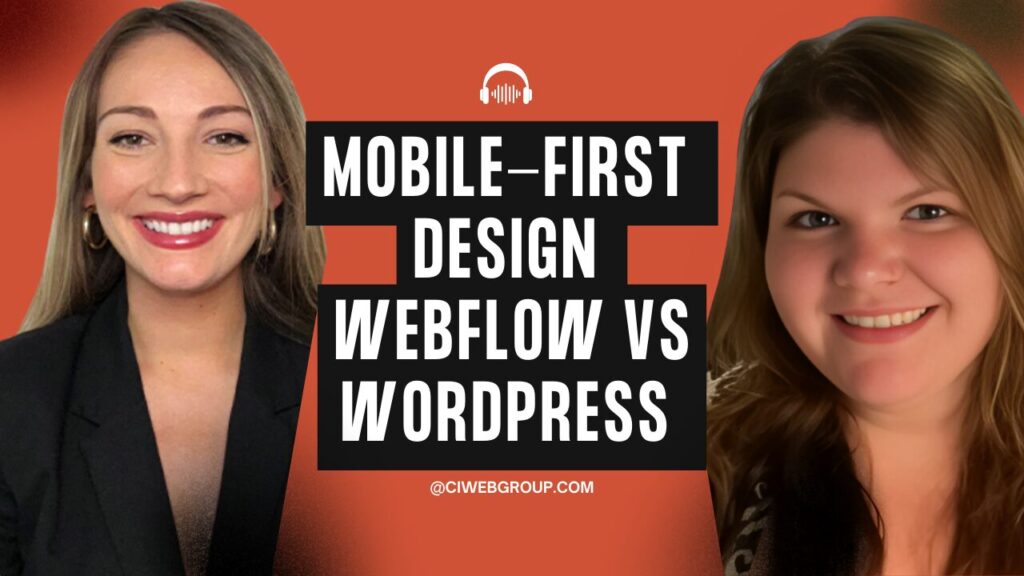
During the webinar, Camille explained how the shift began:
“We were having a lot of issues with the upkeep and the maintenance and the clutter, the bloating, the breaks.”
The problem wasn’t just one plugin or a particular theme. It was the entire ecosystem. Plugins weren’t updating in sync, and even routine edits could introduce bugs or break parts of the site. Fixes required developer intervention. Updates became projects.
We transitioned our first sites to Webflow last year. The goal was to eliminate recurring technical issues, reduce our clients’ dependency on developers, and speed up their sites.
Webflow’s clean structure—without reliance on third-party plugins—meant no more emergency patching. It also helped sites load significantly faster, especially on mobile.
“The way it’s built loads quicker,” Kim said. “We’re just using CSS throughout, essentially reusing elements that have already been built.”
When we launched those first Webflow sites, we saw immediate improvements in keyword rankings and traffic.
One mid-sized HVAC client saw:
That’s without changing their ad spend—just by fixing the foundation of the website.
“Even after going through and doing SEO optimization, there were still URLs that we couldn’t get indexed,” Kim said. “These were quality content… but Google still said, ‘No, I don’t think so.’”
With Webflow, those indexing issues disappeared.
And as content strategies expand, Webflow makes it easy to add new pages, city targets, or service lines without plugin workarounds or site rebuilds. That means you can scale SEO over time without reinventing the wheel.
One of the biggest improvements for our team—and our clients—is that we’re no longer spending time fixing problems. We’re spending it on strategy, CRO, and content development.
“We were doing so much in the business rather than on the business to improve and constantly grow,” Camille said. “This has really kind of freed us up and allowed for a lot more creativity and strategy.”
We’ve made Webflow our new standard. Every new website we build is now launched on Webflow—because it performs better, ranks faster, and gives our clients the control and flexibility they need.
Let’s take a look at what Webflow could do for your business. Contact our team for a strategy session and site review.
Search our Blog
5 min read
The Complete Guide to Plumbing Website Design
Discover expert plumbing website design strategies that boost conversions, mobile performance, and local SEO for your plumbing business.
Read more

5 min read
5 Ways to Find a Reliable Plumber Fast
Discover plumbing website content strategies that help homeowners find a reliable plumber fast with mobile-friendly design and trust signals.
Read more

5 min read
The Definitive Guide to HVAC Vehicle Wraps
Discover how HVAC vehicle wraps boost brand visibility, generate leads, and build trust with professional fleet graphics that deliver lasting marketing results.
Read more

5 min read
Step-by-Step Guide to Reliable Pest Control Marketing
Discover how pest control marketing services can boost local visibility, generate leads, and drive recurring revenue with proven strategies for 2026.
Read more