
5 min read
Step-by-Step Guide to Reliable Pest Control Marketing
Discover how pest control marketing services can boost local visibility, generate leads, and drive recurring revenue with proven strategies for 2026.
Read more
January 14, 2026
How to determine a brand of shingle for a roof is a common challenge for homeowners who need to repair storm damage, file an insurance claim, or simply maintain their home's exterior. Here are the four primary methods to identify your shingle brand:
Whether you're facing a few missing shingles after a storm or trying to match your roof for a larger repair, identifying your shingle brand is the critical first step. Without knowing what's currently on your roof, you can't purchase matching replacements, accurately assess repair costs, or steer insurance claims effectively. The problem is that most homeowners don't keep track of their roofing materials, and manufacturer labels aren't visible from the ground.
For Houston homeowners and those across Texas, the Pacific Northwest, Southeast, and Southwest, storm damage and aging roofs make this question particularly urgent. Hail, wind, and extreme weather events can damage shingles, requiring quick action to prevent further issues like water infiltration or structural damage.
I'm Jennifer Bagley, and through my work with contractors and home service companies at CI Web Group, I've helped countless roofing businesses solve complex customer challenges including how to determine a brand of shingle for a roof for accurate repairs and claims. This hands-on experience with industry professionals has given me deep insight into the practical methods that work for homeowners facing this common dilemma.
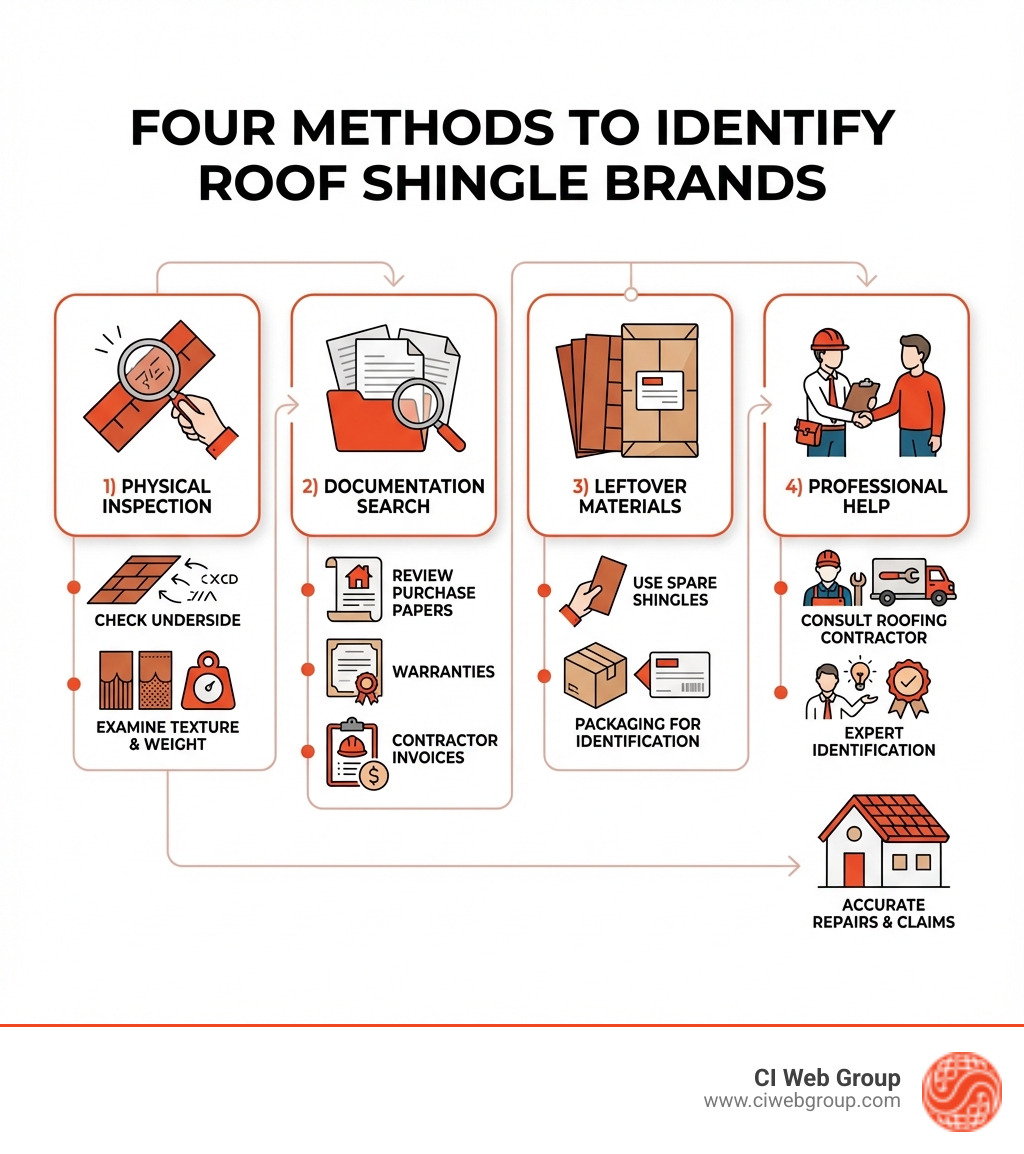
When you're trying to figure out how to determine a brand of shingle for a roof, sometimes the best place to start is with a good, old-fashioned look and feel. Visual cues and physical attributes can tell us a surprising amount about the shingles protecting your home.
The first step in our investigation often begins by looking at the general style and pattern of the shingles on your roof. Asphalt shingles, the most prevalent roofing material used on approximately three out of every four houses in North America, come in a few main types, each with distinctive characteristics:
Beyond these main categories, you might encounter some less common types. For instance, "no cutout" or "strip" shingles are a variation that was once more prevalent. These are essentially strip shingles without the traditional cutouts that create the 3-tab appearance. They were typically very budget-friendly and came with limited 25-year warranties. CertainTeed offered them in their Jet series, and IKO had a New Englander series. Identifying these older or discontinued styles can be a bit like a treasure hunt, but recognizing their unique, uniform look is a good starting point. For a deeper dive into shingle patterns, you can consult an Asphalt Shingle Patterns Identification Guide.
Visual inspection also involves noting the shingle's color and texture. Is it smooth or rough? Does it have a sandy feel, typical of asphalt? Are there any distinguishing color blends or patterns that stand out? These details can be crucial clues in our quest for identification.
Sometimes, a visual inspection isn't enough, and we need to get a little more "hands-on." This doesn't mean climbing on your roof—we always recommend leaving that to the professionals! Instead, this involves examining any loose shingles you might find on the ground after a storm, or perhaps a spare bundle left over from the original installation.
Here's what to look for when you have a loose shingle:
If you happen to have a full, unopened bundle of leftover shingles, that's like hitting the jackpot! The packaging will almost certainly contain all the manufacturer information you need, including the brand, product line, color, and even a lot number, which is vital for precise matching.
Understanding these physical clues is an important part of how to determine a brand of shingle for a roof. It's a bit like forensic detective work for your home! If you're curious about how roofing companies themselves build their brand identity, you might find our insights on More info about Roofing Branding interesting.
Sometimes, a direct physical inspection isn't possible or doesn't yield the answers we need. That's when we turn to other methods, often involving a bit of detective work from the comfort of your home.
Before you even think about climbing a ladder or calling a pro, we highly recommend checking your home's records. You might be surprised by what you find! This paper trail can be the quickest and most accurate way to find out how to determine a brand of shingle for a roof.
Here's where to look:
We've seen countless homeowners overlook these simple steps, only to spend hours trying to identify their shingles through more complex means. Always start with your records; they're often the easiest solution!
There are times when all our detective work—visual, physical, and documentary—hits a dead end. Perhaps your home is older, records are lost, or the shingles are simply too weathered to identify. This is precisely when it's time to call in the experts. A professional roofer has the experience, tools, and industry knowledge to identify even the most elusive shingle brands.
Here's why and when we recommend consulting a professional roofer:
When you contact a roofer, we suggest having a few questions ready to ensure you get the most out of their visit:
A reputable roofing contractor is your best ally in this process. They can provide not only identification but also invaluable advice for the longevity and health of your roof. We also find that a strong online presence helps homeowners find expert roofers who can solve these complex issues. If you're interested in how contractors manage their online reputation, check out our insights on More info about Roofing Reputation Management.
Once you've managed to identify your shingle brand, or even before, understanding the landscape of common shingle brands and their features can empower you to make informed decisions for repairs or future replacements. While asphalt shingles are the most common, different brands offer a range of quality, styles, and specialized features.
When we talk about how to determine a brand of shingle for a roof by its features, we're looking at what makes one shingle stand out from another in terms of performance and aesthetics. For homeowners in Houston, Texas, the Pacific Northwest, Southeast, and Southwest, where weather can be extreme, these features are particularly important.
Here are some key features to consider:
These features aren't just technical specifications; they directly translate into the comfort, safety, and longevity of your home. It's about choosing the right armor for your roof against the elements specific to your region. For more information on what to look for in shingles, particularly concerning longevity and performance, we recommend checking out Understanding Roofing Shingle Warranties.
Understanding shingle warranties is crucial, but it can also be one of the most confusing aspects of roofing. When we talk about how to determine a brand of shingle for a roof by its warranty, we're looking beyond the big numbers and diving into the fine print.
Here's what we typically see with shingle warranties:
While a warranty is important, we often advise homeowners to prioritize a strong, high-quality shingle and a reliable contractor over getting caught up in warranty promises. A well-installed, durable shingle will likely outlast many of the warranty's full-coverage periods anyway. For roofing contractors, understanding and communicating these warranty nuances is key to building trust, a topic we cover in our More info about Marketing for Roofers Guide.
| Brand | Style Variety | Common Features
| Brand | Style Variety
Search our Blog
5 min read
Step-by-Step Guide to Reliable Pest Control Marketing
Discover how pest control marketing services can boost local visibility, generate leads, and drive recurring revenue with proven strategies for 2026.
Read more

5 min read
The Ultimate Guide to Digital Advertising in HubSpot
Master digital advertising HubSpot strategies to boost lead quality and ROI across Meta, Google Ads, LinkedIn, and TikTok.
Read more

5 min read
I'm looking to upgrade my plumbing fixtures. Who provides reliable plumber branding in your area?
Discover how plumber branding builds trust and recognition to help homeowners choose your services first.
Read more

5 min read
In Depth Guide to Plumbing Marketing Strategies
Discover proven plumbing marketing tips that boost local leads, improve visibility, and turn homeowner searches into booked jobs.
Read more