
5 min read
The Complete Guide to Plumbing Website Design
Discover expert plumbing website design strategies that boost conversions, mobile performance, and local SEO for your plumbing business.
Read more
September 26, 2025
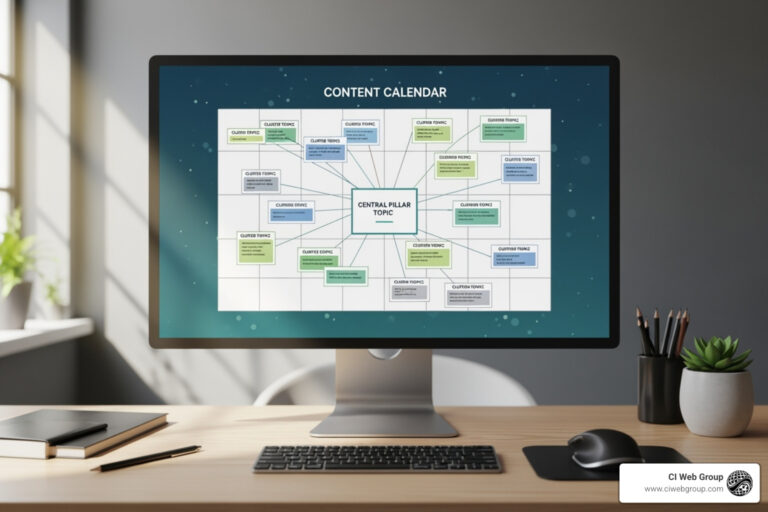
If you're creating content but not seeing results, the problem isn't your effort—it's your approach. Many businesses publish scattered blog posts that compete against each other for attention. A content cluster content calendar solves this by organizing your content into strategic topic hubs that search engines and customers love.
This strategy involves:
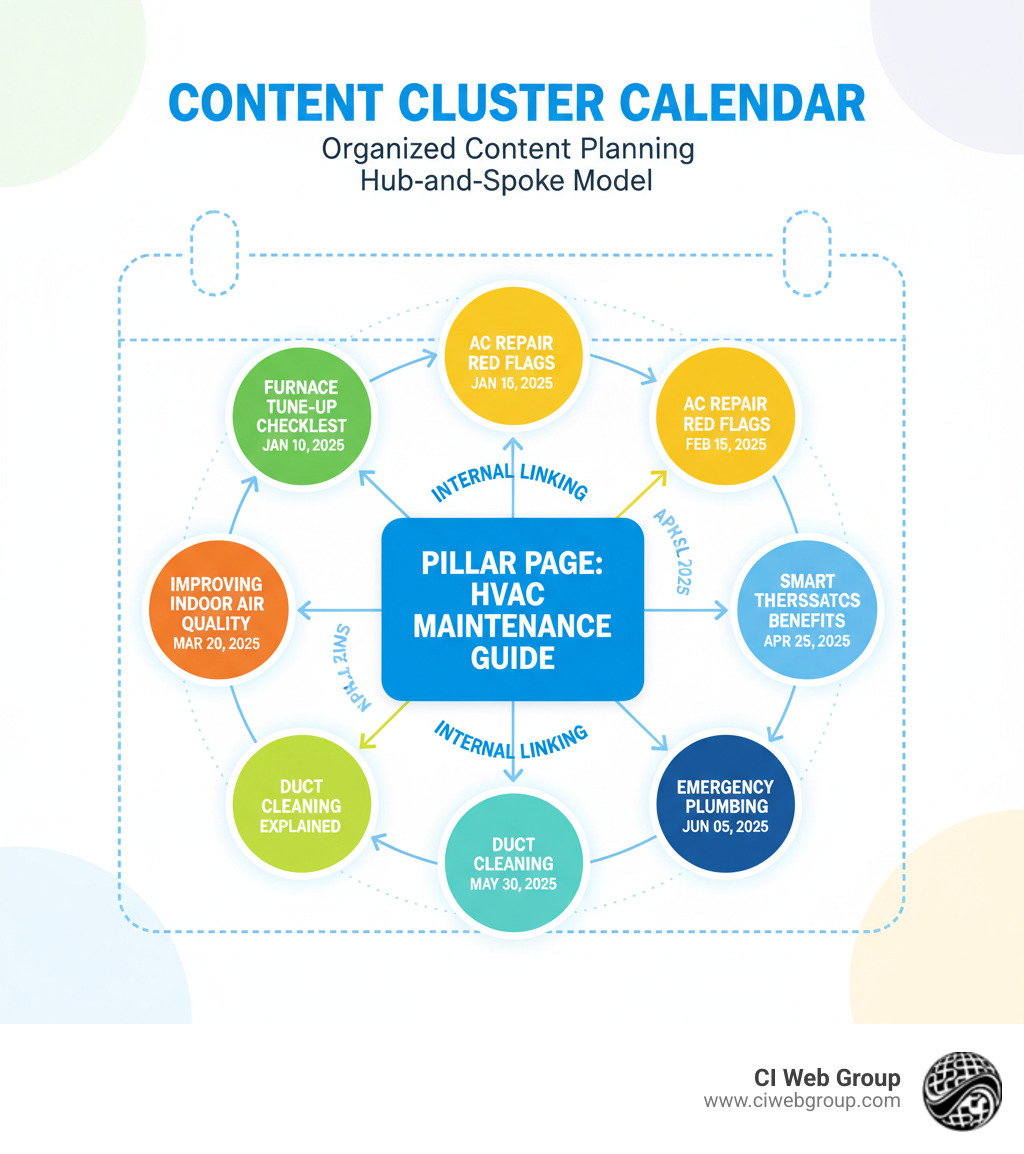
When someone searches for "HVAC maintenance," they don't just find one article—they find your complete expertise on the topic. A content cluster content calendar organizes when and how you'll create each piece, ensuring your pillar page launches first, followed by supporting cluster content that strengthens your position in search results.
The result? A sustainable content engine that generates ideas for months, ranks higher in search results, and positions you as the go-to expert in your market.
I'm Jennifer Bagley, CEO of CI Web Group, where I've helped hundreds of home service companies transform their digital marketing through strategic content planning. I've seen how a well-executed content cluster content calendar can turn struggling marketing efforts into lead-generating machines.
To maximize your strategy, consider a content cluster competitive analysis and effective content cluster link building.
Instead of creating isolated blog posts that compete against each other, content clusters organize your website's content around a central topic. Think of it as creating a mini-encyclopedia on your website for each of your core services. This method helps search engines understand that you're an expert in your field.

A content cluster has three core components:
With 15% of daily Google searches being entirely new, search engines prioritize understanding context and user intent. Content clusters align perfectly with this by:
A content cluster content calendar is essential for managing this strategy. It provides a single source of truth for your content plan, ensuring consistency, facilitating team collaboration, and allowing you to be proactive rather than reactive. It helps you map out the entire cluster, scheduling the pillar page first and then the supporting articles, ensuring your internal linking structure is built correctly from the start.

Creating your first content cluster content calendar is a manageable process. Follow these six steps to build a strategic roadmap that turns scattered content into a lead-generating machine.
Start with your core services and think about the broad topics your customers search for, like "HVAC maintenance" or "water heater installation." Use keyword research tools to find related questions and understand searcher intent. For your first attempt, pick 1-3 topic clusters that align with your most profitable services.
Before creating new content, review what you already have. Pull up every blog post and service page to find content that can be repurposed into a cluster. That old post about changing air filters can become a powerful cluster article when linked to a main HVAC pillar page. This process also reveals content gaps that become your new article ideas.
Your pillar page should be a substantial, comprehensive guide (2,000-5,000 words) on your chosen topic. Each cluster article (1,000+ words) should then explore a specific subtopic in detail. Create a content brief for each piece that includes the topic cluster, target keywords, and intended audience to keep your team aligned.
Choose a tool your team is comfortable with, like Google Sheets, Airtable, or Monday.com. Your calendar should include essential fields for each entry: topic cluster, content title, type (pillar/cluster), status, owner, due dates, and publish dates. Schedule your pillar page first, then space out your cluster content over the following weeks.
Internal linking is the glue that holds your cluster together. Every cluster article must link back to its pillar page, and the pillar page must link out to every relevant cluster article. Use descriptive anchor text like "complete HVAC maintenance guide" instead of "click here" to create clear pathways for both users and search engines.
Use AI tools to accelerate content creation. AI can help generate topic ideas, create detailed outlines, and even draft initial content. This frees up your team to focus on strategy, editing, and adding the unique expertise that makes your company trustworthy. Use AI as a research assistant, not a replacement for human oversight.
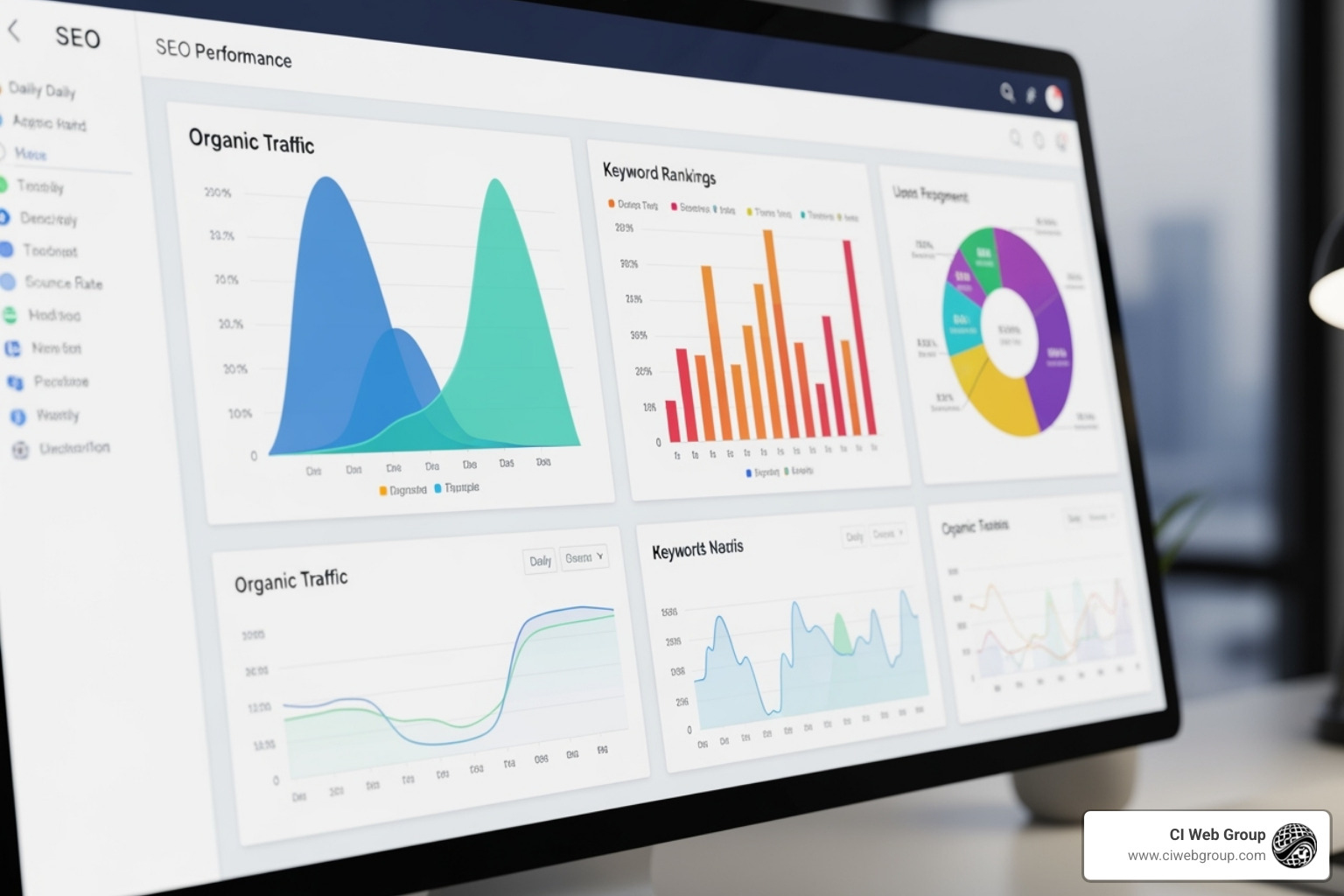
Creating your content cluster content calendar is just the beginning. The real magic happens when you track performance, optimize your strategy, and scale your content engine.
Choosing the right tool depends on your team's workflow. The most sophisticated tool is useless if it's not used consistently.
Tool TypeExamplesBest ForSpreadsheetsGoogle Sheets, Microsoft ExcelSmall teams, simple workflows, and getting started for free.Project Management AppsAirtable, Trello, Asana, Monday.comTeams needing visual workflows, task assignments, and collaboration features.Dedicated Content SoftwareCoSchedule, DivvyHQLarger teams managing multiple content clusters and needing integrated analytics and promotion.
Understanding performance is key to refining your strategy. Track these metrics:
Treat your content calendar as a living system that evolves with your business.
Picture this familiar scenario: You're pumped about growing your home service business through content marketing. You dive in headfirst, publishing blog posts about furnace repairs, social media updates about drain cleaning, and helpful articles about electrical safety. Three months later, you're staring at your analytics wondering why the phone isn't ringing. Sound familiar?
Here's the thing - the problem isn't your effort, it's your approach.
Most home service companies scatter their content like seeds in the wind. One blog post about furnace maintenance here, another about emergency plumbing there, maybe a social media post about generator installation somewhere else. Each piece exists in isolation, competing against your own content instead of working together to build your authority.
This is where a content cluster content calendar becomes your secret weapon. Instead of creating random posts that fight each other for attention, you build comprehensive topic hubs that search engines absolutely love and customers genuinely trust.
Think of it this way: when someone searches for "HVAC maintenance," wouldn't it be amazing if they didn't just find one of your articles, but finded your complete expertise on the entire topic? That's exactly what content clusters accomplish.
A content cluster content calendar transforms this scattered approach into a strategic content engine. It starts with pillar pages - those comprehensive 2,000+ word guides covering broad topics like "Complete Home Plumbing Maintenance" or "HVAC System Care." These become your authority anchors.
Then you surround each pillar with cluster content - focused 1,000+ word articles targeting specific subtopics that link back to your main pillar. Your plumbing pillar might have supporting articles about "How to Prevent Frozen Pipes," "Water Heater Warning Signs," and "Emergency Shut-off Locations."
The magic happens with strategic scheduling. Your content cluster calendar ensures your pillar page launches first, establishing your foundation. Then supporting cluster content rolls out systematically, each piece strengthening your position in search results through an internal linking structure that helps search engines understand the depth of your expertise.
But here's what really makes this approach powerful - it creates an organized workflow that keeps your entire team aligned. No more scrambling for content ideas or missing publication deadlines. Your calendar becomes the roadmap that guides every piece from concept to publication.
The result? A sustainable content engine that generates fresh ideas for months, ranks higher in search results, and positions you as the undisputed local expert in your market. Instead of hoping your next blog post gets noticed, you're building an interconnected web of authority that dominates your competition.
I'm Jennifer Bagley, CEO of CI Web Group, and over the past decade, I've watched hundreds of home service companies transform their digital marketing through strategic content planning. The difference between companies that struggle with content and those that dominate their markets often comes down to this one shift - moving from scattered posts to strategic content clusters organized through a well-planned calendar.
When you're ready to dive deeper into this strategy, exploring content cluster competitive analysis can help you understand what your competitors are doing, while mastering content cluster link building ensures your content gets the authority boost it deserves.
You know that feeling when you're looking for something specific online, and you find exactly what you need – plus everything else related to it – all in one place? That's the magic of content clusters at work.
Content is still king, but in today's crowded digital world, even the best content can disappear into the void if it's not organized strategically. Content clusters solve this problem by moving beyond targeting individual keywords to building comprehensive, interconnected bodies of content around broad topics. Think of it as creating neighborhoods of related information rather than scattered houses with no clear connection.
At its heart, a content cluster has three main pieces: a central pillar page, several supporting cluster content articles, and a robust internal linking structure that connects them all. This hub-and-spoke model helps us establish topical authority on subjects that matter to home service customers – everything from "HVAC repair" to "water heater installation" or "tree removal services."
The SEO benefits are impressive. When we show search engines like Google that we have extensive, interconnected content on a particular subject, we're essentially raising our hand and saying, "We're the experts here." This can lead to improved search rankings for both our pillar page and our individual cluster articles. For our audience, it means they can easily move from a general overview to specific details, finding all the answers they need without bouncing around the internet.
But here's where things get tricky. Managing such a sophisticated content strategy requires a powerful organizational tool: a content cluster content calendar. While 73% of B2B marketers already use an editorial calendar when creating content, integrating this with a content cluster strategy takes it to a whole new level of strategic planning and execution. It's how we keep track of what to create, when to publish, and how each piece fits into the larger puzzle.
Let me paint you a picture. Imagine your website as a library. In the old way of doing things, each book (blog post) sat on a shelf covering a very specific topic, with no clear connection to other related books. Visitors and search engines would wander around, trying to piece together the full story from scattered bits of information.
A content cluster is like creating an entire section of that library dedicated to one broad topic. At the center sits a comprehensive reference book – that's your pillar page. This long-form piece of content, typically around 2,000 to 5,000 words, provides a high-level overview of a broad subject that matters to your home service business.
For example, a plumbing company might create a pillar page called "The Ultimate Guide to Home Plumbing Maintenance." This would cover all aspects of plumbing maintenance in general terms, without diving too deep into any single subtopic.
Surrounding this pillar page are your supporting cluster content articles. These are individual blog posts, usually around 1,000 words each, that dive deep into specific subtopics mentioned in the pillar page. Using our plumbing example, cluster content might include "How to Fix a Leaky Faucet," "Understanding Water Heater Efficiency," or "Preventative Drain Cleaning Tips." Each article provides detailed, focused information on one particular aspect of home plumbing maintenance.
The real magic happens with the internal linking structure. Every supporting cluster article links back to the central pillar page, often using the exact topic phrase of the pillar as anchor text. The pillar page also links out to all the supporting cluster articles, creating a clear path for users and search engines to find more detailed information. This creates a powerful, interconnected web of content that signals to search engines just how deep our expertise runs on the subject.
In today's digital world, staying ahead means understanding how search engines actually process information. Google handles over 63,000 searches every second, and here's a fascinating fact: 15% of these searches are completely brand-new, with no previous search history. This means search engines are constantly working to understand context and intent, not just exact keywords.
The content cluster strategy aligns perfectly with this reality. By organizing our content into logical, interconnected clusters, we open up several powerful SEO advantages.
Building website authority happens when we consistently publish high-quality, comprehensive content around a specific topic. Search engines recognize this depth of knowledge and reward us with significantly boosted credibility and ranking potential.
Improved search rankings follow naturally because we're not just trying to rank for one keyword – we're establishing ourselves as the authority on an entire topic. The internal linking within a cluster helps distribute "link equity" across all related pages, strengthening the SEO performance of the entire cluster. When the pillar page ranks well, it lifts up the cluster content, and vice versa.
Better user navigation creates a seamless experience for website visitors. They can easily find the information they need, moving from general overviews to specific details with intuitive links. This keeps them on our site longer, reduces bounce rates, and sends positive signals to search engines about user experience.
Helping web crawlers understand site structure becomes effortless when we create a clear hub-and-spoke model. Search engines use these crawlers to figure out what's on the internet, how it's organized, and how websites should be ranked. Our organized approach makes it incredibly easy for crawlers to understand the relationships between our content, index our pages more effectively, and recognize our topical relevance.
Thought leadership emerges naturally when we consistently provide comprehensive, valuable content. This positions our home service company as the go-to expert in our industry, building trust with potential customers and making them more likely to choose us when they need our services.
Higher engagement results when users find all the answers they need in one place. They're more likely to engage with our content, share it with others, and return to our site for future needs.
Implementing a content cluster strategy is no small undertaking, especially for home service businesses already juggling daily operations, customer calls, and field work. This is exactly why a dedicated content cluster content calendar isn't just helpful – it's absolutely essential. It transforms what could be a chaotic, overwhelming process into a streamlined, manageable workflow.
Think of your content calendar as the conductor of your content orchestra. It ensures every instrument – pillar pages, cluster content, social media promotion, email campaigns – plays its part at exactly the right time, creating a harmonious and powerful marketing symphony.
Organizing chaos becomes possible when you have a content calendar in place. Without it, content ideas pile up, deadlines get missed, and team members end up confused about their responsibilities. A well-structured content cluster content calendar provides a central, visual hub for all content-related activities, from initial brainstorming to publication and promotion.
Ensuring consistency keeps your audience engaged and your search rankings stable. A calendar helps you plan out your content pipeline for weeks or months in advance, ensuring a steady flow of valuable information to your audience. This means you can consistently release new cluster content that reinforces and strengthens your pillar pages.
Team collaboration flows smoothly when everyone knows their role. Content creation in home service companies often involves multiple team members – writers, editors, designers, SEO specialists, and marketing managers. A shared content calendar makes it crystal clear who is responsible for what and by when, helping you avoid miscommunication and wasted effort.
Proactive versus reactive content creation makes all the difference in quality and effectiveness. A robust calendar shifts your strategy from scrambling for last-minute content ideas to planning well in advance. This allows for thorough research, high-quality creation, and strategic alignment with your business goals, such as seasonal promotions for HVAC or plumbing services.
Planning content clusters strategically becomes manageable with a calendar that helps you map out the entire structure. You can schedule the creation of the pillar page first, then strategically plan and release the supporting cluster articles over time. This ensures the internal linking structure gets built correctly from the start and that each piece contributes to your overall topical authority.
The fact that 73% of B2B marketers use an editorial calendar while creating content tells us something important. This statistic from the Content Marketing Institute shows just how widely recognized calendars are as a fundamental tool for content success. For us, it's not just about scheduling – it's about strategically plotting our path to SEO dominance and establishing our home service brand as the undisputed local expert.
Creating your first content cluster content calendar doesn't have to feel overwhelming. Think of it like planning a family vacation – you wouldn't just show up at the airport without knowing where you're going, right? The same principle applies here. With a clear roadmap and the right approach, you'll build a system that practically runs itself.
I've walked hundreds of home service companies through this exact process, and the ones who follow these six steps consistently see their search rankings climb within months. Let's break it down together, step by step.
Your journey starts with understanding what keeps your customers awake at night. When someone's furnace breaks down at 2 AM or their basement starts flooding, what are they frantically typing into Google?
Start with keyword research, but think bigger than individual phrases. Instead of focusing on "furnace repair," expand your thinking to "HVAC maintenance" as a comprehensive topic. Tools like SEMrush's Keyword Magic Tool or Topic Research can reveal golden opportunities you might miss otherwise. Google Keyword Planner works great too, especially when you're just starting out.
Here's what many home service companies get wrong: they focus only on keywords without understanding searcher intent. Someone searching for "emergency plumbing" needs immediate help, while someone looking up "how to unclog a drain" wants to learn. Understanding this difference shapes everything from your content tone to your call-to-action.
Use the "See-Think-Do-Care" model to map out your customer journey. See represents awareness (general plumbing information), Think covers consideration (comparing repair options), Do means action (hiring a plumber), and Care involves ongoing support (maintenance tips).
Brainstorm your core pillar topics based on what you find. For HVAC companies, "HVAC Maintenance Best Practices" makes an excellent pillar. Plumbing businesses might choose "Comprehensive Guide to Home Water Heaters." Electrical contractors could focus on "Understanding Your Home's Electrical System."
Don't try to tackle everything at once – that's a recipe for burnout. Prioritize 1-3 high-impact topic clusters that align directly with your business goals. Are you trying to generate more emergency service calls? Focus on urgent repair topics. Want to build long-term relationships? Create educational maintenance content.
Before you start creating new content, take inventory of what you already have. It's like cleaning out your garage – you might find some real treasures buried under all that clutter.
Review your existing content systematically. Pull up every blog post, service page, and resource you've created. What's getting traffic? What's collecting digital dust? This analysis prevents you from accidentally competing against yourself and helps identify your strongest performing pieces.
Many of your existing articles can get a second life through smart repurposing. That standalone blog post about seasonal HVAC tips? It might become perfect supporting content for your new maintenance pillar page. Sometimes you'll even find a high-performing long-form article that just needs optimization to become your pillar page.
Map your content gaps by comparing what you have against your planned topic clusters. If you're building an "HVAC maintenance" pillar, do you have content covering seasonal tune-ups, filter changes, and energy efficiency? Are you missing crucial information that addresses the "Do" intent for emergency services?
Create a visual map connecting your existing content to planned clusters. Tools like ScreamingFrog can crawl your entire site and give you a comprehensive content inventory. This step often reveals surprising connections you hadn't considered before.
Now comes the fun part – designing your content architecture. Think of your pillar page as the main hub of a wheel, with cluster articles as spokes radiating outward.
Create comprehensive pillar page outlines that cover your topic broadly but thoroughly. Your "HVAC Maintenance Best Practices" pillar should touch on seasonal maintenance, filter changes, common problems, energy efficiency, and when to call professionals. Aim for 2,000 to 5,000 words, but focus on value over word count.
Plan specific cluster articles for each major section of your pillar. From that HVAC maintenance pillar, you might create "Spring HVAC Tune-Up Checklist," "How Often Should You Change Your HVAC Filter?", and "Troubleshooting Common AC Problems." Each cluster article should be around 1,000 words and dive deep into its specific subtopic.
Develop detailed content briefs for every piece you plan to create. This step saves countless hours later and ensures consistency across your entire content cluster. Your brief should identify the topic cluster it belongs to, specify whether it's a pillar or cluster piece, list target keywords, define your audience, plan your URL structure, and outline key points to cover.
Don't forget to plan your call-to-action and internal linking strategy right from the start. Knowing how pieces connect helps writers naturally incorporate links and guides readers toward your services.
Here's where your content cluster content calendar transforms from concept to reality. You're not just scheduling posts – you're orchestrating a symphony of interconnected content.
Your calendar needs essential fields that keep everyone aligned: Topic Cluster (like "HVAC Maintenance"), Content Title (specific article names), Pillar/Cluster designation, Status tracking (from idea to published), Owner assignment, Due dates, Publish dates, Target keywords, Planned URLs, Call-to-action plans, and Promotion channels.
Choose tools your team will actually use. Google Sheets or Excel work perfectly for smaller teams and offer excellent collaboration features. Backlinko provides a helpful free content calendar template you can adapt for content clusters.
For more advanced needs, consider project management platforms like Airtable, Monday, Trello, or Asana. These offer task automation, visual workflows, and team collaboration features that scale with your growth.
Dedicated content marketing platforms like CoSchedule or DivvyHQ provide comprehensive planning, publishing, and analytics capabilities designed specifically for content marketing.
Schedule strategically, starting with your pillar page. Once it's live, roll out supporting cluster content over the following weeks or months. This approach builds topical authority gradually and gives you time to create high-quality pieces without rushing.
Internal linking is the secret sauce that transforms individual articles into a powerful content ecosystem. Think of it as creating pathways that guide both readers and search engines through your expertise.
Follow the two-way linking rule religiously. Every cluster article must link back to its pillar page, and every pillar page must link out to all its supporting cluster content. This creates a tight web that signals topical authority to search engines.
When linking from cluster articles to pillars, use natural opportunities within your content. If you're writing about fixing leaky faucets, naturally reference your comprehensive plumbing maintenance guide. Use the pillar page's exact title or close variation as anchor text – this tells search engines exactly how these pieces connect.
Link from pillars down to clusters by introducing subtopics and directing readers to detailed explanations. When discussing seasonal maintenance in your HVAC pillar, link to your specific "Spring HVAC Tune-Up Checklist" article.
Use descriptive anchor text that includes relevant keywords. Instead of generic "click here" links, try "learn more about professional drain cleaning services" or "find energy-efficient HVAC maintenance tips."
The goal is creating logical content paths that feel natural to users while clearly showing search engines your content structure. Strong internal linking distributes authority throughout your cluster, boosting SEO performance for all related pages.
AI has become our content creation co-pilot, handling routine tasks so we can focus on strategy and creativity. Used wisely, it can dramatically speed up your content cluster content calendar development.
Use AI for topic ideation by feeding your core topics into tools that analyze search trends, competitor content, and audience questions. This helps identify those brand-new search queries that represent fresh opportunities for your business.
Generate comprehensive outlines with AI assistance, ensuring you cover all essential points for both pillar pages and cluster articles. This provides a solid foundation that saves research time and prevents important topics from falling through the cracks.
AI excels at content repurposing suggestions, identifying sections of pillar pages that could become standalone cluster articles or changing existing blog posts into new cluster content. It can also help adapt long-form content into social media snippets, infographics, or video scripts.
Streamline your workflow by using AI for initial drafts, summarizing complex information, or optimizing content for SEO. This acceleration lets you publish more high-quality content consistently without burning out your team.
AI is your co-pilot, not your pilot. While it handles repetitive tasks and provides valuable insights, human strategists remain essential for defining brand voice, understanding nuanced customer needs, and crafting compelling narratives that resonate with your local home service audience. AI helps you work smarter, allowing your team to focus on the strategic thinking and creative touches that truly differentiate your content.
Implementing a content cluster content calendar is a journey, not a destination. To truly dominate search results and maintain our authority, we need to continuously track performance, optimize our strategy, and adapt to the changing digital landscape. This section will guide us through the essential tools for managing our calendar and the critical steps for measuring and scaling our content engine.
Choosing the right tools can make all the difference in the efficiency and effectiveness of our content cluster strategy. Here's a comparison of common options:
| Tool Type | Examples
We're going to build an extensive guide for an SEO article on "content cluster content calendar".
Let me share a story I hear almost daily from home service business owners. You dive headfirst into content marketing with genuine excitement. You publish helpful blog posts about HVAC repairs, create social media content about plumbing tips, and write informative articles about your services. Three months later, you're staring at disappointing analytics wondering where you went wrong.
The truth is, your effort was never the problem – your approach was.
Most home service companies scatter their content like seeds in the wind. One standalone post about furnace maintenance here, another isolated article about emergency repairs there. Each piece fights for attention instead of working together to establish your authority. It's like having a team of talented players who never pass the ball to each other.
This is exactly where a content cluster content calendar transforms everything. Instead of creating random content, you build comprehensive topic hubs that search engines absolutely love and customers trust completely.
Here's the magic this approach delivers: Pillar pages of 2,000+ words become your comprehensive guides covering broad topics like "HVAC maintenance" or "plumbing system care." Cluster content articles, typically 1,000+ words each, dive deep into specific subtopics while linking back to strengthen your pillar. Strategic scheduling ensures every piece publishes at the perfect time to maximize impact. Your internal linking structure creates clear pathways that help search engines understand the depth of your expertise. Most importantly, an organized workflow keeps your entire team aligned and moving toward the same goals.
When someone searches for "HVAC maintenance," they don't just stumble upon one random article – they find your complete expertise on the topic. Your pillar page serves as the comprehensive guide, while your cluster articles provide detailed solutions to specific problems. This approach positions you as the undisputed local authority rather than just another contractor with a blog.
The content cluster content calendar takes this winning strategy even further by organizing exactly when and how you'll create each piece. Your pillar page launches first, establishing your foundation. Then, supporting cluster content follows in a strategic sequence that continuously strengthens your position in search results.
The result? A sustainable content engine that generates fresh ideas for months ahead, consistently ranks higher in search results, and positions your company as the go-to expert customers trust when they need help.
I'm Jennifer Bagley, CEO of CI Web Group, and I've spent over a decade helping hundreds of home service companies transform their digital marketing through strategic content planning and AI-powered systems. Time and again, I've witnessed how a well-executed content cluster content calendar can turn struggling marketing efforts into lead-generating machines that completely dominate local search results.
Understanding related strategies like content cluster competitive analysis and content cluster link building will help you maximize the impact of your content cluster content calendar and stay ahead of your competition.
You know that feeling when you're trying to find something specific in a messy garage? You know it's in there somewhere, but everything's scattered around without any real organization. That's exactly what happens to most home service websites – they have great content, but it's all over the place.
Content clusters solve this problem by creating a smart, strategic approach to organizing your content. Instead of writing random blog posts that compete with each other, you build comprehensive, interconnected bodies of content around broad topics that your customers actually care about.
Think of it this way: when someone searches for "HVAC maintenance," they don't just want one narrow answer. They want to understand the whole picture – seasonal maintenance, filter changes, common problems, energy efficiency tips, and more. A content cluster gives them exactly that.
At its heart, a content cluster content calendar consists of three essential components: a central pillar page, several supporting cluster articles, and a robust internal linking structure that connects everything together. This hub-and-spoke model helps you establish real expertise on subjects that matter to your customers, whether that's "water heater installation," "emergency plumbing," or "tree removal services."
The SEO benefits are pretty amazing when you think about it. By showing search engines like Google that you have extensive, interconnected content on a particular subject, you're essentially saying, "Hey, we really know our stuff here." This signals authority in a way that isolated blog posts simply can't match. The result? Improved search rankings for both your pillar page and your individual cluster articles.
For your website visitors, it means they can easily move from a general overview to specific details, finding all the answers they need without bouncing around to different websites. They stay longer, engage more, and trust you more.
But here's the thing – managing this kind of sophisticated content strategy isn't something you can wing. You need a powerful organizational tool: a content cluster content calendar. While 73% of B2B marketers already use an editorial calendar for creating content, integrating this with a content cluster strategy takes your planning to an entirely new level. It becomes your roadmap for what to create, when to publish it, and how each piece fits into your bigger marketing puzzle.
Let me paint you a picture that makes this crystal clear. Imagine your website as a well-organized library. In the old days of content marketing, each blog post was like a standalone book sitting randomly on a shelf – maybe a technical manual next to a cookbook next to a romance novel. Visitors (and search engines) had to hunt around to find related information, and often they'd just give up and leave.
A content cluster is like creating an entire section of that library dedicated to one broad topic that your customers care about. At the center of this section sits a comprehensive reference book – that's your pillar page. This substantial piece of content, typically around 2,000 to 5,000 words, provides a complete overview of a broad subject relevant to your home service business.
Let's say you're a plumbing company. Your pillar page might be titled "The Complete Guide to Home Plumbing Maintenance." This comprehensive guide would cover all the major aspects of plumbing maintenance – seasonal care, common problems, preventive measures, when to call a professional – but without diving too deep into any single topic.
Surrounding this pillar page are your supporting cluster articles. These are focused blog posts, usually around 1,000 words each, that dive deep into the specific subtopics mentioned in your pillar page. Using our plumbing example, you might create cluster articles like "How to Fix a Leaky Faucet in 5 Easy Steps," "Understanding Your Water Heater's Efficiency Rating," or "The Homeowner's Guide to Preventative Drain Cleaning."
Each of these articles is laser-focused on one specific aspect of home plumbing maintenance, providing the detailed, actionable information that people are searching for.
The magic happens with your internal linking structure. Every supporting cluster article links back to the central pillar page, often using the exact topic phrase as anchor text. At the same time, the pillar page links out to all the supporting cluster articles, creating natural pathways for both users and search engines. This creates a powerful, interconnected web of content that clearly signals your deep expertise on the subject.
Here's something that might surprise you: Google processes over 63,000 searches every single second. Even more interesting? About 15% of those searches are completely brand-new – nobody has ever searched for those exact phrases before. This means search engines are constantly working to understand context and intent, not just matching exact keywords.
The content cluster strategy aligns perfectly with how search engines actually work today. When you organize your content into logical, interconnected clusters, you open up several powerful SEO advantages that isolated blog posts simply can't deliver.
Building website authority happens naturally when you consistently publish high-quality, comprehensive content around specific topics. Search engines recognize this depth of knowledge and reward it with higher credibility and ranking potential. You're not just another website with a random blog post about furnace filters – you're the go-to resource for everything HVAC maintenance.
Improved search rankings become possible because you're not just targeting one keyword anymore; you're dominating an entire topic. The internal linking within your cluster helps distribute "link equity" across all related pages, strengthening the SEO performance of your entire cluster. When your pillar page ranks well, it pulls up the cluster content with it, and vice versa.
Better user navigation keeps people on your site longer and more engaged. When visitors find a well-structured content cluster, they can easily move from general overviews to specific details with intuitive links. They get their questions answered without having to search elsewhere, which reduces bounce rates and sends positive signals to search engines.
Helping web crawlers understand your site structure becomes effortless when you create a clear hub-and-spoke model. Search engines use these web crawlers to figure out what's on the internet and how it should be ranked. Your organized content cluster makes it incredibly easy for crawlers to understand the relationships between your pages, index them more effectively, and recognize your topical expertise.
Thought leadership develops naturally when you consistently provide comprehensive, valuable content. This positions your home service company as the trusted expert in your industry, building the kind of trust that makes potential customers choose you when they need help.
Higher engagement follows when users find all the answers they need in one place. They're more likely to share your content, bookmark it, and return to your site for future needs. This creates a virtuous cycle of trust and authority that compounds over time.
Let's be honest – implementing a content cluster strategy feels overwhelming, especially when you're running a home service business and juggling daily operations, customer calls, and everything else that comes with the territory. This is exactly why a dedicated content cluster content calendar isn't just helpful – it's absolutely essential.
Think of your content calendar as the conductor of your marketing orchestra. Without it, you might have talented musicians (great content ideas), but they're all playing different songs at different times. With a skilled conductor keeping everyone in sync, those same musicians create beautiful, powerful music that moves people.
Your content cluster content calendar ensures every piece of content – pillar pages, cluster articles, social media posts, email campaigns – plays its part at exactly the right time, creating a harmonious and powerful marketing symphony.
Organizing the chaos becomes possible when you have a central, visual hub for all your content activities. Without a calendar, content ideas pile up in random places, deadlines get missed, and team members end up confused about who's supposed to do what. Your calendar transforms this chaos into a clear, manageable system that everyone can understand and follow.
Ensuring consistency becomes automatic when you plan your content pipeline weeks or months in advance. This steady flow of valuable information keeps your audience engaged and helps maintain your search rankings. More importantly, it means you can consistently release new cluster content that reinforces and strengthens your pillar pages over time.
Team collaboration flows naturally when everyone can see the big picture. Whether you're working with writers, editors, designers, SEO specialists, or marketing managers, a shared content calendar makes it crystal clear who's responsible for what and when it needs to be done. This eliminates miscommunication and prevents duplicated effort.
Proactive versus reactive content creation changes everything about your marketing effectiveness. Instead of scrambling for last-minute content ideas or publishing sporadically, you can plan strategically around your business goals. Need to promote your HVAC services before summer? Your calendar helps you publish relevant cluster content months in advance, building authority and capturing search traffic when people start thinking about air conditioning.
Planning entire content clusters becomes manageable when you can visualize the whole structure on your calendar. You can schedule the creation of your pillar page first, then strategically plan and space out the supporting cluster articles over the following weeks or months. This ensures your internal linking structure gets built correctly from the start, and each piece contributes to your overall topical authority.
The Content Marketing Institute found that 73% of B2B marketers use an editorial calendar for their content creation, and there's a good reason why. For home service companies like yours, it's not just about scheduling – it's about strategically plotting your path to SEO dominance and establishing your brand as the undisputed local expert in your field.
Creating a content cluster content calendar might feel overwhelming at first glance, but here's the truth: it's actually quite manageable when you break it down into clear, actionable steps. Think of it as building a roadmap that will guide your content creation for months ahead, ensuring every piece of content you publish works toward establishing your home service company as the local authority.
This isn't about randomly filling calendar dates with blog ideas. We're crafting a strategic system that transforms your scattered content efforts into a powerful, organized engine that search engines love and customers trust.
Your journey starts with understanding exactly what your potential customers are searching for online. With Google processing over 63,000 searches every second, there's a massive opportunity waiting for your business to capture.
Keyword research forms the foundation of everything we'll build. Instead of targeting narrow terms like "furnace repair," we need to think bigger and broader. Consider "HVAC maintenance" as your umbrella topic – it's comprehensive enough to support multiple related articles while still being specific to your services.
Tools like SEMrush's Keyword Magic Tool and Topic Research, along with Google Keyword Planner, become your best friends during this process. They'll uncover high-volume keywords and reveal the questions your audience is actually asking. 15% of Google searches are completely new each day, so staying alert to emerging trends can give you a competitive edge.
Understanding searcher intent goes beyond just finding keywords. When someone types "emergency plumbing" into Google, they're in a very different mindset than someone searching "how to unclog a drain." The first person needs immediate help (Do intent), while the second wants to learn something (Know intent). This "See-Think-Do-Care" framework helps you create content that meets people exactly where they are in their journey.
Once you've gathered this research, brainstorm your core topics. For an HVAC company, "HVAC Maintenance Best Practices" makes an excellent pillar page. A plumbing business might choose "Comprehensive Guide to Home Water Heaters," while an electrical contractor could focus on "Understanding Your Home's Electrical System."
Here's the key: don't try to tackle everything at once. Pick 1-3 high-priority topic clusters that directly align with your business goals. Maybe you want to generate more leads for a specific service, increase brand awareness in a new area, or establish authority around complex topics like home energy audits. Focus your efforts where they'll make the biggest impact.
Before diving into creating new content, let's take inventory of what you already have. This step often reveals hidden gems that can be polished and repurposed, saving you time and maximizing your existing investment.
Start by analyzing your current content. Review your blog posts, service pages, and any other content you've published. What's performing well in search results? What feels outdated or incomplete? What topics are you missing entirely? This analysis prevents you from accidentally creating content that competes with itself and helps identify your biggest opportunities.
Look for repurposing opportunities among your existing articles. That standalone blog post about seasonal HVAC tips might be perfect supporting content for your new maintenance cluster. You might even find a high-performing long-form article that could be expanded and optimized into a pillar page with minimal effort.
Identify your content gaps by mapping what you have against your planned topic clusters. If you're building an "HVAC maintenance" pillar, do you have enough supporting content covering seasonal maintenance, filter changes, and common troubleshooting? Are you missing content that addresses the "Do" intent for emergency services?
Create a visual map connecting your existing content to your planned clusters. You can literally draw lines on paper or use a spreadsheet to show these relationships. This exercise helps you see how old and new content can work together to strengthen your entire cluster. Tools like ScreamingFrog can help by crawling your site to provide a comprehensive list of all your pages.
Now comes the exciting part – planning the actual content that will establish your expertise and attract customers.
Your pillar page serves as the cornerstone of each cluster. For that "HVAC Maintenance Best Practices" pillar, you'll outline all the major areas: seasonal maintenance schedules, filter replacement guidelines, common issues homeowners face, energy efficiency tips, and when to call professionals. These comprehensive pages typically run 2,000 to 5,000 words, covering the topic thoroughly without diving too deep into any single subtopic.
Each cluster article focuses on one specific aspect mentioned in your pillar page. From your HVAC maintenance pillar, you might create supporting articles like "Spring HVAC Tune-Up Checklist," "How Often Should You Change Your HVAC Filter?" and "Troubleshooting Common AC Problems." These targeted pieces, usually around 1,000 words each, provide the detailed information your pillar page introduces.
Developing detailed content briefs ensures consistency and guides your writers, whether they're in-house team members or external contractors. Each brief should clearly identify which topic cluster it belongs to, include a compelling, SEO-friendly title, and specify whether it's a pillar page or supporting cluster content. Don't forget to include your target keywords, define your audience and their pain points, plan your URL structure, and outline the key points to cover. Most importantly, include internal linking instructions and specify what call to action you want readers to take.
This is where your content cluster content calendar transforms from concept to reality. The right structure makes the difference between a calendar that guides your team effectively and one that becomes another forgotten spreadsheet.
Your calendar needs specific fields to track everything properly. Topic Cluster identifies the overarching theme (like "HVAC Maintenance"), while Content Title specifies the exact article (like "Spring HVAC Tune-Up Checklist"). Pillar/Cluster designation keeps everyone clear on content hierarchy, and Status tracking (Idea, Briefing, Writing, Editing, Scheduled, Published, Promoting) shows exactly where each piece stands.
Team coordination requires clear Owner assignments, realistic Due Dates, and planned Publish Dates. Include your Target Keywords and planned URL for each piece, along with the specific Call to Action and Promotion Channels you'll use to amplify the content.
Choosing the right tool depends on your team's needs and preferences. Google Sheets or Microsoft Excel work perfectly for most home service companies – they're free, collaborative, and familiar to everyone. Backlinko offers a free content calendar template you can adapt to your needs.
If you want more advanced features, project management tools like Airtable, Monday, Trello, or Asana offer task assignment, workflow automation, and visual project boards. For companies serious about content marketing, dedicated platforms like CoSchedule or DivvyHQ provide comprehensive planning, publishing, and analytics features.
Schedule strategically by putting your pillar page first, then spacing out supporting cluster content over the following weeks or months. This approach ensures consistent content flow while continuously reinforcing your topical authority.
Think of internal linking as the circulatory system of your content clusters – it's what keeps everything connected and flowing smoothly for both search engines and your website visitors.
Two-way linking is your golden rule. Every supporting cluster article must link back to its central pillar page, and your pillar page must link out to all supporting articles. This creates a tight web of interconnected content that signals your expertise to search engines.
When linking from cluster articles up to your pillar, look for natural opportunities within your content. If you're writing "How to Fix a Leaky Faucet," you'll naturally find places to reference your broader "Ultimate Guide to Home Plumbing Maintenance" pillar page. Use the exact title or a close variation as your anchor text – this tells search engines that your detailed article is part of a larger, comprehensive topic.
Linking from your pillar down to cluster content works the opposite way. As you introduce various subtopics like seasonal maintenance within your pillar page, link out to your specific articles that dive deeper into those subjects. This creates a logical path for users who want to explore topics in greater detail.
Descriptive anchor text makes a huge difference. Skip generic phrases like "click here" or "read more." Instead, use keyword-rich descriptions like "learn more about professional drain cleaning services" or "find our spring HVAC maintenance checklist." This approach helps both users and search engines understand what they'll find when they click.
Create logical content paths that make it effortless for visitors to find related information and for search engines to crawl and understand your site structure. Strong internal linking distributes "link juice" throughout your cluster, boosting the SEO performance of all connected pages.
AI isn't replacing human creativity in content marketing – it's amplifying it. Smart home service companies use AI tools to handle repetitive tasks, freeing up their teams to focus on strategy and customer connection.
AI excels at topic ideation by analyzing massive amounts of data including search trends, competitor content, and audience questions. This capability is especially valuable for identifying those 15% of brand-new Google searches happening every day. Feed your core topics into an AI tool and watch it generate related subtopics and questions your audience might be asking.
Outline generation becomes lightning-fast with AI assistance. Once you have a topic, AI can create comprehensive outlines for both pillar pages and cluster articles, ensuring you cover all essential points. This gives you a solid starting structure and saves valuable research time.
Content repurposing suggestions from AI can identify sections of your pillar page that could expand into standalone cluster articles. It might also suggest ways to transform existing blog posts into new cluster content, or help you repurpose long-form content into social media snippets, infographics, or video scripts.
Streamlining your workflow with AI tools that assist with initial drafts, summarize complex information, or optimize content for SEO can dramatically accelerate your production process. This means you can publish more high-quality content consistently without burning out your team.
AI is your co-pilot, not your pilot. While it handles repetitive tasks and provides valuable insights, human strategists remain essential for defining your brand voice, understanding nuanced customer needs, and crafting compelling narratives that resonate with your local audience. AI helps you work smarter and more efficiently, allowing your team to focus on the strategic thinking and creative touches that truly differentiate your content.
Implementing a content cluster content calendar is a journey, not a destination. To truly dominate search results and maintain our authority, we need to continuously track performance, optimize our strategy, and adapt to the changing digital landscape. This section will guide us through the essential tools for managing our calendar and the critical steps for measuring and scaling our content engine.
Choosing the right tools can make all the difference in the efficiency and effectiveness of our content cluster strategy. Here's a comparison of common options:
| Tool Type
Search our Blog
5 min read
The Complete Guide to Plumbing Website Design
Discover expert plumbing website design strategies that boost conversions, mobile performance, and local SEO for your plumbing business.
Read more

5 min read
5 Ways to Find a Reliable Plumber Fast
Discover plumbing website content strategies that help homeowners find a reliable plumber fast with mobile-friendly design and trust signals.
Read more

5 min read
The Definitive Guide to HVAC Vehicle Wraps
Discover how HVAC vehicle wraps boost brand visibility, generate leads, and build trust with professional fleet graphics that deliver lasting marketing results.
Read more

5 min read
Step-by-Step Guide to Reliable Pest Control Marketing
Discover how pest control marketing services can boost local visibility, generate leads, and drive recurring revenue with proven strategies for 2026.
Read more