
5 min read
The Complete Guide to Plumbing Website Design
Discover expert plumbing website design strategies that boost conversions, mobile performance, and local SEO for your plumbing business.
Read more
November 20, 2025
AI-powered customer segmentation uses machine learning to automatically analyze customer data and create detailed groups based on behavior, preferences, and characteristics. Unlike traditional methods that rely on basic demographics, AI segmentation identifies hidden patterns and updates in real-time for more precise targeting.
Key Components of AI-Powered Customer Segmentation:
The marketing landscape has fundamentally changed. Traditional segmentation by age or location is no longer enough. Today, 72% of shoppers expect businesses to recognize them as individuals and know their interests, and 78% are more likely to repurchase from companies that provide personalized experiences. This shift makes AI-powered segmentation not just useful, but essential for competitive marketing.
The difference is dramatic. Traditional segmentation might group customers as "homeowners aged 35-55 in suburban areas." AI segmentation goes deeper, identifying "homeowners who schedule HVAC maintenance in spring, research energy-efficient upgrades online, and respond best to email campaigns sent on Tuesday mornings."
This precision transforms how businesses connect with customers. Instead of generic messaging, companies can deliver the right message to the right person at exactly the right time.
I'm Jennifer Bagley, CEO of CI Web Group, where I've spent years helping home service companies leverage AI and data-driven strategies to transform their marketing results. Through implementing ai-powered customer segmentation for hundreds of contractors, I've seen how this technology turns broad marketing approaches into precision-targeted campaigns that drive real growth.
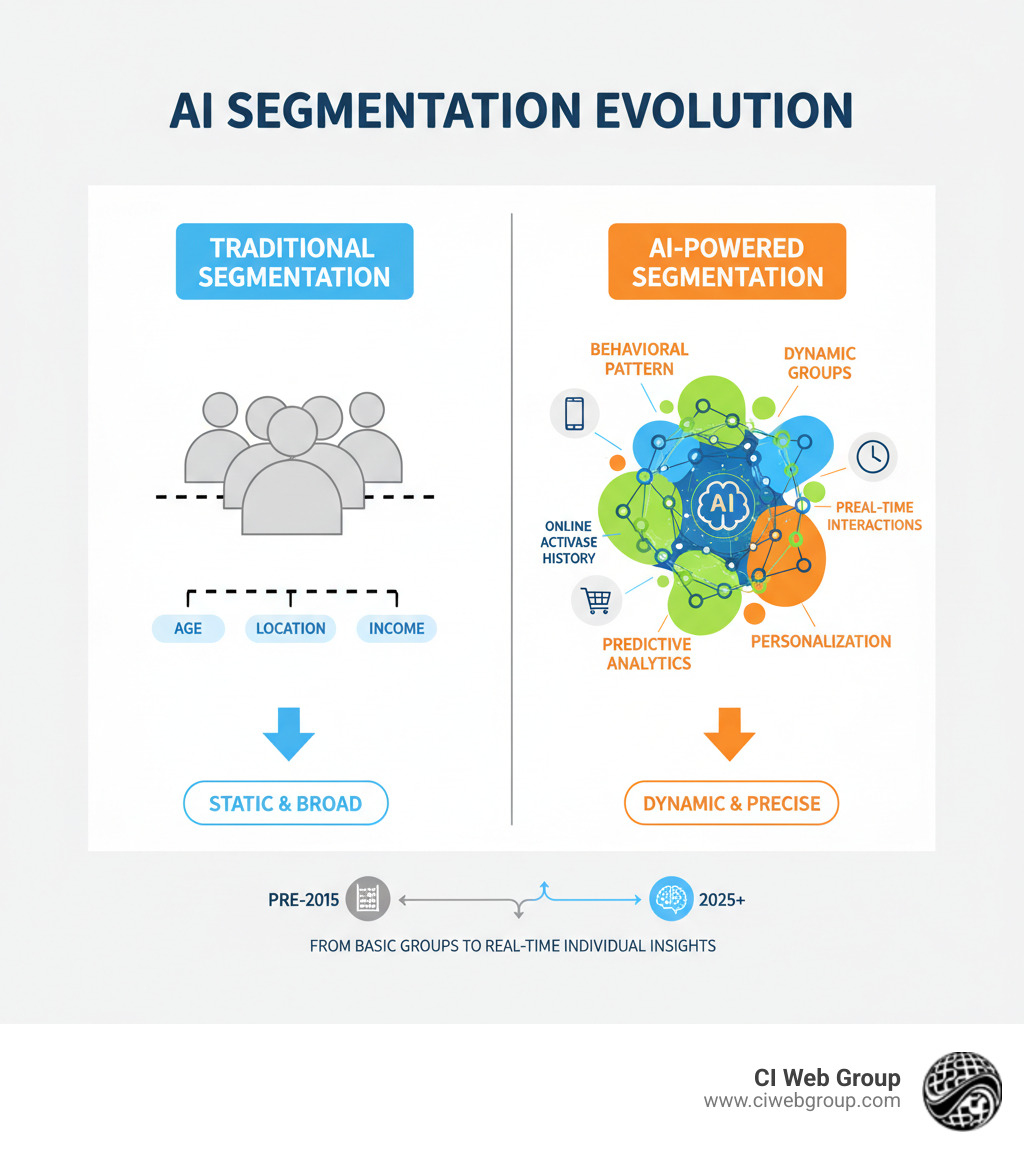
Traditional segmentation is like knowing someone wants "Italian food." AI-powered customer segmentation is like understanding they prefer family-owned restaurants with gluten-free options and cozy lighting on Tuesday evenings.
For years, marketers relied on static segmentation, grouping customers by age, income, or location. The fundamental problem with these traditional methods is they assume people within demographic groups think and act alike, which is rarely true. One 45-year-old homeowner might research every purchase for weeks, while another makes quick decisions based on gut feeling. Traditional segmentation misses these crucial differences.
AI-powered customer segmentation changes everything. Instead of slow manual analysis, machine learning algorithms process massive amounts of data in real-time. They spot patterns humans would never notice—like customers who browse your website on mobile devices being more likely to call during lunch hours.
Here's how traditional and AI segmentation compare on key factors:
FeatureTraditional SegmentationAI-Powered SegmentationData SourcesBasic demographics, surveys, limited transaction historyCRM, website analytics, social media, purchase history, sentiment analysis, IoT dataSpeedManual, slow, periodic updatesAutomated, real-time insights, continuous updatesAccuracyLimited by human bias and data volumeHighly precise, uncovers subtle patterns in vast datasetsAdaptabilityStatic, slow to react to market changesDynamic, adapts in real-time to evolving customer behaviorInsight DepthBroad categories, surface-level understandingNuanced profiles, predictive analytics, behavioral modeling
Imagine marketing plumbing services to "homeowners aged 35-55." This group includes busy parents needing 24/7 service, retirees wanting detailed explanations, and price-conscious new homeowners. A single message misses the mark for most of them, creating a one-size-fits-all approach that often fits no one perfectly.
Traditional methods are also too slow. Customer behavior changes constantly due to economic shifts, seasonal needs, or new technology. By the time you've manually analyzed last quarter's data, the market has already moved on, leading to inefficient resource allocation and irrelevant messages. As we've discussed in our exploration of modern marketing strategies, businesses need approaches that move at the speed of modern customer expectations.
AI transforms customer understanding from guesswork into data-driven science. Machine learning algorithms process information from dozens of sources simultaneously—your CRM, website analytics, social media, and purchase history.
Real-time data analysis means your customer segments update automatically. If a customer's behavior changes, AI notices immediately and adjusts their segment accordingly. The real magic is in uncovering hidden correlations. AI might find that customers who read your maintenance blog posts are 40% more likely to sign up for annual service contracts. These are insights human analysts might never find.
Forecasting capabilities take this even further. AI can predict which customers are likely to need emergency repairs or might be considering switching providers, giving you a chance to win them back proactively. Scientific research on AI Marketing confirms this level of understanding dramatically improves marketing performance. It's the foundation for true hyper-personalization, where every interaction feels custom-made for the customer.
Implementing AI-powered customer segmentation is more accessible than you might think. You don't need a team of data scientists to get started. Instead of casting a wide net, you can fish with precision, knowing exactly who needs your services and when.
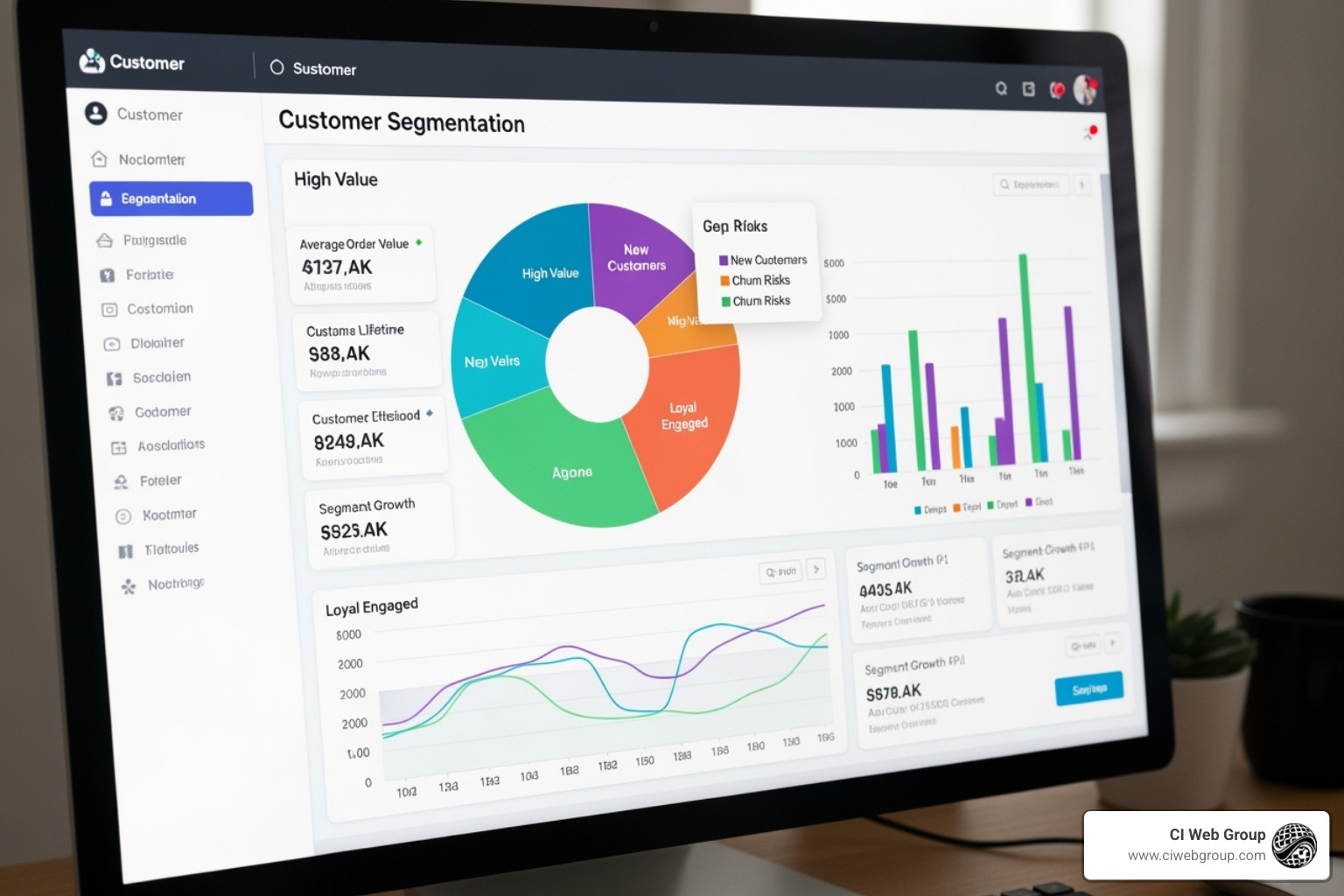
Let's walk through how to make this change happen.
Before diving into algorithms, define what you want to accomplish. Are you trying to boost Customer Lifetime Value, reduce churn, or improve conversion rate optimization? For home service companies, this could mean identifying homeowners likely to need emergency repairs or seasonal maintenance. Setting clear Key Performance Indicators ensures your AI efforts translate into business growth and helps with using AI to build a smarter marketing budget.
Good data is the fuel for your AI. The better the quality, the more accurate your segments will be. Gather information from all customer touchpoints, including your CRM systems, website analytics, purchase history, social media interactions, and customer feedback. The goal is to unify this scattered information into a single view of each customer.
Data quality is crucial—outdated information, duplicate records, and inconsistent formatting can throw off your AI models. It's worth taking time to clean up your data. Also, privacy is non-negotiable. Always follow all privacy regulations and be transparent about how you use customer data. For more guidance, check out more on the importance of data privacy.
Now, let AI work its magic. Different techniques serve different goals. Clustering algorithms like K-Means are great at finding natural groups in your customer base, such as budget-conscious homeowners versus proactive ones. Predictive modeling forecasts future behavior, like which customers will need HVAC repairs before summer. Natural Language Processing can analyze text from reviews or support tickets to understand customer sentiment.
AI's beauty lies in spotting connections humans would miss, which is a key part of leveraging AI for your business to gain a competitive advantage.
This is where insights become results. Once you understand your segments, you can create personalized experiences. This means running targeted campaigns for specific groups (e.g., "weekend emergency plumbing" for busy professionals). Use personalized email marketing with timely reminders and relevant offers. Your website experience can adapt dynamically to different visitor segments.
This dynamic system keeps your marketing relevant as customer behavior changes. It also helps with simplifying lead management with AI by automatically routing leads to the right campaigns. A/B testing within segments lets you continuously refine your approach, ensuring your marketing stays effective without constant manual adjustments.
When you adopt ai-powered customer segmentation, you're not just upgrading your tools—you're changing how your business connects with customers. The results are better campaign performance, higher customer engagement, and a stronger bottom line.

The advantages of AI segmentation are far-reaching:
Today's homeowners expect businesses to understand them. As research from McKinsey shows, the value of getting personalization right is multiplying. The numbers are clear: 72% of shoppers expect businesses to recognize them as individuals, and 78% are more likely to repurchase from companies that provide personalized experiences.
With AI, individualized messaging becomes second nature. You can send targeted communications based on a customer's home, system age, or past behavior. This allows for custom service recommendations and proactive customer service, which builds incredible loyalty and positions your business as a trusted partner.
The real beauty of ai-powered customer segmentation shows up in daily operations:
While AI-powered customer segmentation offers incredible opportunities, it's not magic. Like any powerful tool, it comes with a learning curve. The good news is that with a strategic approach, you can steer these challenges successfully.

Understanding potential challenges helps you prepare for them. Common issues include:
Success with AI segmentation is about a thoughtful, systematic approach. Follow these best practices:
Viewing AI as a powerful assistant, rather than a replacement for good judgment, is the key. This combination of technology and expertise is what sets successful home service companies apart and is foundational to streamlining content creation with AI that resonates with your customer segments.
Here are answers to common questions home service business owners have about AI-powered customer segmentation.
AI uses machine learning algorithms, like clustering, to analyze vast amounts of customer data simultaneously. It finds complex patterns in behavior, demographics, and transaction history that humans would miss. This allows it to create highly specific and accurate segments based on data, not assumptions.
Not anymore. User-friendly AI marketing platforms have made this technology much more accessible. Small businesses can start with their existing customer data from a CRM or website and a clear goal. Many platforms now include integrated AI features that handle the technical complexity, allowing you to focus on business outcomes without needing a data science team.
Yes, this is a valuable application called predictive churn analysis. By analyzing the historical data of customers who have left, AI learns to identify warning signs in your current customer base, such as a drop in email engagement or a missed annual service call. This allows you to launch proactive retention campaigns with a personalized offer or a friendly check-in before you lose them, often saving the relationship.
The marketing world has shifted. AI-powered customer segmentation is no longer a futuristic concept but the foundation of modern customer connection. The days of "spray-and-pray" marketing are over; today's customers expect to be understood as individuals.
For home service companies, this is especially powerful. AI helps you recognize the unique needs of every homeowner—from energy efficiency priorities to emergency preparedness—and respond with relevant, timely solutions. This transforms you from a contractor into a trusted advisor.
This move to dynamic, predictive marketing means your understanding of customers evolves with them, allowing you to anticipate their needs. At CI Web Group, we build our strategies on this data-driven philosophy. We believe combining AI insights with genuine expertise is essential for helping home service businesses thrive.
The future of marketing is personalized, and it's about using technology to better serve real people. To effectively leverage AI and build a robust marketing plan that helps your home service business dominate online search and achieve its goals, it's crucial to start with a solid foundation. Plan your digital marketing strategy with our experts today.
Search our Blog
5 min read
The Complete Guide to Plumbing Website Design
Discover expert plumbing website design strategies that boost conversions, mobile performance, and local SEO for your plumbing business.
Read more

5 min read
5 Ways to Find a Reliable Plumber Fast
Discover plumbing website content strategies that help homeowners find a reliable plumber fast with mobile-friendly design and trust signals.
Read more
5 min read
The Definitive Guide to HVAC Vehicle Wraps
Discover how HVAC vehicle wraps boost brand visibility, generate leads, and build trust with professional fleet graphics that deliver lasting marketing results.
Read more

5 min read
Step-by-Step Guide to Reliable Pest Control Marketing
Discover how pest control marketing services can boost local visibility, generate leads, and drive recurring revenue with proven strategies for 2026.
Read more